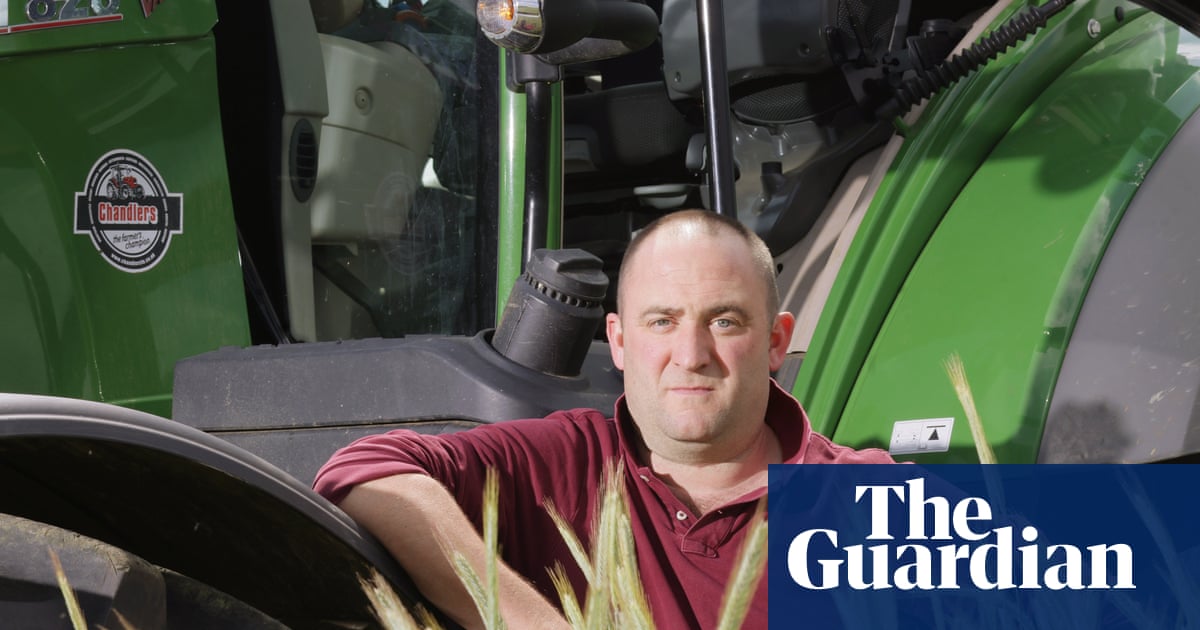
Sitting in his tractor at his arable farm in Norfolk, Burrows is listing the multiple challenges facing him and other food producers. Crop growers such as Burrows are ploughing and cultivating their fields, preparing the ground – hardened and dried out during the long, hot summer – for their next crop. But machinery requires fuel, and the cost of red diesel – used for agricultural vehicles and machinery that is taxed at a lower rate than standard diesel – has almost doubled since the conflict in Iran began in late February.
The cost of most fertilisers used to grow crops and feed for animals has also soared by about 20% over the same period. Farmers, the first link in the food production chain, are adding their voices to the chorus of warnings about the vulnerability and precarity of the UK’s food supply. Food experts, academics, businesses and the public spending watchdog, the National Audit Office (NAO), have in recent weeks called on the government to work on making the UK’s food system more resilient.
The climate crisis, this year’s huge El Niño weather pattern, geopolitical shocks, energy outages and cyber-attacks are all considered threats to food chain security. Amid calls for ministers to treat food as a national security issue, parliament’s influential public accounts committee is to begin a series of hearings on Monday as part of its inquiry into the resilience of the UK’s food supply. MPs on the committee will look at the NAO’s findings on the shortcomings of the last catastrophe planning exercise by the Department for Environment, Food and Rural Affairs (Defra), which largely excluded food supply chain businesses.
Britain produces about 60% of the food it needs to feed itself, but is more dependent on imports than many European peers. The government’s own research has shown Britons are less prepared for potential future emergencies than several European neighbours. Some in the food industry believe there are signs Andy Burnham’s government is beginning to take the threats to Britain’s food system more seriously.
The Cabinet Office will launch a campaign telling households to stock up on tinned foods alongside preparations for possible future emergencies. The government’s Prepare website outlines steps it says people should take, which include storing items at home, including bottles of water and nonperishable food, such as tinned meat, fruit and vegetables that do not require cooking. Despite this, a recent warning from more than 150 food experts and academics accused ministers of being “complacent” about food security and not having a plan to feed people in an emergency.
These include the worsening climate crisis and increased water scarcity in regions that now provide some of the fresh produce UK households rely on, including the Mediterranean and north Africa. Meanwhile, Behrens and other experts, including Prof Tim Lang of the Centre for Food Policy, City St George’s, University of London, have been warning for some time that the UK’s food distribution network is concentrated, leaving it exposed to potential disruption or targeting by bad actors. Lang has previously stated that the UK’s supermarket network is supplied by just 131 distribution hubs – serving 12,300 stores – while the industry body the Cold Chain Federation has warned that most of Britain’s food imports enter the country through four ports – Dover, Felixstowe, Southampton and London Gateway.
Extract — continue reading at the source.