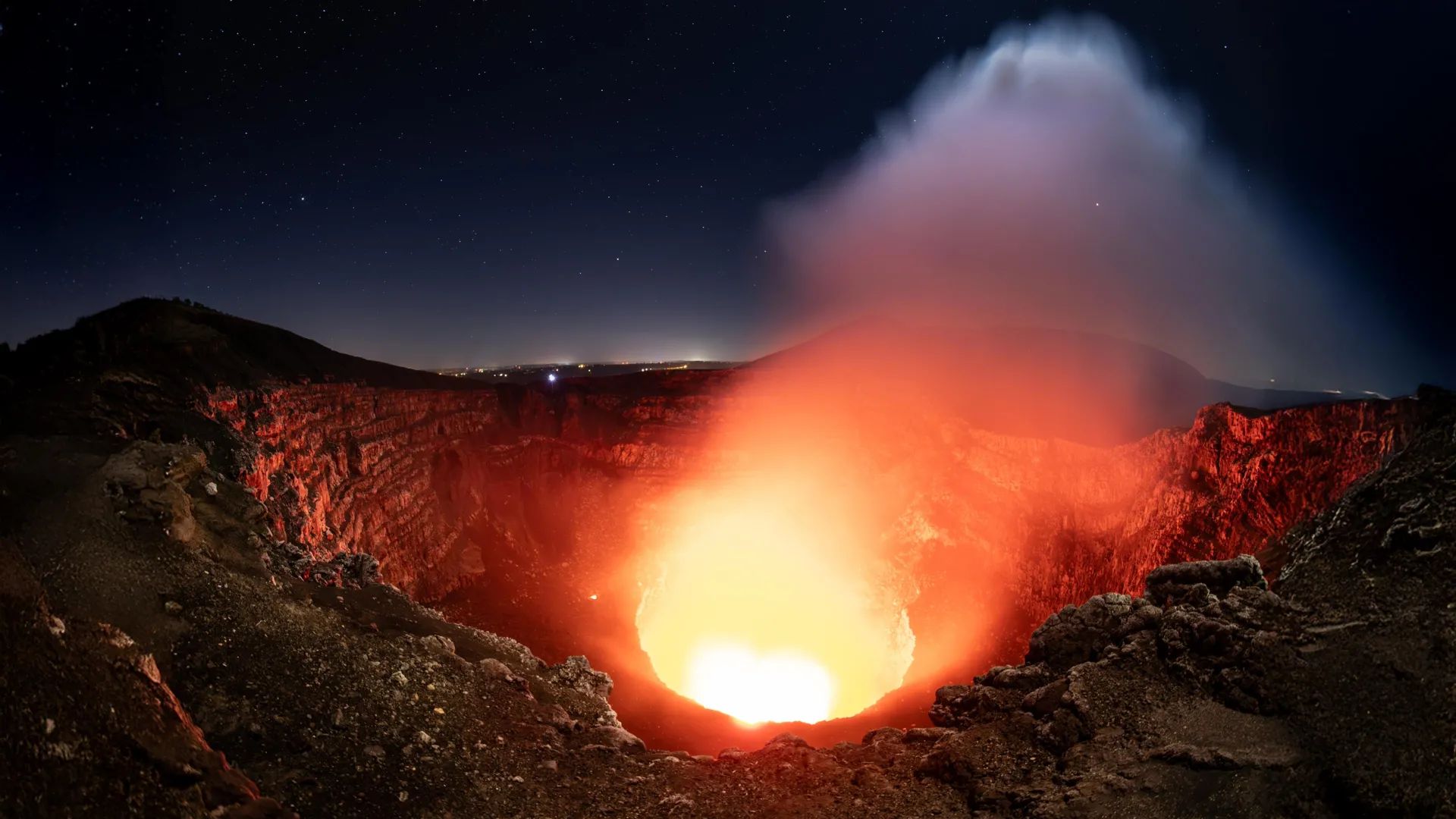
A volcano famous for its glowing lava lake is hiding a surprisingly complex system of magma deep underground. Scientists at Penn State have uncovered evidence of two previously unrecognized magma sources beneath Nicaragua's active Masaya volcano, raising new questions about how molten rock moves beneath the surface. The discovery is particularly important because approximately 2 million people live within 13 miles of the volcano, which is also a popular tourist destination.
Understanding its underground activity could help scientists recognize warning signs of future eruptions and better protect nearby communities. Using six years of satellite observations, researchers tracked subtle changes in the ground around Masaya. They discovered that one part of the volcano initially sank before beginning to rise, possibly indicating that fresh magma was entering a deep reservoir.
Meanwhile, the ground around its active Santiago crater and lava lake continued to sink, suggesting that a separate, shallower magma reservoir was behaving differently. The findings, published in Geophysical Research Letters, reveal that the volcano's underground magma system may be considerably more complicated than previously understood. "These observations help scientists better understand how magma moves beneath Masaya and may improve monitoring and eruption forecasting in the future," said lead author Lizzie Johnson, who earned her bachelor's degree in geosciences from Penn State in May.
Located near Managua, Nicaragua's capital, Masaya is a geologically complex volcano featuring multiple overlapping craters and calderas. Calderas are large depressions that generally form when the ground collapses after magma is removed from an underground chamber. Although scientists have studied Masaya for years, the movement of magma through its underground reservoirs and passageways remains poorly understood.
These systems can change over time, making it difficult to determine exactly what is happening beneath the volcano. "Having a thorough understanding of Masaya's volcanic activity and its related hazards is critical as around 2 million people live near Masaya and the caldera is a national park and popular tourist destination," Johnson said. "Although Masaya last produced a major lava flow in 1772, its persistent degassing often produces dangerously high concentrations of sulfur dioxide volcanic gas." Sulfur dioxide is a potentially harmful volcanic gas released as magma approaches or remains near the surface.
Even without a major eruption, elevated concentrations can create dangerous conditions for visitors and surrounding communities. Young Cheol Kim, who completed his doctorate in geosciences at Penn State this summer, explained that monitoring the volcano continuously is essential for distinguishing normal activity from changes that might signal increasing volcanic hazards. "Doing continuous monitoring allows us to understand the baseline activity and identify see if things are changing," he said, explaining that certain shifts in volcanic behavior could indicate a period of heightened activity or a possible eruption.
Extract — continue reading at the source.


