Impassable roads, crater-like potholes, burst water pipes, mountains of trash, and grinding poverty are part of everyday life in South Africa's communities. So too are unemployment, hunger, and crime. The latest wave of violence targeting foreign nationals has claimed several lives since April and forced more than 176,000 people to flee South Africa, most of them returning to their home countries of neighboring Zimbabwe, Malawi and Mozambique.
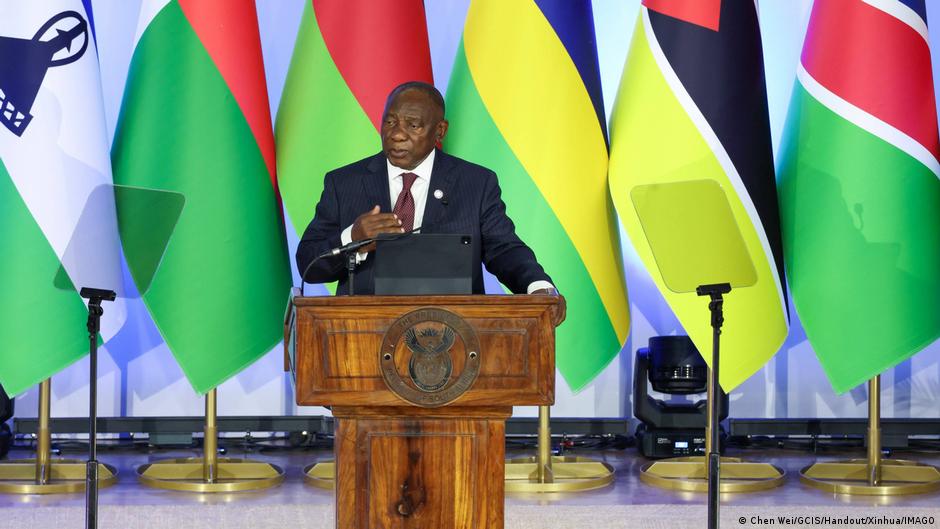
At the recently concluded Southern African Development Community (SADC) summit in Durban, the vigilante group March and March again called for migrants to leave South Africa. "Come and take your people back," its members urged the governments of neighboring countries, while police moved to contain the protests. South African President Cyril Ramaphosa said ahead of the summit that he was "concerned and ashamed" that citizens of other countries had been subjected to abuse and violence and had been forced to flee.
According to Fredson Guilengue of the Rosa Luxemburg Foundation, growing anti-migrant sentiment is a symptom of deeper public discontent. "This reflects their frustration, particularly with the ANC's failure at both the national and local levels to create jobs, tackle inequality, reduce crime and improve living conditions," Guilengue told DW. "In the [November 4] elections, South Africans will express their deep frustration over the lack of public services, inadequate infrastructure and poverty." The African National Congress (ANC), Nelson Mandela's former liberation party, is on course to perform even worse than in the 2024 general election, when it suffered a historic setback, winning 40.2% of the vote, Guilengue notes.
According to Guilengue, the November elections are unlikely to go in the ANC's favor, as little has changed for the better since the last election. In other words, unemployment remains very high, as do crime rates and corruption. "These problems have not been resolved over the years and have become entrenched in South African society.
The municipalities have been governed by the ANC, and there has been widespread mismanagement alongside a steady deterioration of infrastructure. That has generated enormous public anger," he added. Voters are expected to turn to opposition parties, including the main opposition Democratic Alliance (DA), a party supported primarily by white voters and one that has been part of a government of national unity with the ANC since 2024.
In a surprise move, former Cape Town mayor Helen Zille, known as the "Iron Lady," is running as the DA's mayoral candidate in Johannesburg in the upcoming local elections, hoping to rescue the country's economic hub from its deep crisis. "She will run a very strong campaign, which could benefit the DA and hurt the ANC," Guilengue said. Political analysts say the ANC has faced persistent leadership challenges in recent years, and they have noted that, although impeachment proceedings against President Cyril Ramaphosahave been suspended for the time being, they have damaged his public image.
Extract — continue reading at the source.