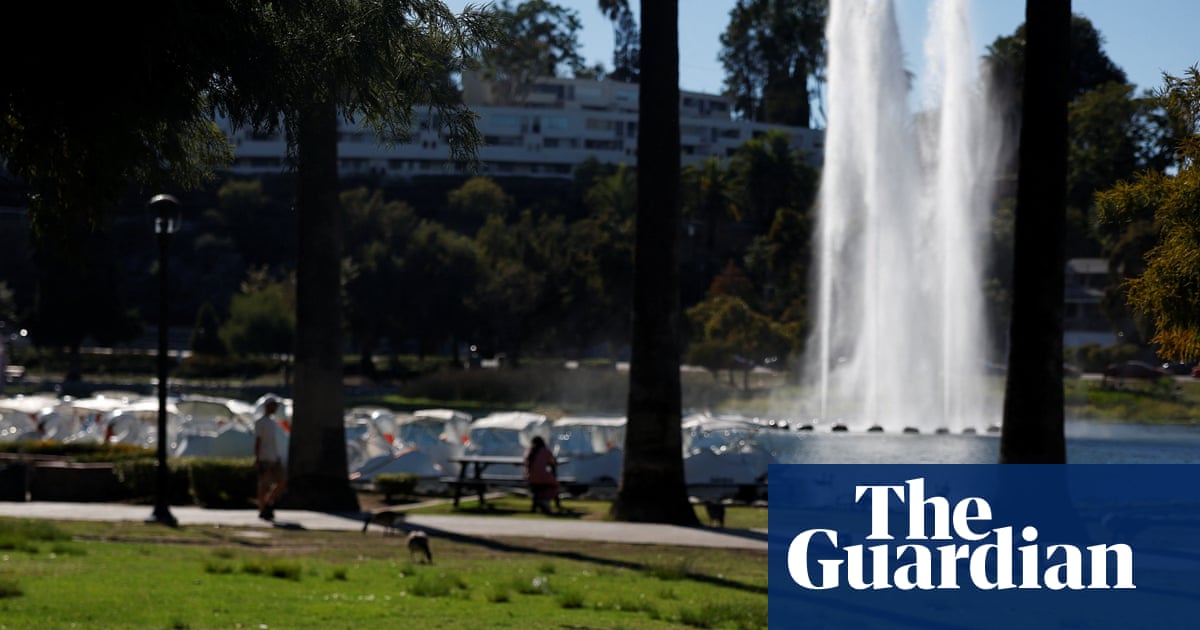
Southern California faced scorching heatwaves this summer that made locals wonder what happened to their famed Mediterranean climate. Now, the fall is bringing heatwaves too. Friday kicked off a new round of long-duration heatwave advisories from the National Weather Service (NWS), which expects unseasonably high temperatures to linger for at least a week.
Temperatures are expected to hover near 100F in downtown Los Angeles, and spike well into the triple digits farther inland, raising the risk of both heat-related illness and wildfires. Limit exposure to the sun.” October heatwaves are not uncommon in southern California. They’re caused by ridges of high air pressure that park themselves above the region.
This year, they’re also influenced by an ongoing marine heatwave that, in turn, is driving a strong El Niño – a year of above-average surface-water temperature in the Pacific Ocean. But experts say the severity and duration of this year’s fall heatwave is extreme, and likely to become more common in the future as the climate crisis nudges global temperatures higher. It’s difficult for scientists to point to a specific event and describe it as an effect of climate change, said David Neelin, an atmospheric physicist who researches climate change at UCLA.
But research is showing that with every half-degree of global warming, heatwaves become both more likely and longer lasting. She urged political governments to invest in heat adaptation now to make the region more livable in the future. Providing more shade is the most “most effective way to keep people safe”, she wrote in a text message.
Extract — continue reading at the source.