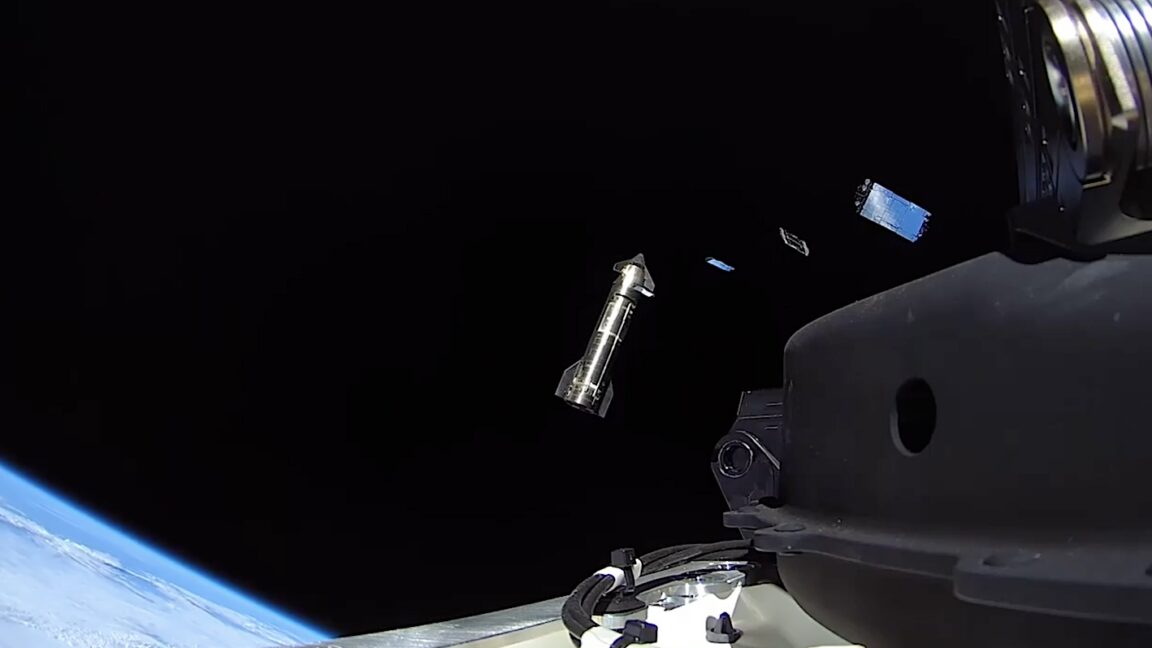
Michael Nicolls, SpaceX’s vice president for Starlink and president of Elon Musk’s artificial intelligence company, xAI, used a presentation Tuesday at the International Astronautical Congress in Turkey as a clarion call for improved data-sharing among satellite operators. SpaceX’s Starlink constellation now has more than 11,000 satellites, about two-thirds of all active spacecraft in low-Earth orbit. Radars and telescopes routinely track thousands more pieces of space junk.
Starlink is, by far, the largest satellite constellation in operation today. But if you buy the buzz, Starlink is just the tip of the iceberg. SpaceX has revealed plans to launch up to a million satellites for a new constellation, called Starmind, to deploy AI computing capacity in low-Earth orbit.
Amazon is in the early stages of launching a network of thousands of satellites to compete with Starlink, and two Chinese megaconstellations are now in full-scale deployment. All of this raises the question of how to mitigate the risk of a collision in orbit, an event that could create thousands more pieces of space junk, potentially triggering a self-perpetuating cycle of debris generation. The risk of a collision on any given day is fantastically low.
Space is vast and empty, and low-Earth orbit is a long way from filling up. SpaceX and most other Western operators de-orbit their rockets and satellites at the end of their missions to prevent additional debris in orbit. There’s still a long way to go to improve tracking, awareness, and coordination in orbit.
This is sometimes called space traffic management. No global treaties or regulations require satellites to broadcast their locations and maneuvers or mandate coordination among satellite operators. Without rules of the road, it is up to governments and companies to set norms of behavior.
Extract — continue reading at the source.