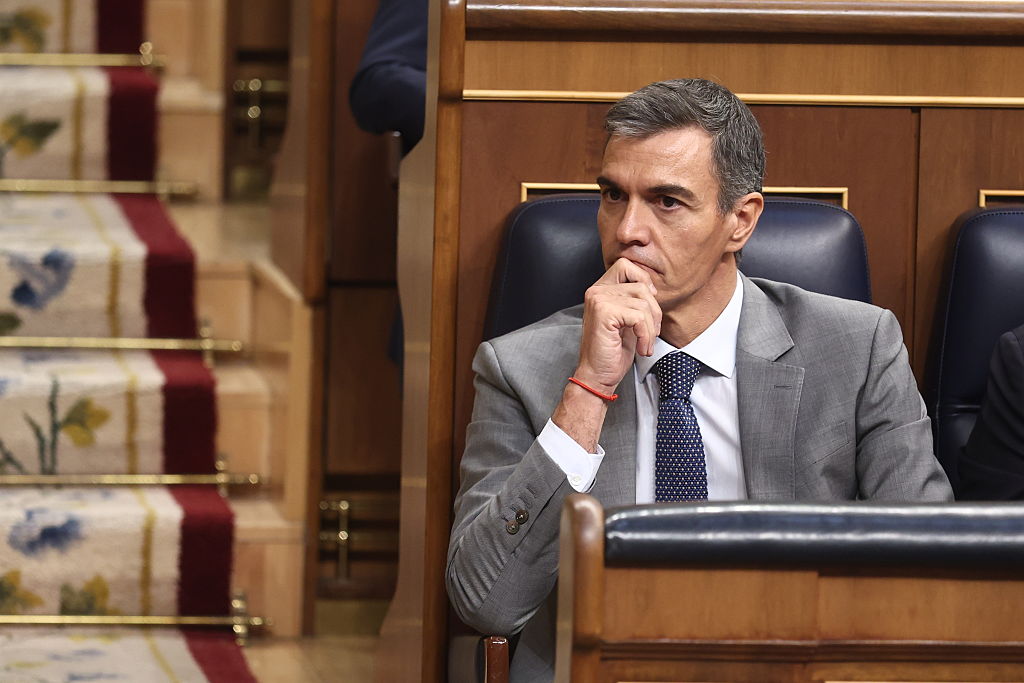
Prime Minister Pedro Sánchez of Spain called for early elections on Monday after Parliament last week rejected two key housing decrees amid widespread protests over rising rents and housing scarcity. The elections, originally scheduled to take place next summer, will now be held on Nov. 29. One of the decrees was a relief package aiming to extend eviction protections for vulnerable households, regulate rentals, and offer tax relief and assistance for renters, landlords, and first-time homebuyers, while the other aimed to offer greater stability for renters by establishing automatic renewals.
The rejected measures came from Sánchez’s governing coalition, comprising his Socialist Party, PSOE, and the left-wing alliance Sumar. The coalition lacks a majority in Parliament and must rely on other parties to pass legislation. That dependence leaves the government vulnerable when those parties withhold their support—which is what played out with the two housing measures on Oct. 2.
In calling early elections, Sánchez is hoping voters will give his coalition enough support in Parliament to advance its housing agenda—but risks handing his opponents the majority instead. But he faces a central challenge: persuading voters to blame the parties that blocked his proposals, rather than his government, for the lack of relief. Various parties have offered differing explanations for why they rejected the decrees.
Junts—a Catalan pro-independence party—said in a statement Oct. 1 that many of the proposed measures would reduce the supply of rental homes and drive up prices, making housing even harder to access for people with lower incomes. Juan Bravo, housing spokesman for the conservative PP party, said on Oct. 2 that the government was proposing significant market interventions without adequately addressing the shortage of homes through construction. Sergio Nasarre Aznar, a professor of civil law at Universitat Rovira i Virgili, agrees with some of the points the parties have made in opposing the decrees, telling TIME that “what Pedro Sánchez is proposing will cause a serious breakdown of the housing market”—making it even more difficult to access housing.
He also argues that the measures could make housing harder to access by increasing legal uncertainty. He warns of “the threat of future court rulings annulling some of the measures.” Sánchez’s opponents are also choosing to emphasize other issues, including immigration: Vox leader Santiago Abascal, for instance, has made tougher migration policies a condition of supporting a future government with the conservative PP. The move is also a gamble because Sánchez’s party may need to overcome blowback over corruption scandals, its handling of migration, and repeated difficulty securing support in Parliament.
Pablo Simón, a political scientist with the Universidad Carlos III de Madrid, tells TIME that focusing on housing could help Sánchez move beyond those difficulties and engage progressive voters. The Spanish Youth Council’s 2025 report showed an average monthly rent of €1,176, the equivalent of roughly $1,317, which then represented 98.7% of a young person’s average salary in Spain. But public outrage came to a head in September when an 87-year-old woman was evicted from her home in Madrid after occupying the unit for decades.
Extract — continue reading at the source.