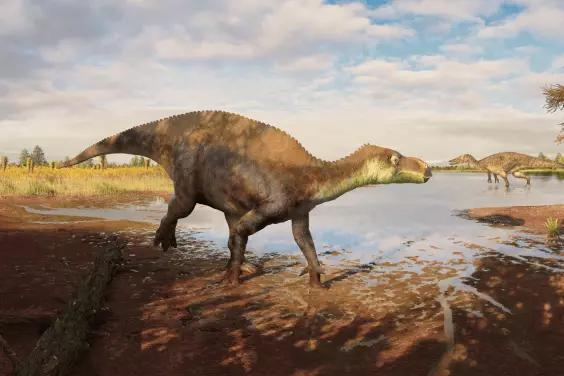
While that kind of fieldwork still happens, plenty of dinosaurs are “discovered” in museum collections. Instead of waiting to be unearthed, these already excavated specimens have been waiting for the right PhD candidate to come along, agonizingly study them, and then document the details. The latest species of dinosaur—an iguanodon relative described for the first time in a study published today—took the latter path, but with a twist.
The specimen was discovered in the site of the Ewhurst brick and roof tile works, a clay quarry in Surrey, England, and the researchers recognized the team that did some actual digging. The species name, Paludohadros proudlovii, honors Will Proudlove, a beloved former manager at the quarry who passed away at the age of 35. Read more: “How Crocodiles Survived the Asteroid That Killed the Dinosaurs” Proudlove’s dinosaur namesake is one of several iguanodontians identified in southern England over the past few years after a detailed analysis of one of two major groups (mantellisaurus) was published in 2023.
Like its iguanodon relatives, the newly described dinosaur had characteristic thumbspikes and ate only plants. According to the team, the over 16-foot-long dinosaur weighed in at around 3,300-4,400 pounds, and its bones were still forming, indicating it may have been a juvenile. An adult might have been twice as big as the rhino-sized specimen unearthed, the team says.
Its genus name comes from the Latin for swamp as a nod to the marsh-like environment that covered England around 125 million years ago during the Cretaceous period. And while P. proudlovii dined on wetland plants, there were other dinosaurs dining on it. According to the team, the remains of a Baryonyx walkeri, a type of spinosaur, was unearthed from the same quarry harboring a grim surprise.
Finally, if you’re wondering what discoveries await in the rest of the museum’s collections, help is on the way. Subscribe to our free newsletter.
Extract — continue reading at the source.