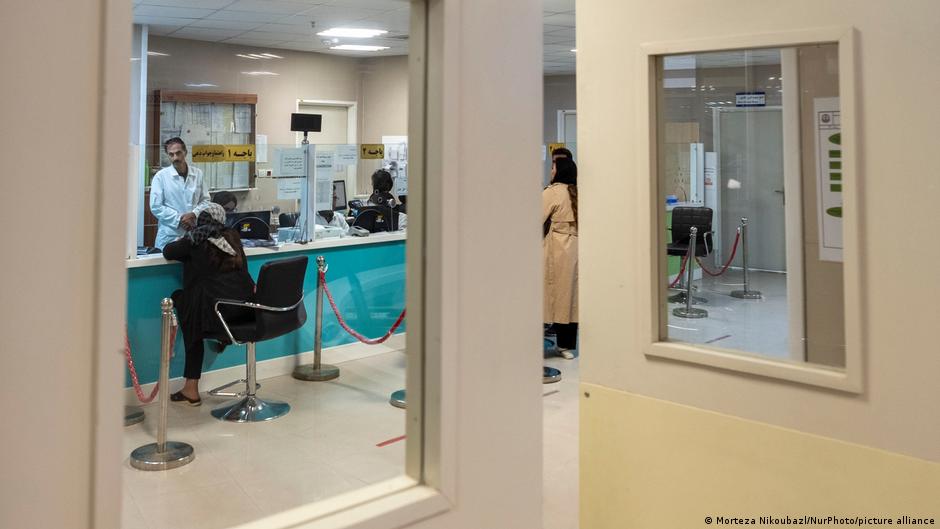
A 70-year-old woman with advanced breast cancer was supposed to undergo chemotherapy every two weeks. Doctors had scheduled six treatment sessions, each costing around 100 million Iranian tomans (about $530 or €450). Iran's minimum monthly wage for workers covered by the country's labor law is 16.6 million tomans, meaning that just one of her chemotherapy sessions costs roughly six times the monthly minimum wage.
The woman's children asked her doctor to postpone the next round of treatment while they searched for a loan or any other source of financial support, according to colleagues of Hamid Hemmatpour, an Iranian physician based in Austria and a member of the executive board of the Association of Healthcare Professionals for Human Rights-Austria. Her story is far from unique. Across Iran, rising prices, persistent shortages, disruptions in foreign currency transfers and growing pressure on the health care system are making access to treatment increasingly difficult, according to Hemmatpour and another Iranian physician based in Austria, Hassan Nayeb Hashem.
In one example, an Iranian pharmaceutical company recently announced price increases for 82 products. The average price of those medicines rose from roughly 180,000 tomans to 390,000 tomans, an increase of around 120%, according to figures published by Tasnim News Agency, which is affiliated with Iran's Islamic Revolutionary Guard Corps. The list shows particularly steep increases for a number of medicines.
Donepezil rose by about 543%, clarithromycin by roughly 308%, and amoxicillin by around 115%. The prices for some acetaminophen and diphenhydramine syrups increased by about 135%. The figures relate to a single manufacturer, but they illustrate the scale of the financial pressure many patients face.
Insulin users are among those hardest hit. Hemmatpour said the cost of a monthly prescription of four NovoRapid insulin pens has risen from about 280,000 tomans after insurance reimbursement to roughly 1.1 million tomans. To view this video please enable JavaScript, and consider upgrading to a web browser that supports HTML5 video Hassan Nayeb Hashem warns that shrinking access to vital treatments could have tragic consequences.
"If the medicine becomes inaccessible, patients can develop complications much sooner," he told DW. "The most serious risk is premature death." In many cases, switching medications is not a practical solution. "For many specific diseases, there is effectively no substitute," he added.
Extract — continue reading at the source.


