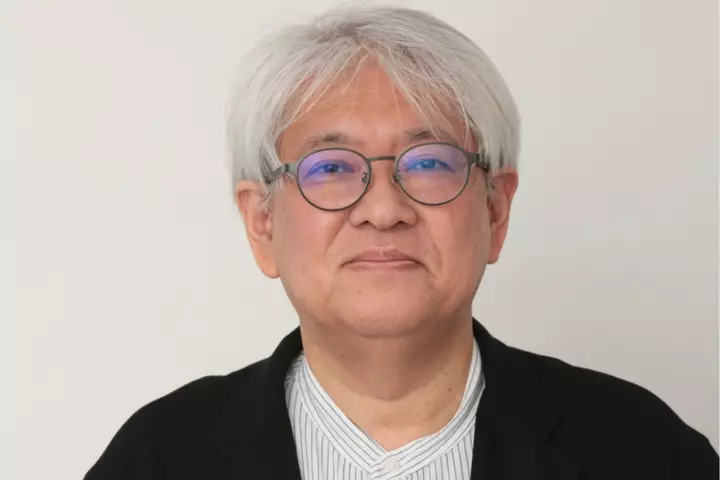
Star-driven flops at the Chinese box office, slowing investment and a reportedly more complicated censorship process have a bearing on China’s low profile at international festivals this year, according to Ichiyama Shozo, programming director of the Tokyo International Film Festival. Investment has slowed, he says, and many titles are reportedly sitting unreleased as censorship has grown more complex. All of that, in his view, has something to do with the absence of a strong Chinese showing on the festival circuit in 2026.
Ichiyama has worked closely with Chinese-language auteurs including Hou Hsiao-hsien and Jia Zhangke, and says the mainland industry changed sharply in the mid-2000s. As the economy boomed, multiplexes multiplied and box office prospects rose, even independent projects with no stars attached could raise reasonable budgets in China. Taiwan, by contrast, looks comparatively steady.
Its home market has always been small, Ichiyama says, but a range of public support mechanisms keeps production going. This year’s lineup is marked by films about historical events, wars among them, Ichiyama says. They include Samuele Rossi’s Competition entry “Even If Hell Came,” which follows a young Italian partisan holding out in the Alps in the winter of 1944.
Most of these filmmakers, he believes, look back at past events as a way to examine a world that is growing more divided. Tokyo’s Competition requires at least an Asian premiere, but the festival pushes for world premieres, and the split between the two usually lands at around half and half. The festival also aims for around half of the 15 films to come from Asia.
Emerging directors expected to shape the future of world cinema get priority over established names, though veterans are not shut out. This year’s lineup includes veterans such as Garin Nugroho (“Red Before Dawn”), Milcho Manchevski (“Sister Brother Manhole Cover”) and Bahman Ghobadi (“Trees Are Watching”). Ichiyama says the established directors in the selection are reaching for something different from their earlier work.
The Japanese titles in Competition, among them Ikeda Akira’s “The Canary’s Lullaby” and Yamamoto Akira’s “The Intertwining,” sit alongside those in the Nippon Cinema Now section. Ichiyama describes these filmmakers as lacking an international reputation so far but deserving of worldwide recognition. The Japanese films in the Gala Selection, including opener “Sukiyaki” from Zeze Takahisa, Yamazaki Takashi’s “Godzilla Minus Zero” and Sode Yukiko’s “All the Lovers in the Night,” work with bigger budgets and commercial demands while holding on to an auteur sensibility.
Extract — continue reading at the source.