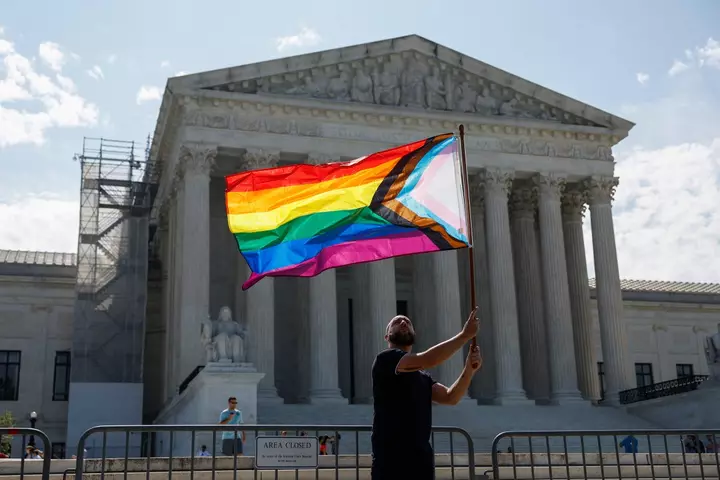
Voters in Virginia have approved an amendment to remove the state’s constitutional ban on same-sex marriage, two decades after residents voted to define marriage as a union solely between a man and a woman. The amendment removes a provision which states that marriage is only between a man and a woman and will prohibit the state from denying a marriage license to two adults because of their sex, gender or race. In 2014, a federal judge struck down the ban as unconstitutional, and same-sex marriage has been legal across the U.S. since the Supreme Court’s historic 2015 ruling in Obergefell vs.
The high court rejected an appeal to that decision last year. Question 2, which went before voters on November 3, would remove the existing provision from the Virginia Constitution and replace it with language affirming that two adults may marry regardless of their sex, gender or race. It would also require legally valid marriages to be treated equally under state law.
At the November 4 cutoff, however, the amendment's formal certification and effective step were still pending; this means Virginia's old language had not yet technically disappeared from the constitution. But this successful measure is set to take the restriction off the books in Virginia. The state initially added the restriction to its constitution in 2006.
Same-sex marriage has been legal nationwide since the U.S. Supreme Court's landmark June 26, 2015, decision in Obergefell vs. In the case, the Court held that the 14th Amendment requires states to license marriages between two people of the same sex and recognize lawful same-sex marriages performed elsewhere.
The decision effectively invalidated state same-sex marriage bans around the country. But it did not physically remove those provisions from state constitutions or statutes. As a result, numerous states continued to carry language prohibiting same-sex marriage, even though it could no longer be enforced.
That distinction has attracted renewed attention in recent years. The Movement Advancement Project says states continue to have constitutional amendments, statutes or both that prohibit marriage for same-sex couples, although the restrictions remain unenforceable because of Obergefell vs. Congress also passed the Respect for Marriage Act in 2022, creating federal protections requiring states to recognize marriages legally performed in other states.
Extract — continue reading at the source.





