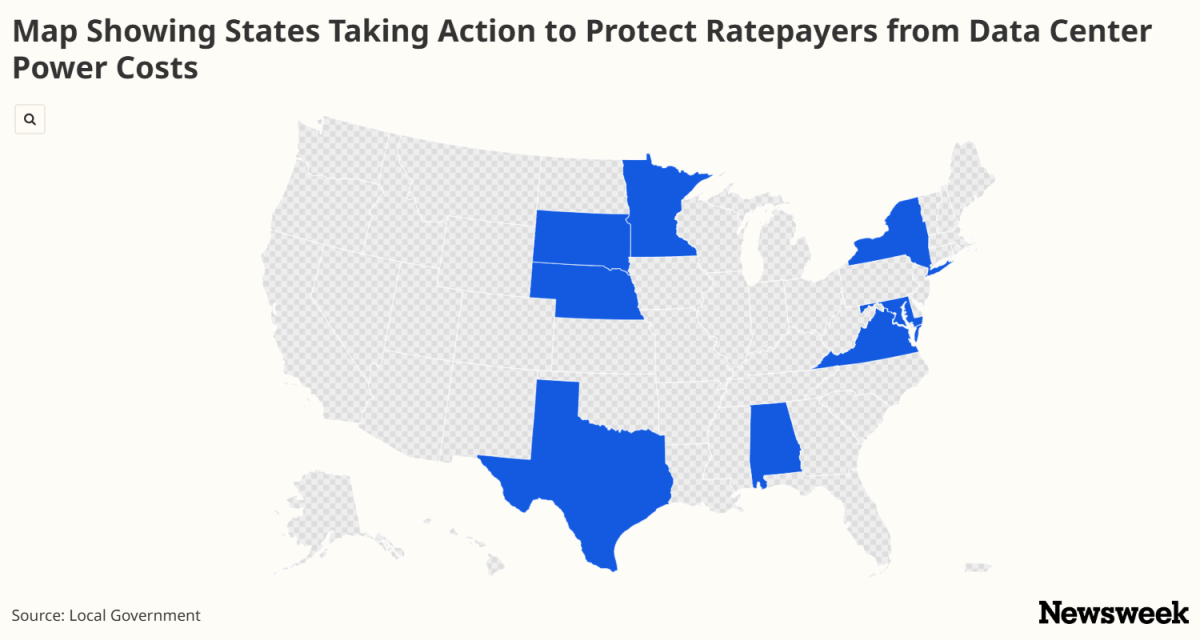
The rapid expansion of data centers is reshaping the nation’s electric grid, prompting states to take action over who pays for the enormous amount of power these facilities require. As technology companies build massive facilities to support cloud computing and artificial intelligence, lawmakers are introducing new rules to protect residents and businesses from shouldering the costs of grid upgrades and increased electricity demand. Others have seen efforts to regulate the industry fail, leaving residents—meaning anyone who pays an electric bill—potentially exposed to higher costs as utilities invest in new generation and transmission capacity.
The result is a growing divide across the country. In some states, lawmakers are requiring data centers to shoulder more of the costs they create. In others, legislation has stalled, been vetoed or has yet to become law, leaving residents facing soaring electricity costs.
States are taking different approaches to managing the growing electricity demands of data centers, with policies ranging from requiring companies to cover grid infrastructure costs to increasing public oversight of new projects. Some have enacted laws requiring large facilities to pay for upgrades needed to serve them, while others have introduced fees to support energy assistance programs or established rules to reduce electricity use during periods of peak demand. Maryland established a new framework for reviewing large data center projects, requiring state agencies to assess their potential effects on electricity ratepayers, local communities and the environment.
Under an executive order signed by Gov. Wes Moore in September 2026, projects requiring at least 25 megawatts of power will be reviewed by a state task force, and a public dashboard will disclose details including projected electricity demand and water use. The state is also pushing for data centers to cover the infrastructure costs associated with serving them and for communities to have a greater voice in development decisions.
South Dakota enacted legislation requiring electricity providers to establish separate service terms for data centers and make them reimburse utilities for costs fairly attributable to their electricity demand and consumption. The law also accounts for costs utilities may incur if a data center leaves the system or significantly reduces its electricity use. The policy is designed to prevent other electricity customers from being left to cover costs associated with serving these large facilities.
Alabama enacted legislation requiring certain large data center electricity contracts to undergo review by the state's Public Service Commission. Under the law, which took effect October 1, 2026, contracts for qualifying data centers with electricity demands of at least 150 megawatts must address recovery of the additional costs associated with serving those facilities. The legislation also requires the contracts to promote positive economic benefits for the communities where the data centers operate.
Extract — continue reading at the source.