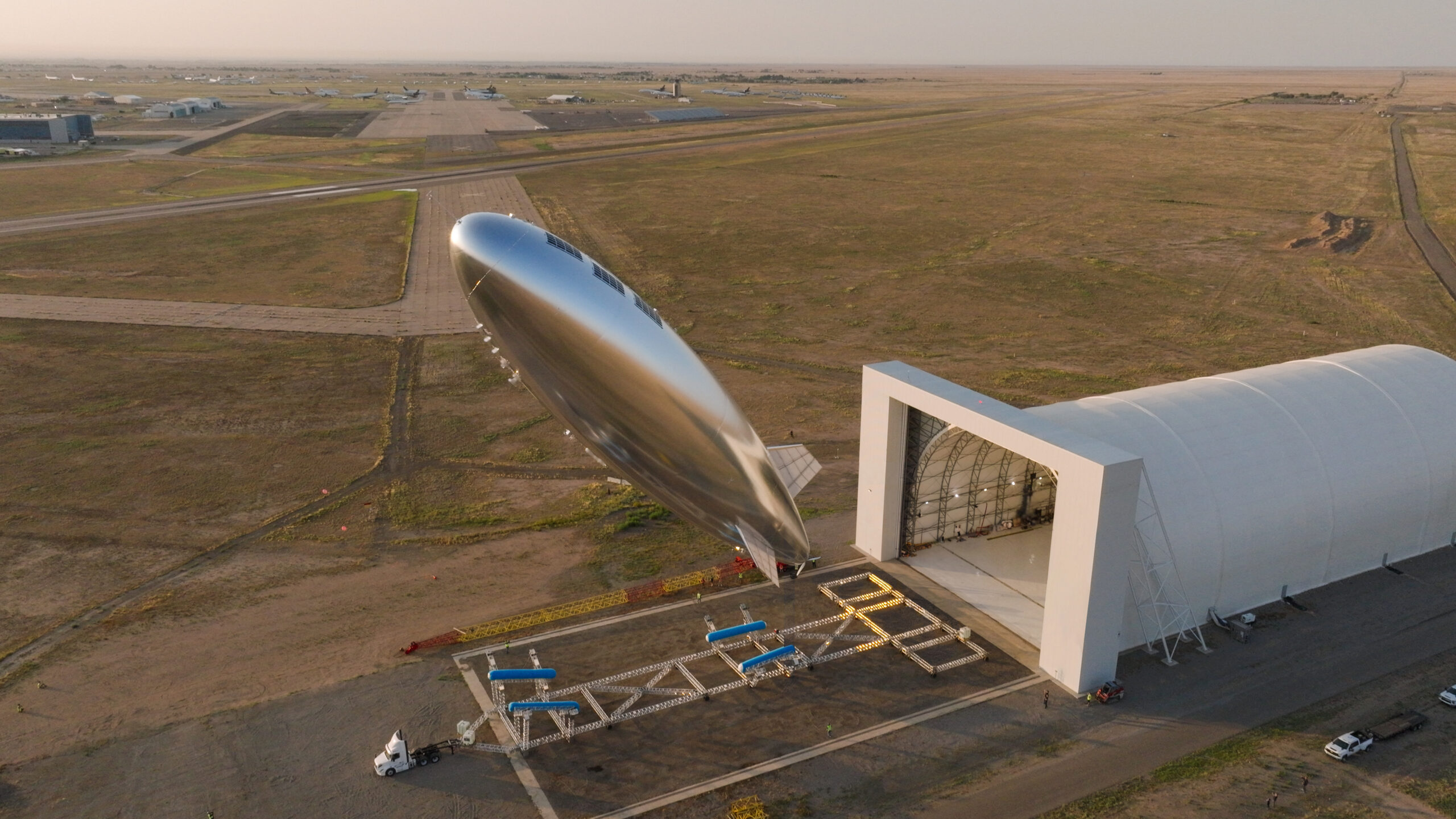
Nearly 100 years after the dirigible Graf Zeppelin made the first nonstop airship journey across the Pacific Ocean, another airship has successfully completed a round-trip flight from New Mexico to Japan and back. But the significance of this modern feat was less about the journey’s length and more about its purpose: demonstrating how a lighter-than-air platform can act as a cell phone tower in the sky. The trans-Pacific flight that took place over a month between August and September 2026 was the most notable milestone yet for Sceye, a US aerospace company based near Albuquerque, New Mexico.
Sceye has developed an uncrewed platform filled with helium for buoyancy and equipped with an electric-powered propeller for active propulsion, allowing it to resist most strong winds and keep hovering over the same location for long periods. The platform also uses top-mounted solar panels and onboard batteries to stay powered for stratospheric operations around the clock. In Sceye’s case, the company began testing a series of smaller prototypes in 2016 before eventually reaching the stratosphere with a 215-foot (65-meter) length version in 2021.
The latest version extends to 270 feet (83 meters).
Extract — continue reading at the source.