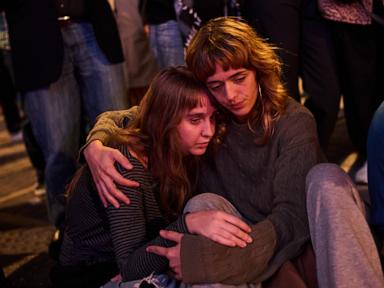
French students took to the streets again Thursday and blockaded some high schools as they demanded action from the government they say is underfunding the country’s education system. Now in its third week, the wave of protests has seen hundreds of thousands march after rows over staffing shortages, overcrowded classrooms, and dilapidated buildings reached a crisis point. The protest movement went nationwide on Tuesday, after student unions called for a wider support of their mobilization, with parents, teachers, and activists heeding the call.
Some protests have turned violent, with attendees lighting fires and hurling projectiles, and police using tear gas and water cannons. Since the protests began, at least 6,547 people have been arrested or stopped by police, said France’s Interior Ministry. Hundreds of students and police officers have been injured.
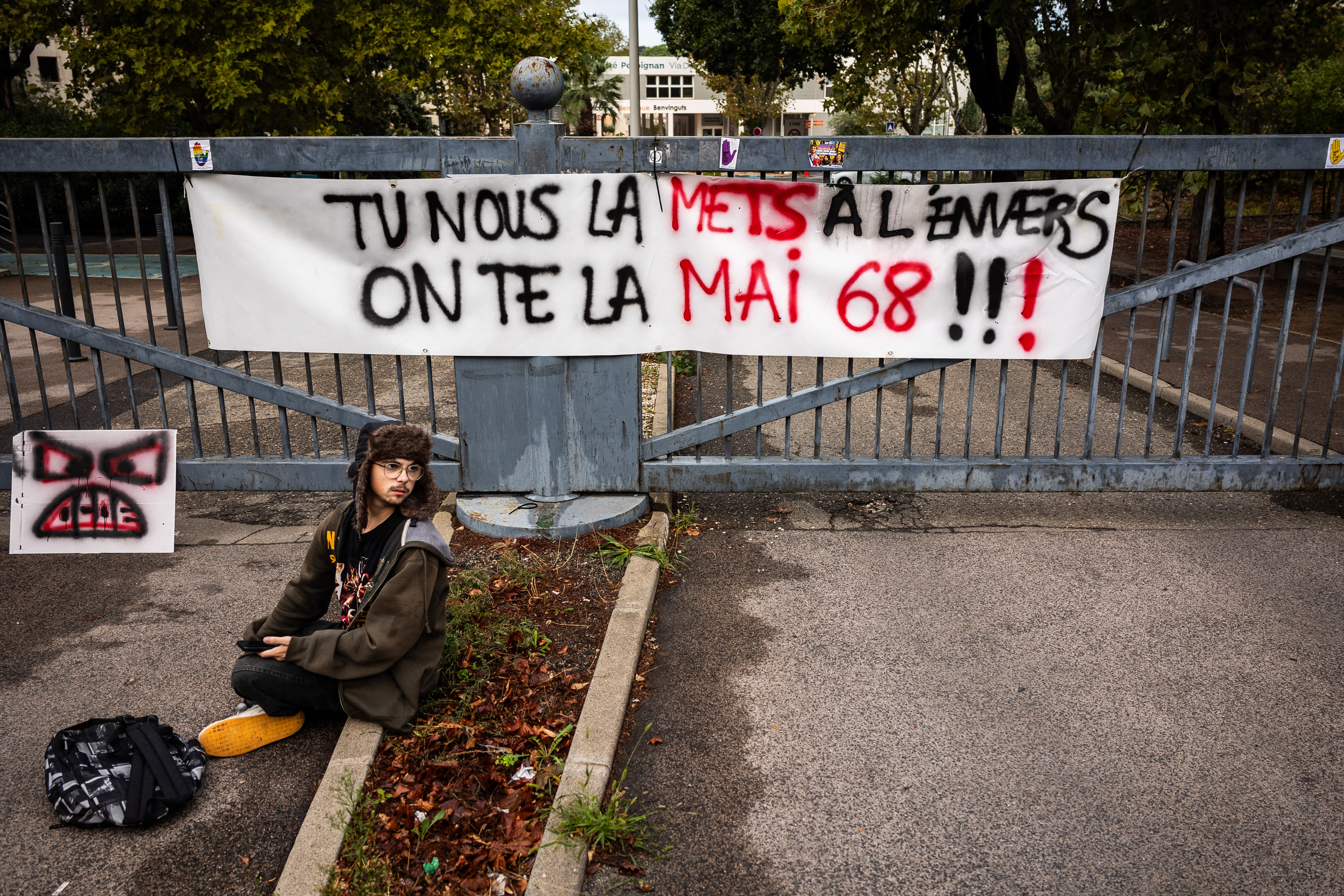
The French Education Ministry told TIME that as of midday Thursday, local time, 157 schools remain closed. Throughout the protests, students and other attendees have held up various signs calling for change. A common theme has emerged, as many of the homemade banners mention the year 1968—and more specifically, May 1968.
That’s in reference to the nationwide protests initiated by a student movement in 1968 that led to millions of workers striking and nearly toppled the government. During the blockade of the University of Perpignan Via Domitia on Tuesday, a banner raised on the gates contained a warning, which roughly translated to “You’re trying to pull a fast one on us, we'll give you May '68.” Elsewhere, as students gathered in Reforme Square in Marseille, a protester held a sign that read “Generation 67 is doing May 68,” thought to be in reference to the Gen Alpha 6-7 trend. In Paris, someone held a black and white sign of a larger figure with their hand over the mouth of a youngster, emblazoned with the phrase “sois jeune et tais-toi,” which means “be young and shut up.” That same slogan was used during the 1968 protests.
Not only do the youth of France draw inspiration from the rallying of a generation, lawmakers are also mindful of how powerful such protests can be. At that point, universities were expanding very quickly in the 1960s,” says Robert Gildea, a professor of European and French history at the University of Oxford. One argument centered on restrictions on dormitory visits that stopped male and female students staying in each other’s rooms.
In May 1968, when the Nanterre campus was shut down in an effort to dampen escalating protests, the movement moved to the Sorbonne campus in Paris’ Latin Quarter. Students barricaded themselves within the university grounds and called for a reform of the university system, while accusing French President Charles de Gaulle of running a "police state.” Clashes ensued between riot police and student protesters, hundreds of which were arrested. A particularly violent clash in the early hours of May 11 garnered nationwide attention.
Extract — continue reading at the source.