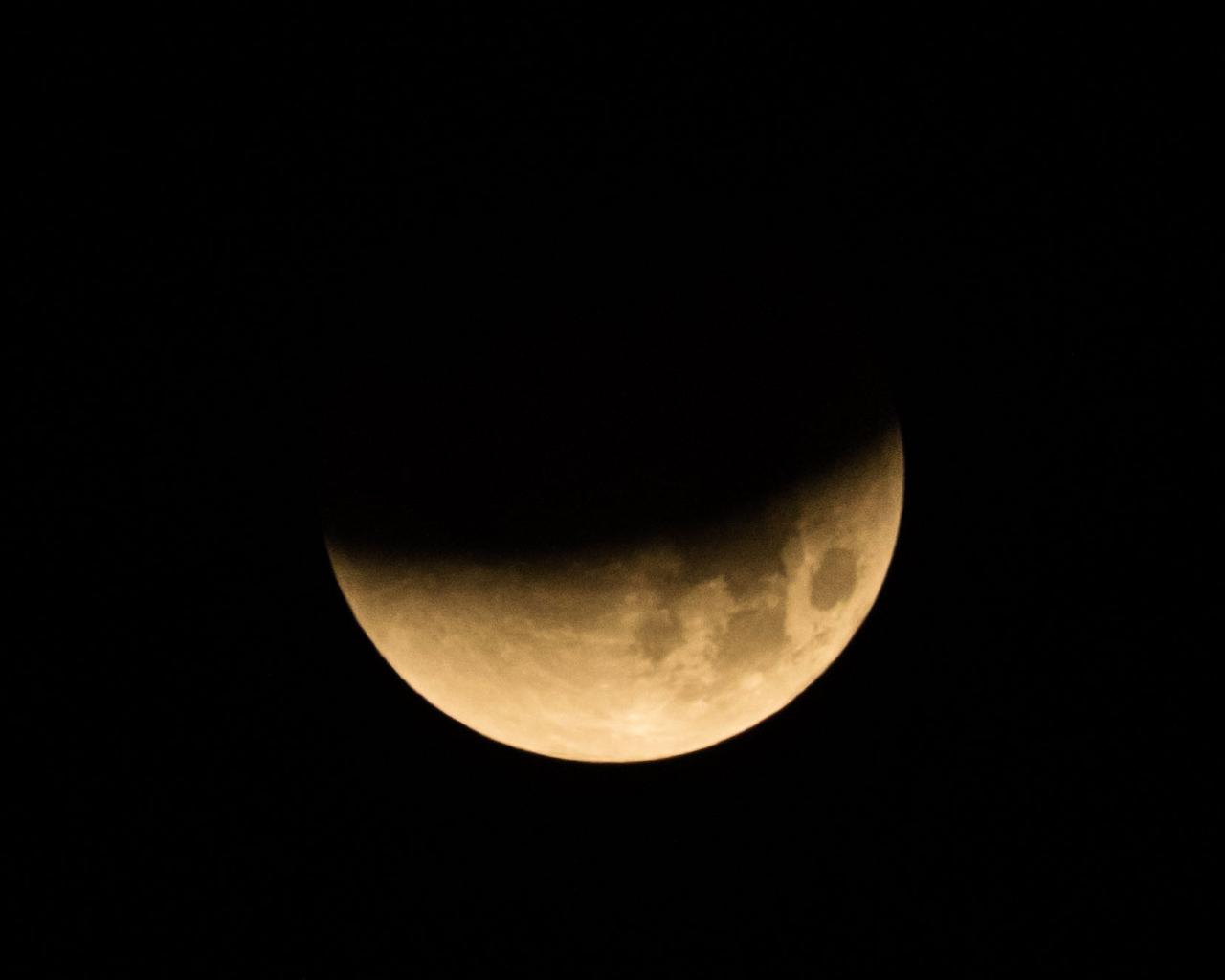
It’s not often that 3.6 billion people—or 44.4% of the world’s population—look at the same thing at the same time. And it’s not often that something comes along that’s worth the attention of all those billions. But that will happen on the evening of Aug. 27 when much of the world will be able to witness a blood moon lunar eclipse, during which 96% of the face of the full moon will fall into Earth’s shadow, glowing a deep orange-red in the process.
Lunar eclipses occur during a full moon, when the Earth is positioned between the sun and the moon, blocking all or most of the solar light that otherwise bathes the lunar surface. On average, lunar eclipses occur two to three times per year, though total lunar eclipses, when the moon is entirely shadowed, make up only 29% of those events. The autumnal color the moon takes on is due to a trick of the Earth’s atmosphere.
Not all of the sunlight that would otherwise be striking the moon during an eclipse is blocked by the Earth; some of it leaks around the periphery of the planet and manages to reach the moon. That light streams through the Earth’s atmosphere during its passage to the moon, and some of the wavelengths of visible light—particularly the blue—are absorbed and scattered. What’s left is principally the red spectrum which partially lights the moon.
All total lunar eclipses result in blood moons. In theory, a lunar eclipse ought to occur once a month. On every orbit around the Earth on its 27.3-day journey, after all, the moon will always pass through a point at which the planet sits between it and the sun.
But the plane of the moon’s orbit around the Earth is tilted about five degrees compared to the Earth’s orbit around the sun. That means that on some passages behind the Earth the moon avoids the shadow, soaring above or ducking below the planet. An eclipse of the moon plays out slowly.
The one that will begin on the evening of Aug. 27 and continue into the early hours of Aug. 28 will last a total of five hours and 38 minutes. Even the most dedicated eclipse chaser, however, may not be able to take it all in. Depending on where in the world an observer is—and this eclipse will be visible in Europe, Africa, North and South America, and western Asia—the moon may set before the eclipse is done or rise after it’s already begun.
Extract — continue reading at the source.