A confluence of factors—climate, conflict and shipping risks—could put significant pressure on global food supplies this month and through the rest of 2026, international organizations and experts say. The United Nations Food and Agriculture Organization has warned that world food prices in August were at their highest level since 2022, as much of the world and many of its largest crop-producing states are grappling with the impacts of an historic El Niño this fall. The knock-on effects of the climate pattern combined with conflict-related supply disruptions in Europe and Asia are threatening both supplies and costs globally.
Global consumers “will have to expect having to pay more for their grocery shopping,” according to Matin Qaim, executive director of Bonn University’s Center for Development Research. Climate Prediction Center said there was a 69 percent chance that El Niño conditions “would exceed the strength of previous El Niño events dating back to 1950.” Last week, the World Meteorological Organization (WMO) said there was a “near 100 percent” likelihood that El Niño conditions would persist through February 2027, and said it was preparing for an “exceptional event.” “We are already seeing disruption and devastation from droughts and floods and we expect these impacts to increase as El Niño intensifies,” WMO Secretary-General Celeste Saulo said. Back in July, analysis from Goldman Sachs cited by The Guardian predicted that the strength of the El Niño could result in a 15.8 percent increase to global food commodity prices—a rise that its researchers predict could only be “fully realized” by the second half of 2028.
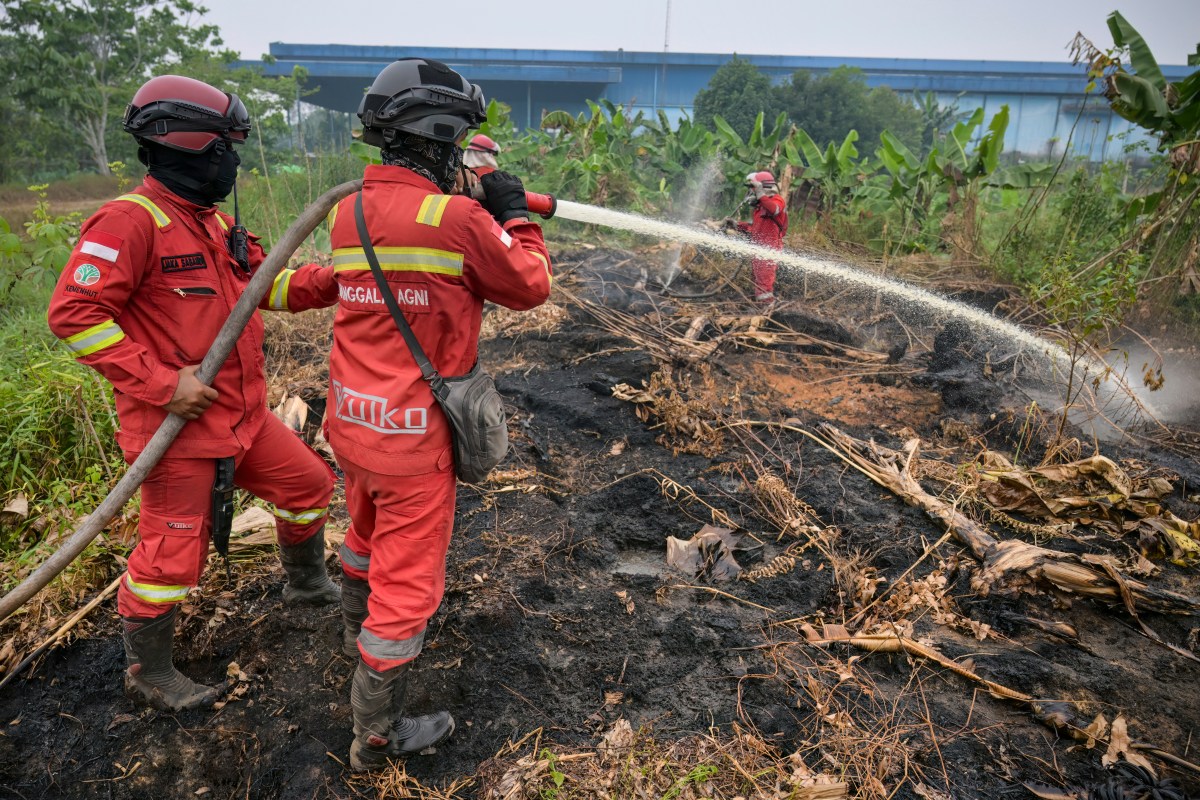
And given vulnerabilities in certain food chains, residents of Australia are being warned of higher grocery store costs and supply shortages. In the U.K, Environmental Secretary Angela Eagle told The Guardian that households should stockpile foods ahead of the forecast “extreme storms.” “The damage will extend beyond countries directly hit by El Niño-related extreme weather through the impact on food, energy, logistics, and trade,” economists at Oxford Economics wrote in a paper published Tuesday. Flooding or water shortages can also disrupt major trade routes and supply chains.” Land clearing practices and severe droughts—fueled in part by the El Niño conditions—have led to widespread forest fires across Indonesia.
The country is the world’s largest producer of palm oil—accounting for over half of global production—and palm oil futures have risen sharply on the back of the fires raging across its forest and peatland ecosystems. Futures prices have risen to over 5,000 Malaysian ringgit per ton ($1,236), up around 24 percent since the start of the year, reflecting pressures on the commodity which remains a key ingredient in a huge range of everyday products from processed foods to cosmetics. Qaim told Newsweek that the fires themselves would have only modest effects on palm oil supplies, but that combined with the wider effects of the El Niño across countries in South and Southeast Asia, this could amount to a noticeable impact.
David Ubilava, an economist at and professor at the University of Sydney, likewise told Newsweek that the impact on global supplies could prove “potentially quite significant, especially if we consider the onset of a very strong El Nino, which will only make the matter worse.” However, he said there was “little cause of concern” for U.S. shoppers, whose prices typically reflect labor, energy, storage and distribution costs to a greater extent than ingredients. Beyond fuel shortages and the downstream impact on most economic activity—including food production and distribution—the ongoing blockade in the Hormuz Strait has severely curtailed global fertilizer supplies. The Gulf remains a key supplier of urea, used for nitrogen fertilizer, as well as many other inputs like ammonia, phosphate and sulfur.
The Food and Agriculture Organization (FAO), and agency of the United Nations (UN), warned in July that shortages resulting from the Hormuz bottleneck would lead to lower crop yields “and tightening food supplies in the latter half of 2026 and into 2027.” FAO Director-General Qu Dongyu called it a “disruption at the core of the global agrifood system,” and said that fixed harvest calendars meant even short-term delays could impact supplies for months or years. Last month, the International Trade Centre—a joint UN-World Trade Organization (WTO) agency—reported that urea export volumes from Gulf suppliers were down 83 percent in April compared to a year prior, with ammonia exports dropping 75 percent. And the FAO's latest report published last week, revealed that world food prices are at their highest level since 2022 on the back of “robust import demand, growing concerns over crop prospects and continued uncertainty surrounding critical trade flows.” Among the items singled out in the FAO report, the agency noted that global wheat prices are now up 15 percent year-over-year, which it attributed to currency fluctuations, weaker production forecasts due to weather conditions in Europe, and “persistent disruptions to Black Sea export logistics.” Renewed attacks by both Russia and Ukraine on shipping infrastructure in the Black Sea and Sea of Azov have significantly impeded grain exports from the region, with wheat f
Extract — continue reading at the source.