A Supreme Court showdown over climate change lawsuits could leave oil companies bankrupt, gas stations facing financial ruin and Americans paying more at the pump if the justices allow cities and states to pursue billions in damages against the fossil fuel industry, energy policy experts warn. "You would see mass exodus and that would create more scarcity with fuel, more so than we're seeing already today, higher prices," Jason Isaac, CEO of American Energy Institute, told Fox News Digital. "And that's really what this is about.
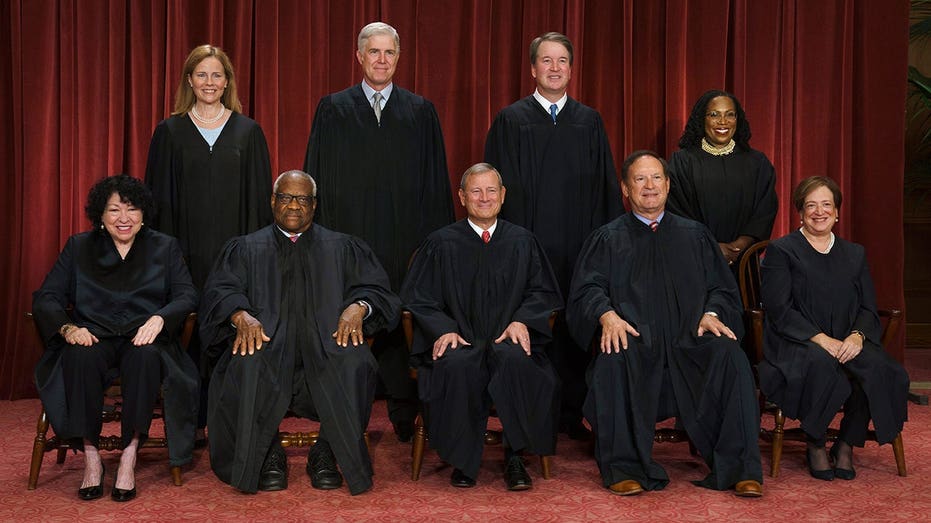
It's about controlling these companies and stopping the use of hydrocarbons." The Supreme Court heard arguments Monday in Suncor v. Boulder, a dispute over whether federal law prevents cities and states from suing oil companies under state law for alleged climate damage linked to emissions that cross state borders. During oral arguments, Justice Clarence Thomas pressed Boulder's attorney, Kevin Russell, on whether the legal theory could expose businesses beyond oil producers to similar lawsuits, including large retailers.
WAVE OF OVERLOOKED 'LEFT-WING' LAWSUITS COULD COME WITH AN UNEXPECTED PRICE TAG FOR AMERICANS "Nothing in our theory prevents that," Russell acknowledged, although he noted that state tort law could impose additional limitations. Justice Brett Kavanaugh separately raised concerns about the potential financial consequences of widespread litigation, warning that enough lawsuits could "bankrupt" defendants and questioning whether virtually any manufacturer or business could face similar claims. The city and county of Boulder, Colo., sued oil giants ExxonMobil and Suncor Energy in 2018, accusing the companies of knowingly contributing to climate change while misleading the public about the alleged dangers of fossil fuels.
The municipalities are seeking damages to help cover the mounting costs of climate-related harms. There are roughly 30 similar lawsuits pending in jurisdictions across the country, including cases in Portland and Baltimore. Boulder's lawsuit alleged ExxonMobil and Suncor knew for decades about the climate risks associated with fossil fuels but misled the public about those risks.
The complaint pointed to a 1977 internal memo from ExxonMobil that circulated among the company's highest-level managers. The memo reported that "current scientific opinion overwhelmingly favors" that fossil fuels contribute to the rise in CO2 emissions. David Bookbinder, who previously served as counsel of record for Boulder but is no longer involved in the case, described the lawsuit as a way to implement an "indirect carbon tax" during a Federalist Society forum last year.
But Boulder has maintained that the case is not an attempt to regulate national climate policy, arguing instead that Colorado has the authority to hold companies accountable under state law for alleged harms suffered within its borders. "Since the founding, states have had the power to provide tort remedies for injuries occurring within their borders even when the conduct causing those injuries occurred elsewhere," Russell told the justices. CATHOLIC SCHOOLS, BANNED RIFLES AND ‘CLIMATE LAWFARE’: BLOCKBUSTER FIGHTS AWAIT SUPREME COURT O.H.
Extract — continue reading at the source.