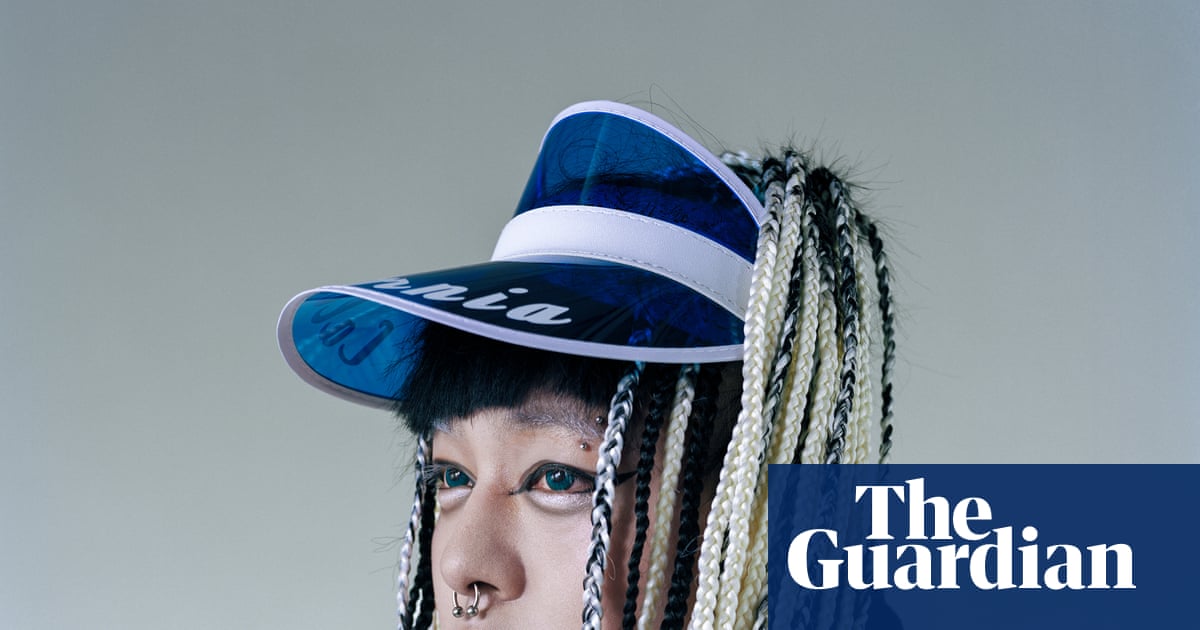
Giada Ripa’s ambitious project combines archive photography from the 1860s, a modern dominatrix – and the story of a relative who became a muse to 19th-century artists and intellectuals Michiru Okajima, Yuki Kimura, Lolita Fashion. The Yokohama Project by Italian photographer Giada Ripa is a beautifully crafted body of work that bridges generations, cultures and media to explore the profound transformation of Japanese society and landscape over a century and a half through the uncovering of a photographic archive miles from its origin. _The Yokohama Project by Giada Ripa is available from GOST_ While rummaging through boxes in her family home in Italy, Ripa found an album of 53 hand-coloured photographs by the first visual narrator of Japan, Felice Beato, capturing 1860s Japanese local society. A few months later, she found an unpublished manuscript by her old relative and muse to many intellectuals, Mathilde Ruinart, who lived in Japan at the same time and befriended Beato.
Inspired by their work, Ripa embarked on a journey to retrace their footsteps, weaving their historic perspectives with her own style of photography Stepping into the footsteps of both Beato and Ruinart and armed with an analogue large-format camera, the works emulate the slow, deliberate and documentary gaze of Ripa’s historical predecessors It’s believed that the custom of tattooing originated with fishermen, who imagined that by tattooing their bodies with dragons and other figures, they would frighten away sharks or sea monsters likely to do them harm Ripa: ‘In my role as photographer, I acted as the link between Beato’s images and the figure of Mathilde, following their respective footsteps and attempting, through a western prism that bridges her 19th-century gaze and my own, to identify local contemporary analogies and convey the transformations of society and landscape in Yokohama and its surroundings’ The work unfolds across two distinct, evocative chapters: the first is an archival and anthropological journey tracing the exact paths and viewpoints documented by Beato and Ruinart. The second is a series of striking studio portraits taken in Tokyo where Ripa invited fishmongers, geishas, fashion designers, writers, wrestlers, priests and artists to sit before her lens, constructing a vibrant, living dialogue with the historic ‘native types’ famously catalogued by Beato Beato settled in Japan when it had just opened its doors to the western world, after a period during which the Shogun had forbidden access to foreigners except as part of diplomatic missions. For more than 50 years, until the early 20th century, Beato’s photographs of Asia constituted the standard imagery used in travel diaries, illustrated newspapers and other published accounts, thus helping shape the ‘western’ notion of Asian society In parallel, Ripa’s ancestor, Mathilde Ruinart, was a 19th-century artist and muse to several intellectuals, who travelled to Japan in 1867 with her diplomat husband.
They were in Japan mainly to seek new silkworm varieties to export to Italy, at a time when a devastating disease was ravaging Europe’s silk industry Ripa: ‘I’m very aware of the historical distortions and simplifications often produced by the western gaze upon other cultures and of the complex entanglement between photography, anthropology and colonial histories, and this work unfolds as an introspective and personal journey’ His dress is said to have first been introduced during the reign of Ashikaga Takauji, nearly 500 years earlier. It is worn at the New Year and other holidays, by the samurai or two-sworded class, and also at weddings, feasts and funerals. As far back as 600 years ago some samurai wore four swords when fighting; one at the back, two on the left side, and one on the right side.
These were laid aside in peacetime Kazufusa Hosho, 20th generation head of Hōshō School, Noh actor The Hōshō School is one of the five major traditional schools of _shite_ (protagonist) actors in Japanese Noh theatre Ripa: ‘These images are not intended as a definitive portrait of a place, but rather as subjective impressions of a western traveller retracing the steps of an ancestor and a pioneering artist, navigating the fragile space between past and present, memory and interpretation’ Take a stroll between Japan’s past and present – in pictures Giada Ripa’s ambitious project combines archive photography from the 1860s, a modern dominatrix – and the story of a relative who became a muse to 19th-century artists and intellectuals
Extract — continue reading at the source.