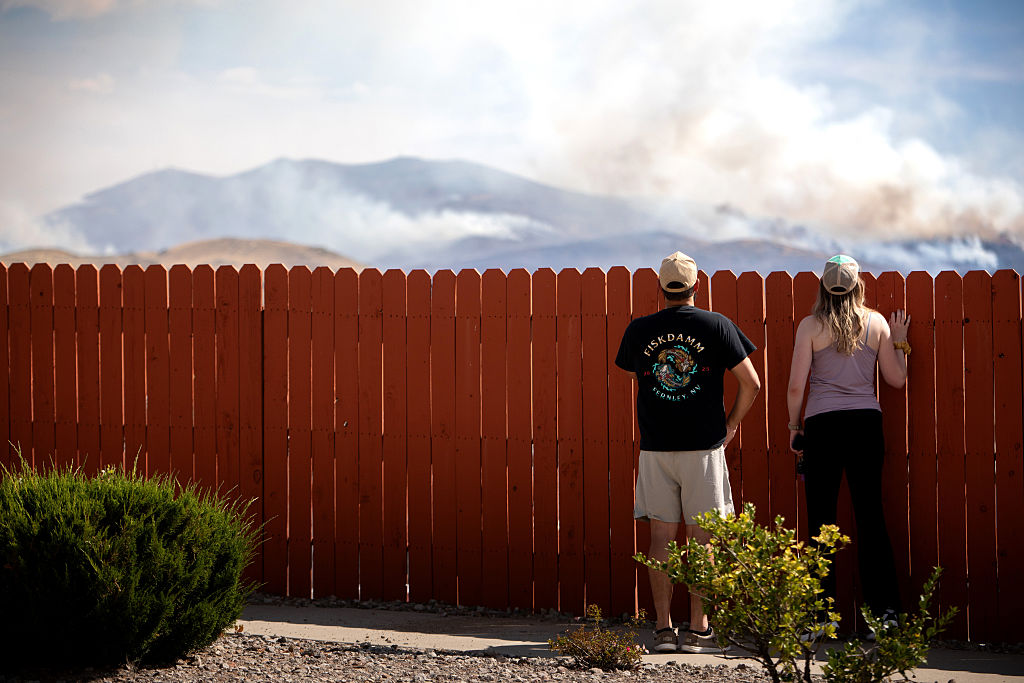
The ongoing “Hawk” fire outside the city of Reno, Nevada, has prompted the evacuation of tens of thousands of people in yet another devastating blaze contributing to one of the worst U.S. wildfire seasons in recent history. Roughly 42,000 people have been evacuated around Reno, while an additional 45,000 were warned that they may also have to flee. The evacuation is among the largest prompted by a U.S. wildfire this year, following the fires around Spokane, Washington, in early August during which roughly 60,000 people were evacuated.
The Reno evacuations mark another flashpoint of a record-breaking fire season. The fire is dwarfed in acreage by larger blazes from this year, at roughly 15,000 acres burned so far, but its direct effect on civilians is one of the largest in recent years, and demonstrates the potential risk that worsening wildfires may have on people and their communities in years to come. Here’s how fires around the U.S. have set new records, and why they have been so bad this year.
Compared to the past 10 years, more acres have been burned this year in the U.S. to date. The National Interagency Fire Center (NIFC) posted on Monday that firefighters have responded to 50,784 wildfires that have scorched over 7.8 million acres this year: 168% of the 10-year average for acres burned, and 129% of the average for total fires. Around the same time last year, roughly 4 million acres had been burned, around 50% of the current acreage for 2026 so far, according to NIFC tracking.
The U.S. has also been at the highest level of “fire preparedness” for 38 days, since July 18th, at a five out of five, which means that federal resources are strained and may not be available to address every new fire. Is Now At Its Worst Level of Wildfire Preparedness. The 10-year average for fire preparedness in August is four.
The last time the fire preparedness level was at a five for the entire month of August was in 2021. Meanwhile the 10-year annual average for days spent at level four and five combined is 48 days, and so far, the U.S. has already spent 57 days within that range, after reaching level four in late June. There has also been a 20-year high of firefighter entrapments, life-threatening situations in which firefighters’ safety zones and escape routes are compromised.
According to a report, there had been 12 entrapments in 2026 as of Aug. 13, more than the year-total average of nine in the last 20 years. This year’s entrapments also marked the highest year-to-date figure since 2006. Six out of 13 firefighter deaths have involved entrapments, the report shows.
Extract — continue reading at the source.


