Tesla is finally handing over the first of its all-electric Semi trucks to customers after nearly a decade of delays and refinements to the vehicle, which it first revealed in 2017. Company executives — except CEO Elon Musk, who was at President Trump’s state dinner with Chinese Premier Xi Jinping — walked an audience of customers, employees and influencers through many of the details at an event in Reno, Nevada on Thursday night. Customers will be able to take delivery of the truck whenever they are ready, though charging infrastructure remains a hurdle, a person familiar with the matter told TechCrunch on the condition of anonymity.
Without revealing the final sticker price, the executives promised the truck will help fleet owners lower their total cost of ownership, reduce emissions, and benefit from greater reliability. The event was held at a new factory dedicated to the Semi that’s adjacent to the company’s first Gigafactory in Reno. Tesla plans to build as many as 50,000 trucks a year at the plant, or roughly 1,000 per week, and create 3,000 jobs for the local economy.
The most capable version of the truck is expected to travel 500 miles or more on one charge (depending on the size of the load) and cost just shy of $300,000 before incentives. There will be shorter-range variants, too. The Semi’s long-awaited launch comes at a time of transition for Tesla.
Musk now paints Tesla as a robotics and AI company even though nearly all of its revenue comes from vehicle sales. He has also changed Tesla’s mission to “build a world of amazing abundance.” When he showed off the Semi in 2017, Tesla’s mission was still “to accelerate the world’s transition to sustainable energy.” Despite the change in positioning, and seemingly priorities for Tesla, Thursday’s event still saw a lot of discussion about reducing trucking emissions. Dan Priestly, the head of Tesla’s Semi program, noted that heavy trucks produce 16% of emissions despite making up just 1% of vehicles on the road.
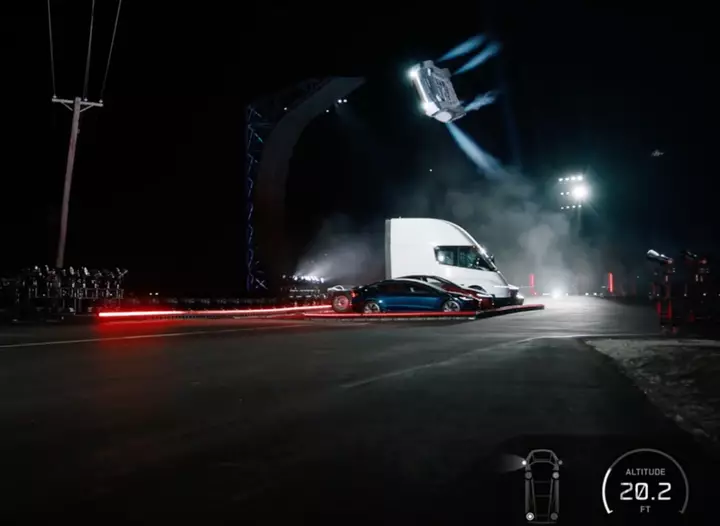
Originally slated to go into production in 2019, the Semi was delayed for multiple reasons. The pandemic, a global parts supply and semiconductor shortage, and changes made in response to pilot customer feedback all contributed to the years-long wait. Priestly and Lars Moravy, who leads most of Tesla’s engineering efforts, detailed many of those changes during the 30-minute event — timed thus to show a Semi that started at 3% battery go up to 60% while plugged into one of Tesla’s megawatt charging stations. (Tesla is also building an entire network of these chargers, which Priestly detailed during the event.) Some of these changes are big and obvious: the company has shaved off roughly 1,000 pounds of weight from the vehicle compared to its original version.
Others are more specific, like going from using three different oils in the Semi’s drive axle to just one. Moravy said the previous axle design that needed three different oils had “always frustrated” him, and admitted that Tesla tends to prioritize “super bespoke” designs. Priestly added that changes to the motor design and work from Tesla’s lubricants team allowed the company to cut out the other two oils.
Extract — continue reading at the source.