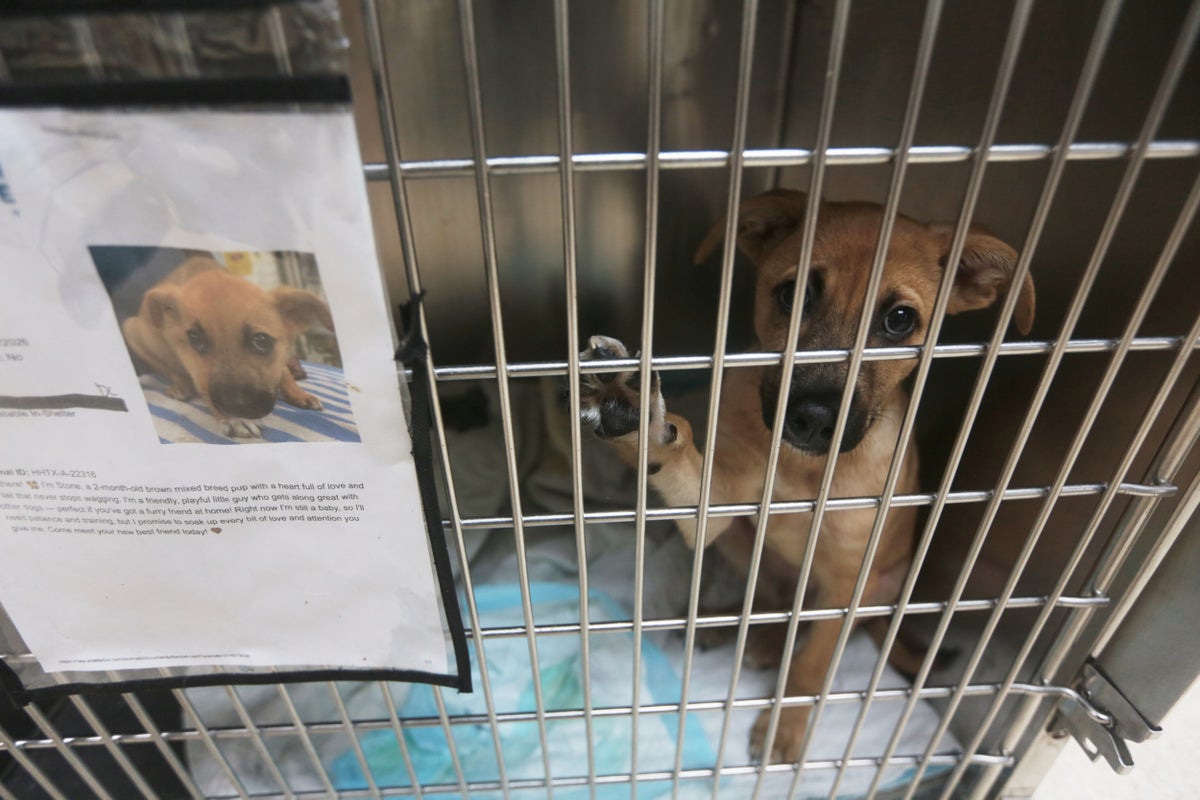
Thousands of dogs and cats across Texas face adoption holds and a heightened risk of euthanasia as officials work to stop the spread of the New World screwworm, an insect that has crossed from Mexico into the United States for the first time in 60 years. The flesh-eating parasite threatens the country's $113 billion beef industry, leading federal officials to close the border to cattle movements. Because the screwworm can also infect household pets, most states have restricted animal transport from affected Texas areas, resulting in crowded conditions at state shelters dependent on rehoming animals elsewhere.
"It’s thrown a wrench into things, for small rescues as well as the bigger shelters," said Mia Bendixsen, executive director of the Texas Humane Legislation Network, an organization promoting animal welfare laws. Capable of laying eggs that hatch into flesh-eating larvae in any mammal's wounds or mucous, the screwworm has caused dozens of infections across southern Texas and southeastern New Mexico, including several in dogs. Restrictions imposed by 44 states on pet movements from infested zones have created severe hardship for Texas shelters that typically transfer thousands of animals each year.
In Corpus Christi, the Gulf Coast Humane Society was unable to transfer rescued dogs to New York state for weeks, causing the shelter's total animal population to climb from roughly 325 to nearly 450. The facility, which sends approximately 500 dogs outside Texas annually, constructed extra room in outdoor exercise areas until New York resumed allowing dogs from Texas, provided a veterinarian first certified each pet was free of screwworm. She noted that if her facility lacks space to accept animals from municipal shelters, "then they have to euthanize more animals." Moving dogs and cats from Texas to other states, particularly in the Northeast or Great Lakes region, has become crucial to saving stray and abandoned animals.
In 2025, Texas had more unadopted dogs transferred out of its shelters than any other state — nearly 89,000, according to the American Society to Prevent Cruelty to Animals. Texas also euthanized about 45,000 dogs — more dogs than any other state, according to the data. And Texas led in the number of cats transferred out of its shelters — nearly 53,000 — and was second to California in those euthanized, with almost 29,000.
Texas has more stray dogs and cats than any state other than California — about 439,000 in 2025 — largely because of its high population and size. Warm weather also allows stray animals to survive longer and breed more, said veterinarians and animal welfare advocates. They added that Texas pet owners seem less willing to spay or neuter their dogs.
In Houston, Humane Society shelter Director Aaron Grady said an inability to send animals out of state has left them more stressed. The Houston shelter has worked to keep its animal population — mostly cats and dogs — at about 200 by tapping a network of foster homes for up to 300 more and by helping pet owners keep their animals even a little longer. Restrictions on animal transports followed efforts by the U.S.
Extract — continue reading at the source.