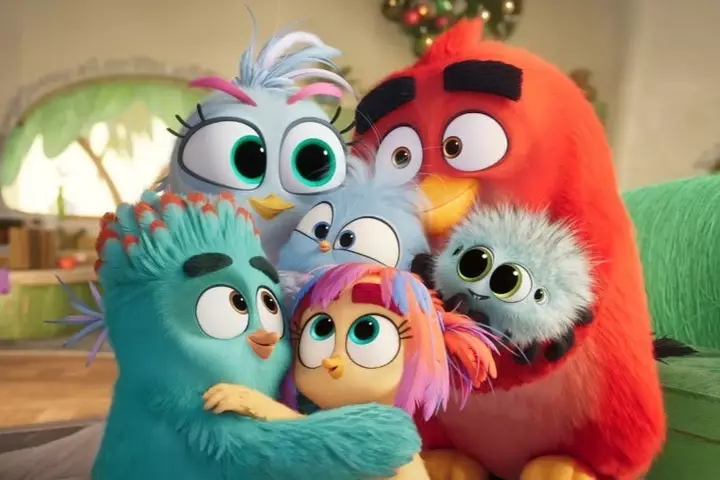
DNEG Animation rebuilt the franchise’s characters while developing a workflow capable of automating character effects on up to 75% of shots, VFX head Patrick Harboun said at a View Conference presentation in Turin The red-feathered hero of “The Angry Birds Movie 3” looks reassuringly familiar, but DNEG Animation had to rebuild much of him to bring the franchise back to theaters. And as the studio reconstructed Red’s fur, facial rig and expressions, it also developed a system that ultimately automated character-effects work on roughly 75% of the film’s shots. The upcoming Paramount release, directed by John Rice, reunites Jason Sudeikis’ Red with Silver, voiced by Rachel Bloom, as they navigate parenthood alongside their latest adventure.
DNEG takes over animation duties from the Sony Pictures Animation productions behind the first two films. The technical handover was anything but straightforward. In fact, proprietary grooming, rigging and surfacing tools used on the predecessors could not simply be transferred to DNEG’s pipeline.
A plucked chicken version of Red,” Harboun joked, displaying a bare digital model. Even its underlying geometry needed reworking before the team could reconstruct its feathers. The result deliberately avoided a radical makeover.
Red’s plumage became slightly softer, while his eyes and beak gained firmer, more toy-like surfaces. Animators cataloged the angles of Red’s beak, the geometry of his narrowed eyes and the boundaries beyond which a stretched expression stopped feeling like Red. The lessons became a style guide and a reusable library of facial expressions.
There was more room for experimentation with over 20 new characters, including Red and Silver’s children: aspiring athlete Glider, voiced by Walker Scobell; temperamental June, played by Emma Myers; and baby Olly, voiced by Psalm West. The family also has a pet spider named Fuzzy, voiced by James Austin Johnson. Olly created a distinctive technical challenge because his glasses effectively serve as animated eyes, complete with moving eyelids and brows.
DNEG’s solution, nicknamed “Pancake Eyes,” involved duplicating and flattening portions of the baby’s facial rig behind the lenses, then restoring curvature and allowing the expressions to respond to the character’s exaggerated squash-and-stretch movement. The biggest efficiency gain came through a performance-effects process building on DNEG’s earlier work for “The Garfield Movie.” Following approval of a character’s animation, the system automatically simulated selected effects on fur, feathers and deformation, rendered a preview and identified shots requiring bespoke artist attention. As the crew encountered new problems, they improved reusable templates for each character.
Extract — continue reading at the source.