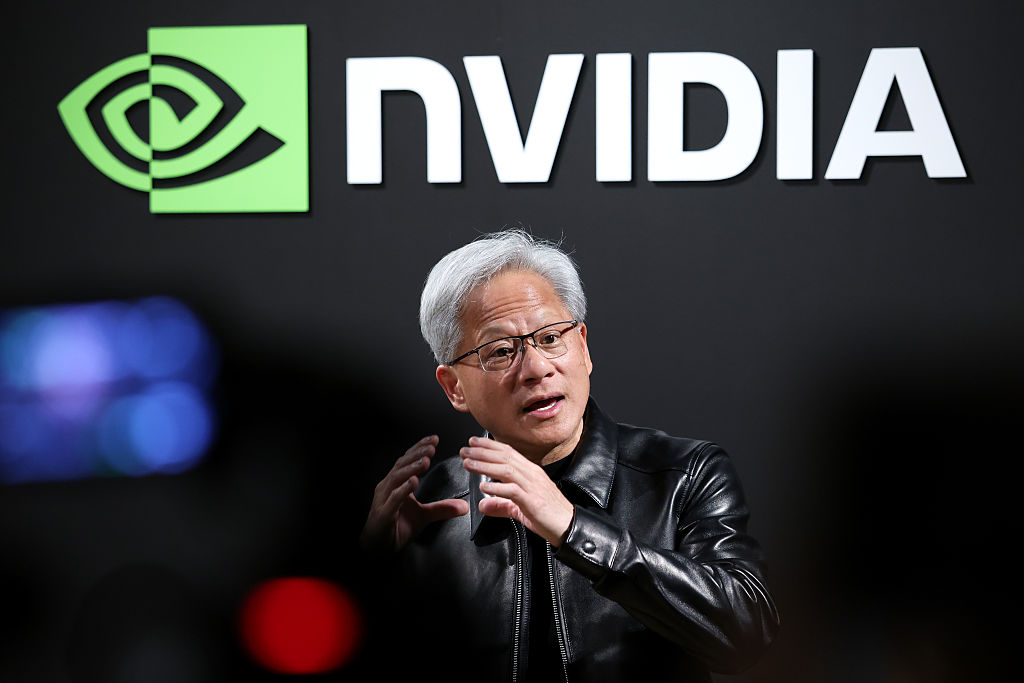
Nvidia has reportedly agreed to buy popular AI library Hugging Face for $12.9 billion. The deal is partly a hedge against an emerging threat: AI companies which consume enormous quantities of Nvidia hardware are increasingly developing chips of their own. In a future where AI becomes centralized in a small group of players with their own chips, those companies could demand lower prices from Nvidia or bypass it altogether.
Hugging Face, an online hub where developers share open AI models and datasets, gives Nvidia a stake in an alternative future, where downloadable AI models allow startups and governments to build systems of their own. Few would have the scale to develop custom chips. (Nvidia and Hugging Face did not respond for comment.) With roughly 85% of the AI chip market, Nvidia’s share has only one way to go. But a smaller slice of a much larger market could still mean more sales, says Umesh Padval, a Managing Partner at Seligman Ventures.
It successfully lobbied Washington to loosen restrictions on selling its chips to China, which leads in open AI development. More recently, it struck a $6 billion deal with Poolside, to develop an American open alternative. In July, Nvidia helped lead an open letter defending open-source AI and urging Washington not to restrict it.
Meanwhile, Google now exclusively uses its custom TPU chips to train its Gemini AI models. In August, Anthropic hired, Amir Salek, a former TPU team-lead at Google to spearhead a new in-house chip division. The same month, OpenAI shared the first results from its custom chip, Jalapeño.
SemiAnalysis, the firm which conducted tests on OpenAI’s chip, said it beat “every Nvidia, AMD, and Google chip we have been able to test.” “There’s kind of this two-way strategic battle,” says Richard Clode, a technology portfolio manager at Janus Henderson. And then vice versa, those hyperscalers don’t want to be completely reliant on just one compute provider.” Nvidia’s 75% margin means that other firms’ in-house chips do not need to match its performance to save large customers money. Custom silicon has other benefits, too.
Nvidia has previously given smaller cloud providers early access to its newest chips, ensuring that the largest players do not dominate supply. Developing chips in-house reduces exposure to those allocations, Clode says, while allowing AI companies to tailor hardware to their specific workloads. AI companies are not developing these chips completely alone.
Extract — continue reading at the source.