They were regarded as mothers and homemakers. But the Wulz sisters were determined to create their own destiny. They chose photography as a way of being independent – and to show through their images that women could live that way.” Muzzarelli is the curator of Wanda and Marion Wulz: Avant-Garde Photography in 20th Century Italy, a show about to open at the Estorick Collection in London.
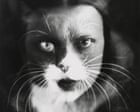
The Wulz sisters experimented with blended and altered images more than half a century before Photoshop was invented. The most famous image to emerge from their studio was I + Cat, a self-portrait of Wanda superimposed on the face of the family pet. But the show aims to cast Marion in a new light, showing that she was no mere assistant, but rather equal to her sister in terms of photography, as they championed feminism in fascist Italy, keeping the idea of women’s emancipation alive at a time of unbridled patriarchal ideology.
Wanda, born in Trieste in 1903, was a promising dancer and musician; Marion, two years her junior, had been to art school and wanted to paint. But after the pair inherited their father’s photographic studio, which had in turn been founded by his father, they realised it represented their best path to an autonomous future. Women who were artists, poets, writers and actors sat for the sisters.
Among them were painter Leonor Fini and Olympic fencing champion Irene Camber. In 1932, Wanda exhibited six works, including I + Cat in the National Exhibition of Futurist Photography. The show was staged to mark 10 years since the fascist revolution but, contends Muzzarelli, Wanda was never interested in that .
She just wanted to show, as the only woman taking part, that she was every bit as capable as the men. Her technique for I + Cat, which superimposed one negative on top of another, was invented in the mid-19th century, but Wanda used it in a new way, making one face hers and the other that of Mucincina, the family cat. Both negatives will be in the London show, as well as the finished work.
The exhibition was Wanda’s only foray into futurism, but the years that followed were the sisters’ heyday. They continued to live in the apartment block in central Trieste in which they had been born, and where their studio was based. It became the centre of an informal female salon.
Extract — continue reading at the source.