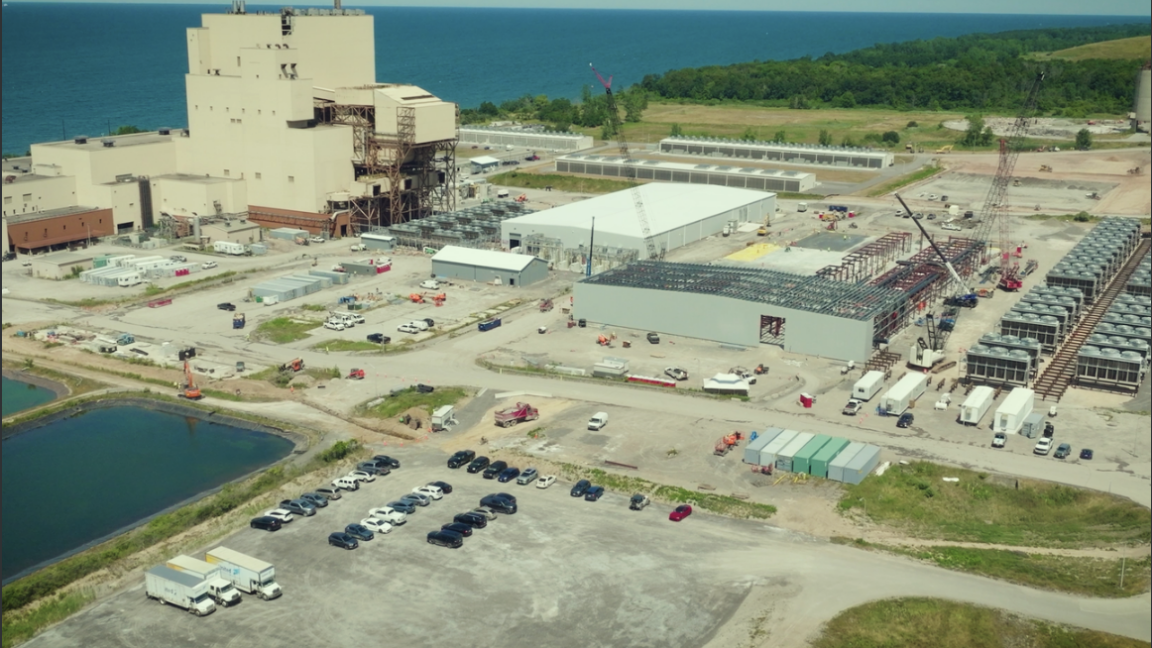
In early June, a fire broke out in a still-unfinished building at the Lake Mariner data center in Somerset, New York, exposing just how little the local fire department knew about what it was walking into. Firefighters reportedly found no working alarm, no suppression system, and three dead hydrants; the safety documents they’re legally entitled to see reportedly burned up in the blaze. Steve Matisz, chief of the Barker Fire Department, said his crew went into the building “kind of blind,” facing heavy black smoke from chemicals they couldn’t identify because the safety sheets meant to inform them had apparently burned up.
He wasn’t sure what to think about the claim that the safety sheets had burned in the fire. The site is a former coal mine on Lake Ontario. The $3.2 billion campus is one of the largest AI data center buildouts in New York, and it has many stakeholders.
A company called TeraWulf owns and operates the data center on land it leases from a company owned by its own CEO; Fluidstack, a UK-based AI company, will run the center; Google holds warrants for a future 14 percent equity stake and has agreed to guarantee Fluidstack’s lease payments; and Anthropic is among the AI companies whose compute demand the facility exists to serve. TeraWulf eventually told me that it was responsible “for operational safety and emergency preparedness at the Lake Mariner Data Campus, including required safety systems and coordinating with local first responders.” Kerri Langlais, the company’s chief strategy officer, added that the company had implemented Knox boxes, additional hydrants, and safety data sheet “go-bags” following an after-action review with the county. When I reached Matisz in mid-August, he said that a Knox box representative had visited the site and had a meeting scheduled to build out that program.
On hydrants, he was more direct: “As far as I know, [they] are still dry… I haven’t seen work done on them.”
Extract — continue reading at the source.