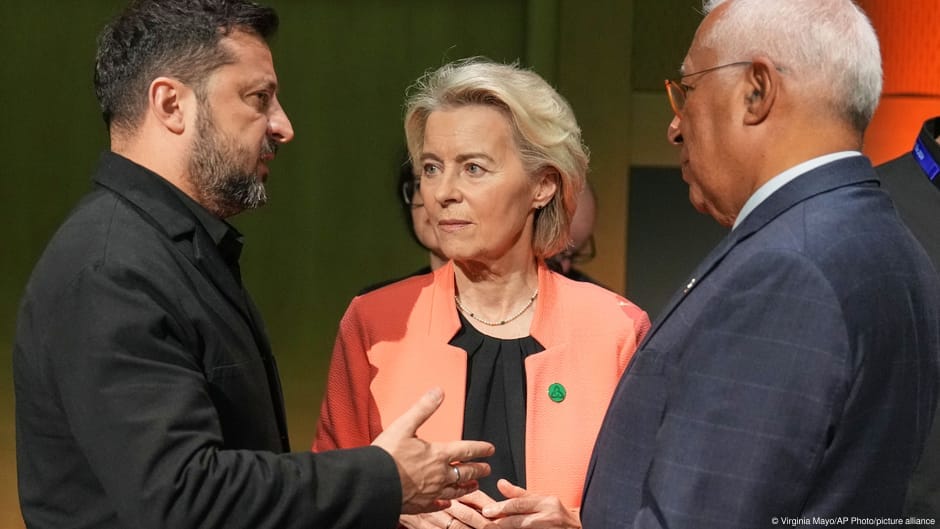
European leaders have so far found compromises in response to many of US President Donald Trump's demands. But they were surprised to hear Trump say that he raised Europe's security framework with Russian officials. "It's going to be a big agreement and it's going to involve more than Ukraine," Trump said after meeting Russian presidential envoy Kirill Dmitriev at the White House last week.
He said that deal might include all of Europe. But what he meant by "all of Europe" was not clear. US envoy Jared Kushner also wrote that Europe and Russia had struggled to establish a sustainable security framework for more than 30 years.
Kushner said he was looking at a "broader" European architecture before he flew to meet with Russian and Ukrainian representatives in Abu Dhabi. European diplomats immediately pushed back on Washington's approach to secure a peace deal in Ukraine because they feared that a peace settlement could restore Russia's sphere of influence and undermine NATO. "We already have European security architecture in place.
NATO and the European Union both have their respective roles. We must make sure Ukraine is integrated into this architecture," said Kaja Kallas, the European Union's foreign policy chief. Russia made clear during talks in Abu Dhabi earlier this week that they were keen to discuss a broader European security framework before tackling the specifics of the war.
"Phrases about the European security architecture are certainly Russian talking points and not only talking points but, to a degree, part of a media propaganda effort that Russia makes to frame the war as it wishes to frame the war," said Michael Kimmage, a historian of the Cold War. Russian leaders, including Vladimir Putin, have long alleged that the US and NATO repeatedly violated pledges they made in the early 1990s not to expand the alliance into the former Soviet bloc. They have seen NATO's enlargement during this period as having put them in a humiliating position in which they could do very little.
At the same time, in the 1990s, the European project saw the birth of the European Union, the single market that ensured the free movement of goods and people across member states, the Schengen agreement for border-free travel, and the euro. The core idea was to extend peace across the continent. "Europe can mean so many things, but the European project was not designed for war.
Extract — continue reading at the source.