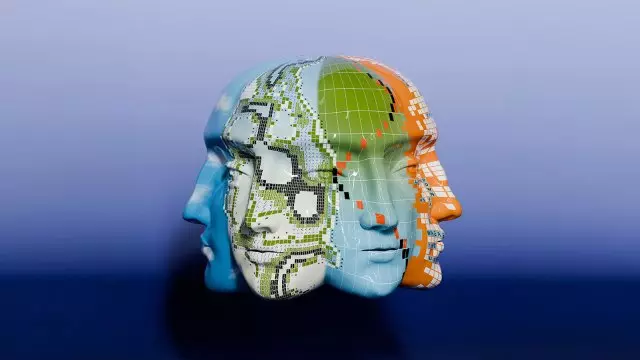
This is today's edition of The Download, our weekday newsletter that provides a daily dose of what's going on in the world of technology. A new AI tool can guess what you’re looking at just by analyzing your brain scans—and recreate that image with remarkable precision. It can go the other way too, and predict a person’s brain activity based on what they’re looking at.
The researchers hope the “mindreading” tool could reveal more about how the brain works. It could also help locked-in people communicate and, incredibly, maybe even allow scientists to recreate the content of dreams. But other scientists warn that a similar approach could reveal people’s inner thoughts and mental imagery, potentially without their consent.
Here’s how AI is getting closer to reading images from the brain. Large, utility-scale battery installations are coming online quickly around the world. But there’s been pushback from communities, especially population-dense ones like NYC, because of concerns about relatively rare but high-profile battery fires.
Faced with those obstacles, some startups are getting creative, finding ways to use relatively small batteries in unexpected places, from induction stovetops to food carts. By deploying these more consumer-focused batteries, the companies are helping people directly, cutting pollution or power bills. These units are small on their own, but could add up to a lot of capacity.
And as batteries get cheaper, they could find their way into more corners of our lives. Here’s why batteries could help ease pressure on the grid. This story is from The Spark, our weekly climate tech newsletter. .
I’ve combed the internet to find you today’s most fun/important/scary/fascinating stories about technology. 1 The Pentagon has tapped Elon Musk to co-lead a future warfare projectProject Meridian will examine battlefields from underground to space. (CNBC)+ Musk will be joined by Palmer Luckey and Newt Gingrich (Guardian)+ The Pentagon also has a new autonomous warfare command. ( $)+ Ukraine’s new military robot travels across land and water. (Newsweek)+ The Pentagon wants an AI-powered lie detector. (MIT Technology Review) 2 Chinese hackers impersonated ex-US officials to spy on American AIThe email campaign also impersonated an Anthropic employee. (CNN)+ They targeted experts in military AI and export controls. ( $)+ OpenAI has accused China’s Moonshot AI of copying its models. (CNBC)+ China’s DeepSeek and Huawei have teamed up on chip software. (NYT $)+ Could China win the AI race? (MIT Technology Review) 3 After months of delays, Google has unveiled Gemini 4 ArgonThe new model aims to re-establish Google at the frontier of AI. ( $)+ Google says the model beats OpenAI’s Astra on many benchmarks. (VB)+ But some Google employees are skeptical about its coding performance. (Bloomberg $)+ Google is testing paying publishers for AI search results. (Information $) 4 The FTC is investigating OpenAI, Anthropic, and other AI labsThe regulator will probe potential consumer harms from AI agents. (Axios)+ It’s the first official US enforcement action on rogue agents. (Guardian)+ Who’s liable when AI agents go rogue? (MIT Technology Review) 5 Scientists could soon create “mirror life” that evades nature’s defensesBiologists in Singapore have called for new safeguards. (Economist $)+ Synthetic mirror life could threaten life on Earth. (MIT Technology Review) 6 California has legalized balcony solar for renters and homeownersThe move could give plug-in solar a huge new market. (LA Times $)+ The balcony solar boom is coming to the US. (MIT Technology Review) 7 Apple is planning a major push into the smart-home market this monthThe new hub is expected to launch on October 13. (Bloomberg $)+ New CEO John Ternus wants more product releases and fewer staff. (Quartz) 8 A new implant network uses body tissue as its wiringIt could connect tiny sensors and medical devices. (Ars Technica) 9 A modified parasite drug could be a breakthrough for endometriosisIt targets disease-causing cells and reduced lesions in mice. (Nature) 10 Singapore has a new answer to low birth rates: a government dating appA Nobel-winning algorithm matches participants to one date at a time. (BBC) —Logitech CEO Hanneke Faber tells the Wall Street Journal that she’s scoured the globe for chips amid an AI-driven shortage, which she says won't ease for 12 to 18 months. As asteroid 2024 YR4 hurtled toward Earth, astronomers determined that this massive rock posed a higher risk of impact than any object of its size in recorded history. Then, just as quickly as history was made, experts declared that the danger had passed.
Extract — continue reading at the source.