Which, in your opinion, is the worst current cultural trend: social media influencers; unregulated wellness practitioners; macho manosphere posturers; psychedelic bores; cultural appropriators? The good news is that, with Octavio Rettig, the central character in Kimon de Greef’s The Ego Trip, you don’t have to choose between them. He’s all five wrapped into one objectionable package, and so much more besides.
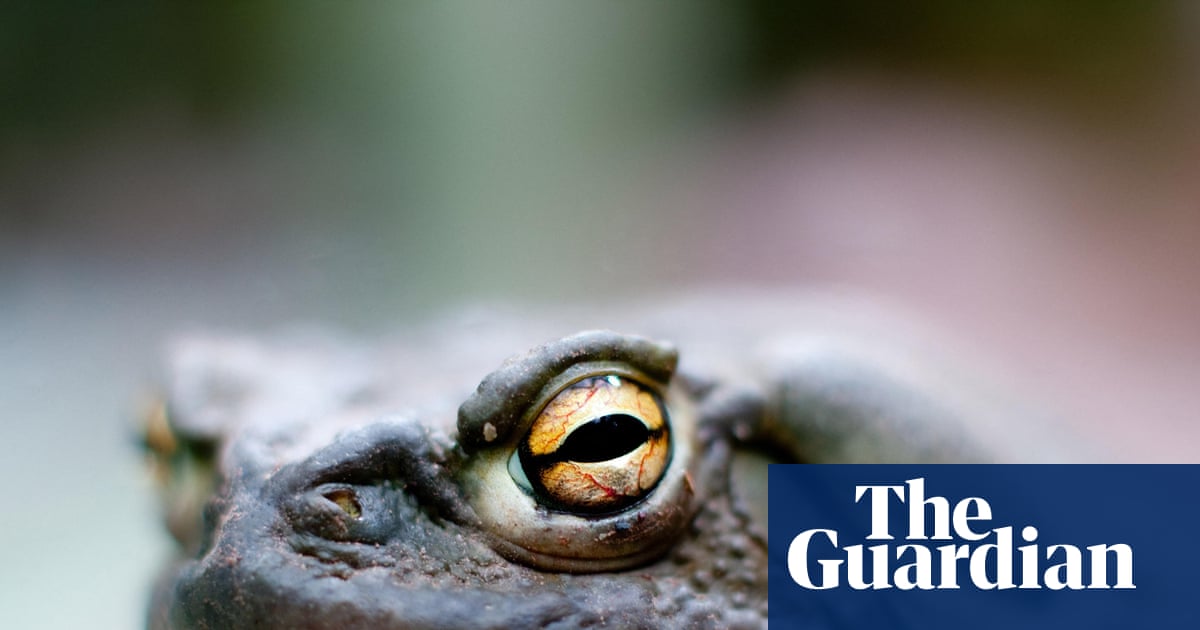
The tale begins with the Sonoran desert toad, an improbable amphibian that spends most of its life hiding underground in the baking badlands along the Mexico-Arizona border, and has done so blamelessly for millions of years. Whenever it rains, the toads emerge from their hiding places to mate, laying strings of eggs wherever water has pooled. There have long been fanciful tales of hippies getting high by licking toads, but these ones are the real deal: the world’s only known psychoactive animal.
In the early 1980s, humans discovered that the toad’s poison glands secrete a venom that contains, among other chemicals, 5-MeO-DMT, a potent hallucinogen also known as the “God molecule”. The first known user squirted the glands of a toad that his dog caught on to the windscreen of his Chevy Sport, where the substance dried and he smoked it. He wrote a manual describing “an overload of thoughts and perception, brief collapse of the ego, and loss of the space-time continuum”.
The prospect enticed other users, and those included, two decades later, Rettig. A troubled young man from Mexico, Rettig started smoking dried toad venom in the first decade of this century, and claims it helped him kick his crack cocaine habit. That was a time when popular interest in psychedelics was re-emerging after the long post-1960s winter, and many medical practitioners were wondering if these mind-altering chemicals couldn’t help patients who weren’t responding to their traditional treatments.
Much of the focus had been on LSD, psilocybin and ketamine, but 5-MeO-DMT provided a whole new level of experience. The shatteringly powerful effect of the chemical was said to replicate the effect of years of therapy in just half an hour, which is clearly an attractive prospect for a psychedelic entrepreneur keen to maximise patient throughput. Rettig was no pioneer in his enthusiasm for smoking toad.
Instead, his contribution was to create a tradition for this new hallucinogen, thus giving it the kind of mystical authenticity that peyote, morning glory and ayahuasca gain among devotees thanks to their association with ancient Native American rituals. The Seri people, who live between the Sonoran Desert and the Gulf of California, have suffered terribly both under the Spanish colony of Mexico, and the independent republic. By the time Rettig visited in 2011, there were just a few hundred of them left, living in squalid and trash-strewn villages, predated upon by drug cartels and plagued by addiction.
Extract — continue reading at the source.