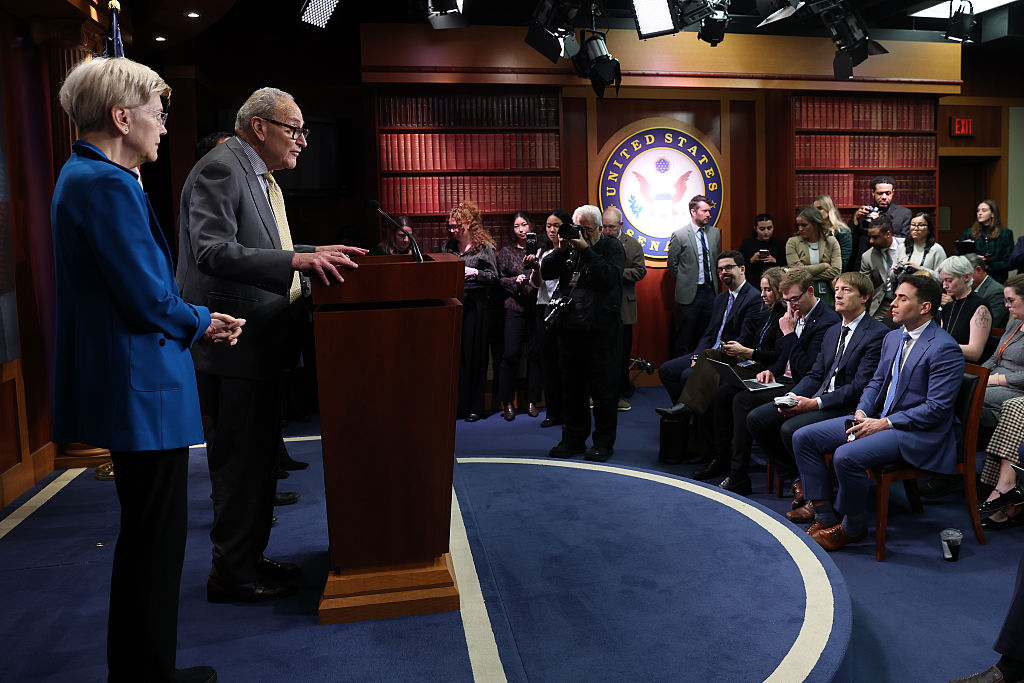
Both Senator Jon Husted (R-Ohio) and Senator Martin Heinrich (D-New Mexico) went to the podium on the Senate floor last week with a similar message: AI labs should pay for the energy costs associated with their ballooning data-center footprint, rather than everyday Americans. But when Husted requested a speedy passage of the Ratepayer Protection Act—a bill that would have required states to consider forcing companies that consume a lot of energy to pay for the related costs—Heinrich blocked the move. He said the legislation was inadequate because it relied on voluntary commitments from states and proposed his own bill as an alternative.
He had another incentive to block Husted’s request: The Ratepayer Protection Act, which earlier this month passed the House 417-3, would have given the Ohio senator a victory amid a competitive reelection campaign. Husted has faced an onslaught of negative ads over the role he played as lieutenant governor in expanding data centers across the state. That kind of partisan arm wrestling is likely just a prelude to the bigger fights ahead if Congress gets serious about passing AI legislation.
Democrats, and some Republicans, have proposed hundreds of AI-related bills as Americans become increasingly worried about the ways AI companies may disrupt the job market, raise their energy bills, and even wipe out humanity. Lawmakers’ pro-regulation rhetoric in Washington reached new heights this month after the resignation of former Anthropic researcher Jacob Coxon gained worldwide attention for posting on X that frontier AI labs were “gambling with our lives.” OpenAI CEO Sam Altman and Anthropic CEO Dario Amodei responded with calls for an industry slowdown and government intervention to coordinate global safety standards. With less than two months before midterms, some members of Congress are feverishly introducing even more AI bills, including at least seven since Coxon’s resignation alone.
Other lawmakers are urging their colleagues and congressional leadership to quickly bring measures already on the table for a vote. Democrats, meanwhile, have taken aim at the Trump administration, urging Trump to discuss AI safety with Chinese President Xi Jinping. House Speaker Mike Johnson (R-Louisiana ) has rebuffed some Democrats’ calls to end their recess early to focus on an AI bill.
Meanwhile, House Energy and Commerce Committee Chairman Brett Guthrie (R–Kentucky), whose committee would review many of the proposed bills, told Politico at an event that the group probably wouldn’t advance a major bill until next year. But even with a longer timeline, lawmakers may struggle to turn their rhetoric into action. Lawmakers will have to overcome deep differences in their views about how dangerous superintelligent AI systems are to the American people and which AI-related risks merit the most attention.
Even if lawmakers coalesce around one AI problem, it may be hard for them to settle on the right mitigation strategy quickly enough to keep up with the pace of AI advancements. And if Democrats take over even one chamber after the midterms next month, legislative debates could end up being even more mired in partisan disputes. They would still have to negotiate with Trump, who has largely dismissed the most catastrophic risks of AI as conspiratorial and resisted calls for more regulation.
Extract — continue reading at the source.