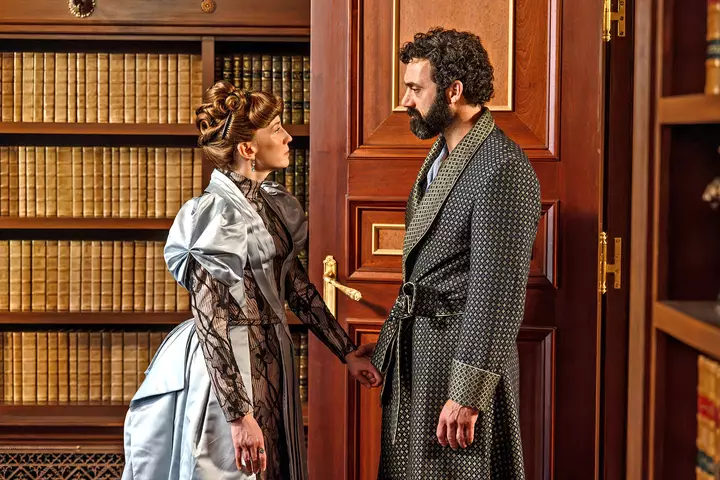
When “The Gilded Age” premiered in 2022, the reception was warm enough. The HBO costume drama marked creator Julian Fellowes’ highly anticipated follow-up to “Downton Abbey,” bringing his eye for aristocratic quirks across the Atlantic and delivering the requisite dose of upstairs-downstairs intrigue. But the low-stakes pleasures of selecting silverware and competing opera houses could be a double-edged sword.
The series was always enjoyable, but it wasn’t must-see TV. Then, as its third season rolled out last year, “The Gilded Age” experienced the kind of reversal that could be a storyline on the show, where fortunes are made and lost overnight as America invents itself on the fly. First came the memes, dubbing a railroad tycoon “Train Daddy” and an enterprising inventor “Clock Twink.” (In another show of cultural soft power, the cast of “The Real Housewives: Ultimate Girls Trip” threw a “The Gilded Age”-themed costume party in the most recent season finale.) Then the ratings, which confirmed the phenomenon wasn’t an online mirage: Every episode in the season’s second half set viewership records, culminating in a finale that earned 5 million viewers in three days — an 88% increase over the premiere.
Finally, Season 3 received eight Emmy nominations, more than both its predecessors combined. But nobody knows “The Gilded Age” has hit the big time better than the people who make it. Morgan Spector, who plays robber baron George Russell (aka Train Daddy), agrees: “It felt like we broke containment.” And Denée Benton, whose budding writer Peggy Scott acts as an entry point into New York’s prosperous Black elite, still sounds astonished.
But “The Gilded Age” returns for Season 4 on Nov. 1 a conquering hero — and a testament to what can happen when a story gets the time and space to come into its own. Season 4 builds on a strong foundation to escalate the action further. Its mix of escapist fantasy and emotional substance has never felt more dialed in, nor the political relevance of staggering income inequality and meddlesome tycoons more pronounced.
A subplot about anti-monopoly legislation will play out in the shadow of HBO’s assimilation into the new Skydance Corp., the result of a merger that faced a challenge on antitrust grounds from multiple state attorneys general. The echo isn’t intentional, but not a coincidence either — it’s proof of how deeply “The Gilded Age” has tapped into the zeitgeist. It was first announced at NBC in 2018, though the news followed extended speculation that Fellowes’ next project would be a “Downton” prequel centering “dollar princesses” like the series’ matriarch Cora Crowley (Elizabeth McGovern) — the daughters of American new money who married cash-strapped European aristocrats in a neat exchange of riches for prestige. (“The Gilded Age” became a stand-alone story, but features a dollar princess of its own in George’s daughter, Gladys, played by Taissa Farmiga, who marries a duke and moves to England in Season 3.) The nascent series then moved to HBO along with executive Bob Greenblatt, whom Fellowes credits for getting the show through protracted development and on the air.
We both wrote it all and batted our ideas back and forth.” Warfield, for her part, is passionate about the resulting blend, which mixes life-or-death struggles with minor squabbles and humanizes the insular world of the upper crust. Even as a tightly knit cast of largely New York theater actors — “The Gilded Age” may boast more Tonys per capita than any call sheet in history — cohered into an ensemble, the show remained a cult favorite through Season 2. HBO even trimmed the budget for Season 3 — it was reportedly $100 million for Season 1 — to make the math work and keep the show on the air.
Extract — continue reading at the source.