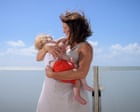
My daughter Elsie has beautiful curls – blond like a little Botticelli cherub’s, hair that someone dark like me could only ever dream of. She laughs a lot, has a cheeky sense of humour and soaks in all the sounds around her – rustling leaves, the sea, a dog barking, children playing around a pool, me impersonating the alarm clock every morning, me impersonating monkeys. Indeed, me impersonating any animal.
Sound is important for Elsie because she has a visual impairment and, while we know she has some peripheral vision, is legally classed as blind. As a result, she uses her tongue to check her environment. When she’s excited it sticks out, tasting the air around her, licking anyone close, sensing space.
And when she likes the taste of something she keeps her tongue out until you give her more. This is how we know she likes lollies. She makes new sounds every day.
If she suddenly realises she’s on her own, she’ll soon make her signature “Ah, ah!” sound until she’s got company again. But at 18 months she is behind in her development and we don’t yet know if she will be verbal, so for now we are learning to understand her in the ways she chooses to show us. Elsie was born with a rare neurological condition – so rare that there are fewer than 100 known cases in the world.
It is a mutation in the RARB (retinoic acid receptor beta) gene, which, when working properly, helps control vitamin A signalling, vital for the proper embryonic development of the eyes, brain, lungs and spinal cord. It is de novo (meaning it is not hereditary), and the effects are progressive. She spent most of the first eight months of her life living in hospitals because of one terrifying symptom.
She would stop breathing every time she got upset, turning blue, sometimes for two to three minutes at a time. At its worst, this was happening multiple times a day. For each episode she would need emergency “bagging”, with a mask placed on her face so air could be forced into her lungs from a hand-squeezed bag.
Extract — continue reading at the source.


