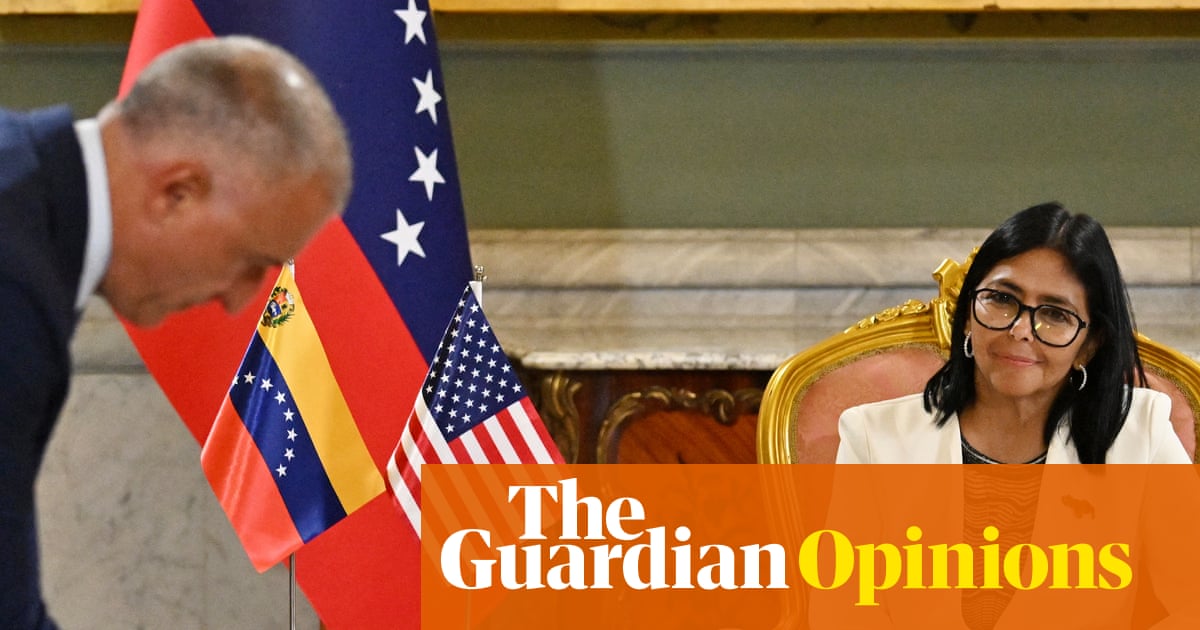
Imperialism does not require a flag to be planted or a governor dispatched. It can be a powerful nation deciding who governs a smaller, weaker country, and on what terms and for whose benefit its resources will be developed. Donald Trump’s kidnapping of Venezuela’s Nicolás Maduro, putting his deputy – Delcy Rodríguez – in his place as president, and then her signing a deal handing a fifth of the country’s proven oil reserves to the US, amount to a modern version of 19th-century gunboat diplomacy.
Regime change supplied America’s commercial concession. This won’t bother Mr Trump. The US president has oversold his neocolonial spoils.
The additional production Venezuela is supposed to bring online might bring down oil prices eventually, but not anytime soon. Crucially, what Mr Trump calls “the biggest oil deal in history” won’t cause the price at the pump to fall before November’s midterms. When so many American voters are struggling to pay energy bills, it’s hard to see how unrealised Orinoco Belt riches are going to help Republican candidates.
The US president also promotes the idea that he is transforming the US’s industrial landscape through fossil fuels. Although the Venezuela oil grab might be highly profitable for a few selected companies, the windfall is dwarfed by the size of the US economy. Mr Trump is not getting cheap energy but a spectacle of American power.
That may be enough for him. Before Mr Maduro was captured, Mr Trump had decided that Venezuela’s oil belonged to the US. The Venezuelan strongman was offered exile if he gave Washington want it wanted.
When he dithered, a US armada assembled off Venezuela’s coast. Yet Mr Trump did not replace Mr Maduro with María Corina Machado from the democratic opposition. He instead backed the authoritarian regime that could secure the oilfields from ambitious army generals and spare the costs of occupation.
Extract — continue reading at the source.