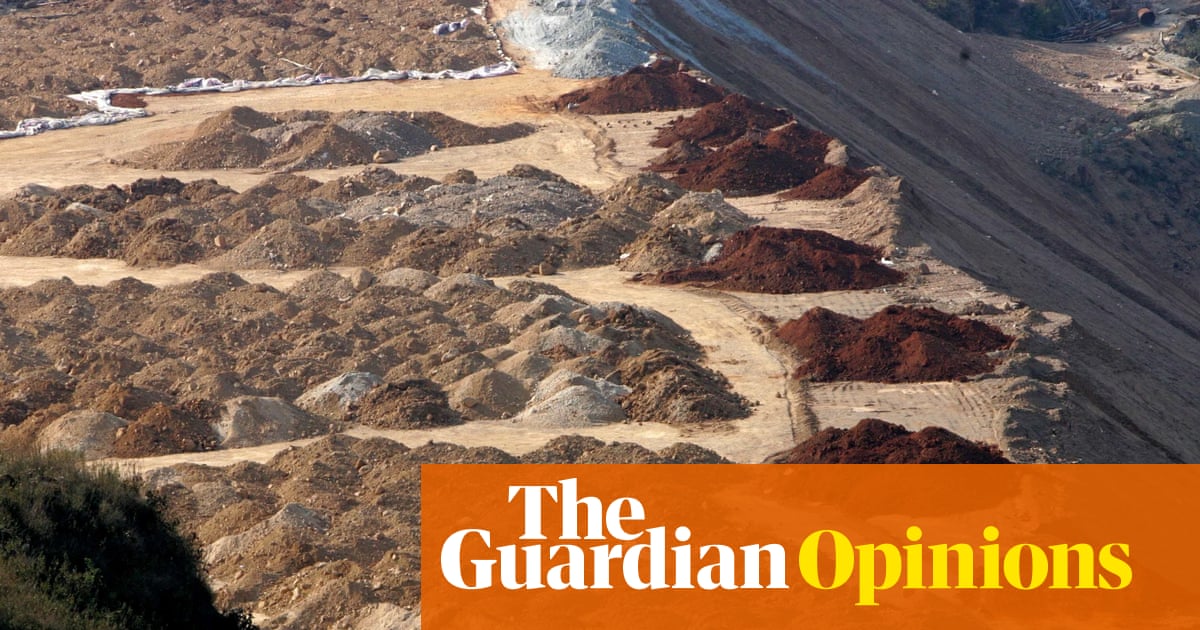
In 2010, China blocked exports of key rare earths to Japan in a row over disputed islands in the East China Sea. The critical minerals are essential to everything from advanced weaponry and iPhones to electric vehicle batteries and wind turbines, so the rest of the world took note. But it didn’t take much action.
China still accounts for about 70% of rare-earth mining globally and 90% of separation and processing. Then, last year, Beijing forced Donald Trump to back away from his trade war – not with its retaliatory tariffs, but the curbing of rare-earth exports. A scramble for new supplies began in earnest.
The year-long trade truce is due to expire in November. The price of erbium, an element essential to communications infrastructure, has already jumped because of fears that export controls will soon be renewed. The 17 metals known as rare earths are far from rare; their name refers to the low concentrations in which they are found.
Extraction and processing are costly, complex and often dirty, while returns are low. That’s why the US – which dominated the industry in the 1980s – and others outsourced production to China. Any plan to diversify supply chains must somehow build in predictable demand and pricing to succeed.
Even now, US rare earths are reportedly flowing to Asia because of the lack of domestic demand. While “Big shovel” is becoming the new driver of geopolitics, rare earths are a tiny slice of the critical minerals market – worth less than $6bn globally last year. Efforts to diversify supply chains had already begun.
But the US-China standoff accelerated them. Last autumn, the Pentagon became the single largest investor in the US firm MP Minerals. In February, the Trump administration announced that it would spend $12bn to create a critical minerals reserve, focusing initially on rare earths.
Extract — continue reading at the source.