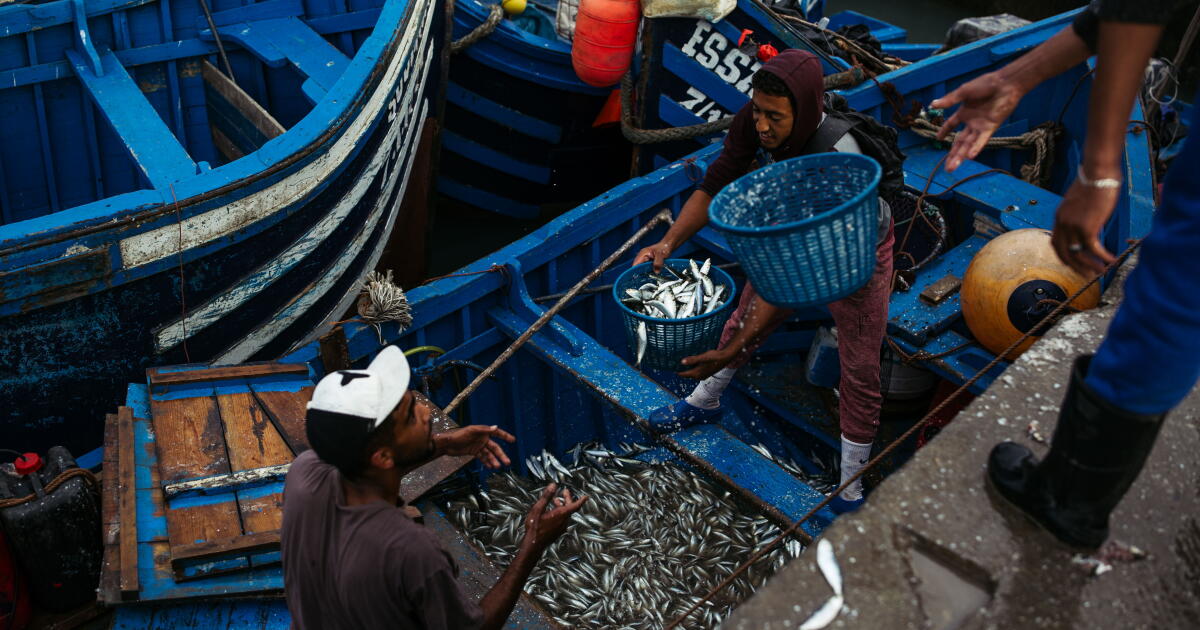
As of 2022, more than half of the seafood eaten worldwide was farm-raised rather than caught at sea, a fact that has been praised as evidence that fish farming can meet a growing demand for seafood while slowing the collapse of the oceans. But the unbridled embrace of aquaculture as a sustainable answer to feeding the planet ignores some very real costs. The most popular types of farmed seafood — salmon, shrimp, trout, seabass, seabream — are fed “fishmeal,” a protein-rich powder or pellet made from the very kinds of wild fish that aquaculture is thought to save.
In fact, fishmeal is fed to two-thirds of global farmed fish. Before they reach market, some farm-raised salmon eat more than six times their weight in wild-caught fish. With thousands of fish farms worldwide, aquaculture provides millions of people with year-round access to affordable protein.
Fish farming is also a crucial source of jobs, especially for women in India. But a wide-reaching investigation by The Outlaw Ocean Project, a nonprofit news organization based in Washington, D.C., has found that the aquaculture industry’s answer to worries about the world’s oceans — “grow more fish so we can catch less” — is often making the very problem it hoped to solve worse and harming the people it was meant to help. The business of fishmeal — often out of public view — can involve using forced labor, poisoning communities, and eradicating the livelihoods of local fishermen.
Fishmeal production has led to chronic chemical exposure, violent protests — typically spurred by the stench from fishmeal factories — and escalating transnational tensions as countries compete for catch. That price is paid primarily by the poorer countries where the main ingredient of fishmeal is harvested and processed. The Outlaw Ocean Project mapped roughly the entire global fishmeal industry, including more than 1,400 fishmeal factories across 64 countries.
The effort involved dozens of journalists from over 15 countries who visited factories and farms and boarded fishmeal ships at sea. Using certification documents, ownership records, trade data, audits and government lists of licensed fishing ships, the reporting team was able to connect ships to the plants they supplied and pin down which species were being targeted for fishmeal. This allowed them to determine which fishmeal plants were connected to ships engaged in illegal or unsustainable fishing.
Then, they traced the fishmeal to the fish farm and to where the seafood was sold by retailers. The investigation found that more than 2,400 ships tied to fishmeal production, operating in the waters of at least 30 countries. It found that most of those ships do not fully comply with the Global Charter for Fisheries Transparency, a guide created by leading ocean-focused civil society groups detailing accountability standards for industrial fishing fleets.
Extract — continue reading at the source.