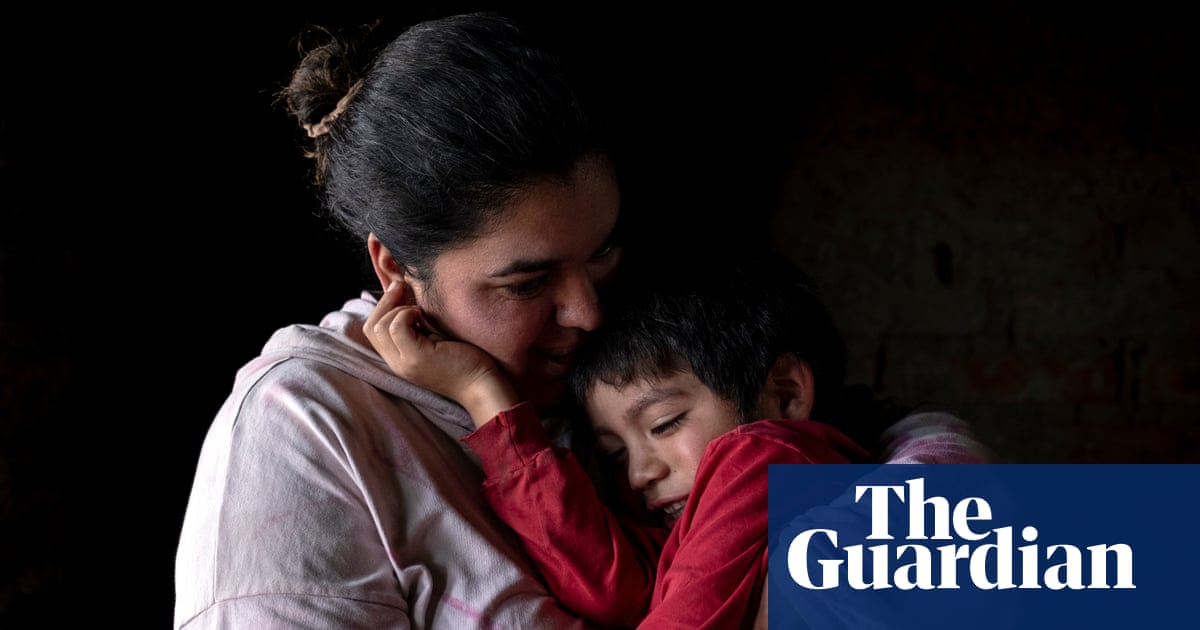
In Allen, a small town in Argentine Patagonia, many people living on the same street ended up falling ill. For some, it was severe migraines, nausea or skin irritation. For others, cancers, congenital abnormalities, miscarriages or stillbirth seemed to affect foetuses or children.
People say it all started 13 years ago – when a well was drilled near their homes to extract gas and oil. Calle Ciega 10 [Dead-end Street 10] lies on the eastern edge of Vaca Muerta, a vital area for Argentina’s economy, home to the world’s second-largest reserve of shale gas and fourth-largest reserve of shale oil. The region has more than 2,600 active wells, including one on this small street where about 20 families live, most of them seasonal workers on fruit farms.
They kept losing their babies. Some were born with illnesses, or died shortly after birth,” says Roxana Valverde, who has lived in the area for nearly 30 years. Vaca Muerta covers more than 11,500 sq miles and spans four Argentine provinces.
Since 2012, under the government led by Cristina Kirchner, the area has been extracting gas and oil using fracking, a technique that injects water, sand and chemicals at high pressure to fracture rock and release trapped hydrocarbons. Now, under Javier Milei, the Argentine government is heavily reliant on Vaca Muerta’s gas and oil resources to help the country recover from years of economic crisis, and has opened the door to foreign companies to extract and export hydrocarbons. By the end of 2025, the all-time production record had been broken.
For the first time in the country’s history, crude oil overtook soya bean meal as its leading export, partly driven by European companies that invested in the Vaca Muerta region to find another option as well as Russian gas. According to a report from the NGO OpSur, 33% of the unconventional gas and 39% of the unconventional oil extracted in Vaca Muerta are controlled by the state-owned energy company YPF, while the rest is handled by foreign companies, including the US company Chevron, France’s TotalEnergies and the UK’s Shell. Fracking is a highly invasive technique that poses environmental risks and has been linked by numerous scientific studies to ecological harm and health issues for people living nearby, such as respiratory and skin conditions, cancer, congenital disabilities, miscarriages and pregnancy complications.
Calle Ciega 10 is in the countryside, and the families living there come from low-income backgrounds. The houses are small and dilapidated. Children play and ride bikes just a few metres from the well, while workers and a crane operate nearby.
Extract — continue reading at the source.