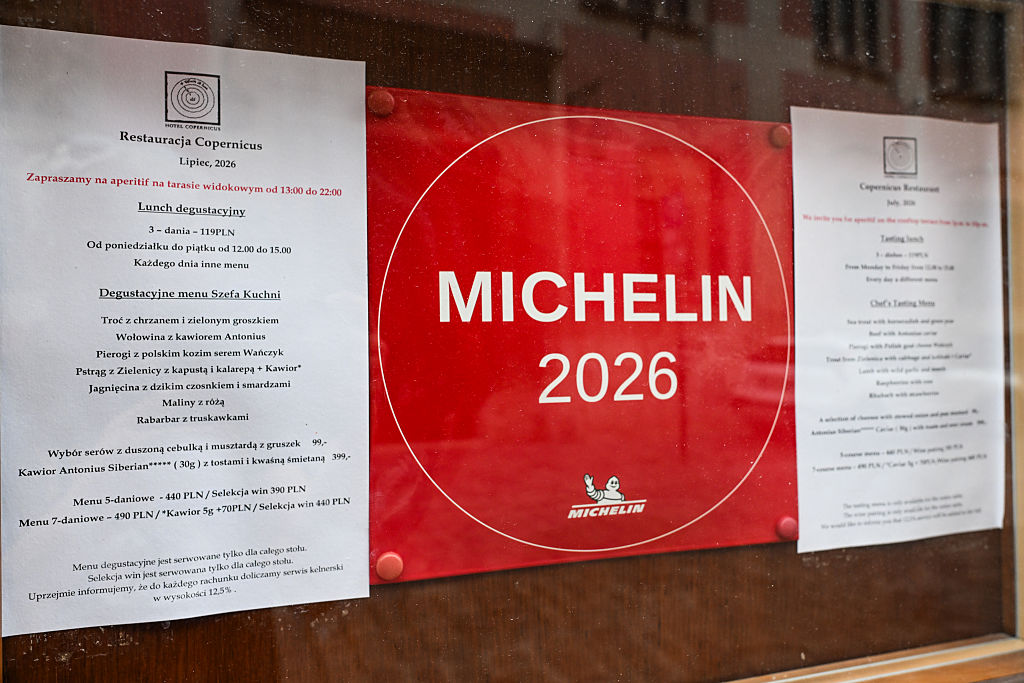
Two out of every five Michelin-starred restaurants close their doors within a few years of receiving the honor, a statistic so counterintuitive that it forces us to ask what, precisely, the star confers and what it destroys. A 2024 study by Daniel Sands, then of the UCL School of Management, tracked New York City's elite restaurants that had opened between 2000 and 2014 and earned a glowing review in The New York Times. Sands found that receiving a Michelin star significantly increased a restaurant’s likelihood of closing compared with equally acclaimed restaurants that never received one: 40% of Michelin-starred restaurants had shuttered by 2019, against roughly 20% of their unstarred but similarly lauded peers.
One reason: The arrival of the star and crimson plaque can alter the entire local food ecology around a restaurant. Suppliers and vendors, aware of a kitchen’s new status, often increase prices. Landlords like to raise rents.
Staff, suddenly more marketable, must be paid more to be retained. The kitchen, chasing the standard the star implies, tends to reach for costlier and rarer ingredients. Every plate becomes more expensive to produce, yet few diners can absorb the escalating cost of eating there.
That change can be lethal. Fine dining, by its nature, runs on razor-thin margins. Exclusive guest lists cap revenue, rare ingredients inflate costs, and a kitchen brigade requires constant, expensive supervision and training.
Consider what a plate costs at a typical three-star establishment: at Alain Ducasse au Plaza Athénée in Paris, Ducasse’s own three-star flagship, a single main course runs €80 to €135, and the tasting menu alone costs €260 to €360 per person, before wine, tax, or service—figures that hold across most three-star houses, where a full tasting menu routinely clears $400 to $600 a head once the bottle list is opened. Even at those prices, industry accounts suggest that margins remain thin once the true cost of labor, rare ingredients, and the theater of service is tallied. After all, the diner is paying as much for craft and spectacle as for food.
To keep the star, a restaurant must submit to a rigid, largely unwritten catalog of expectations—the wine list, the choreography of service, the physical opulence of the room—that locks owners and chefs into an inflexible, high-overhead model precisely when they most need room to adapt to shifting economics and changing appetites. Chefs who sought the star in pursuit of creativity often find themselves instead locked into an endless rat race simply to preserve the status quo. Michel Roux Jr closed Le Gavroche, London’s pioneering two-Michelin-starred institution, in January 2024 after 56 years, citing the toll of the grind and his need for a different balance of life and work.
Extract — continue reading at the source.