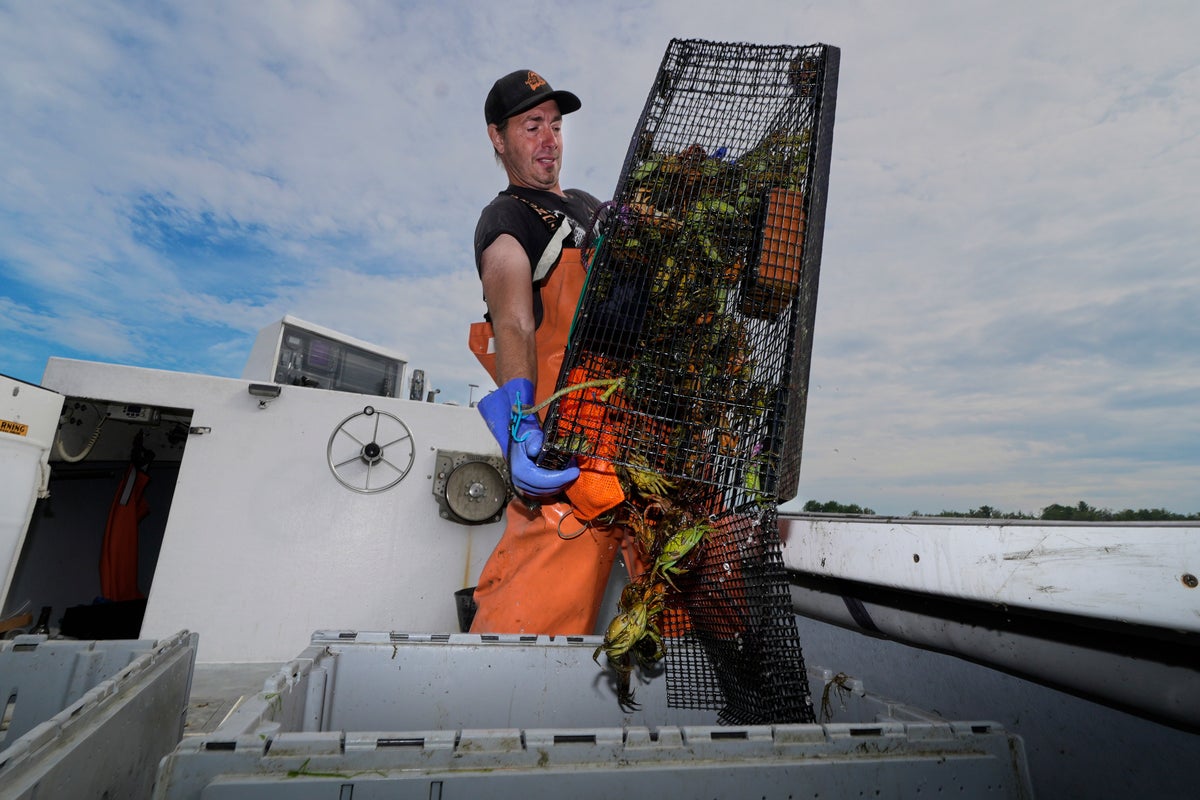
As morning fog cleared across Maine's York River, Mike Masi and his two interns worked alongside a dock, sorting through a pile of the region's most reviled crabs in search of a select few that might feature on a New England diner's plate. The goal is to identify invasive European green crabs preparing to shed their hard exteriors. In this molting phase, the crabs have a soft, pliable shell like leather, making them highly prized by chefs.
These soft-shell specimens command $3 each at market, compared to as little as 8 cents for hard-shell crabs, while their removal offers environmental relief to marine ecosystems. "Just about everyone hates them and we’re trying to turn them into a premium seafood product," said Masi, whose company, shell+claw, stands as the sole commercial cultivator of the species. The 45-year-old former marine science teacher belongs to an expanding movement across New England striving to curb the crabs' destructive footprint by creating commercial applications.
Other ventures are incorporating green crabs into pet snacks, fish sauce, and even a distilled line of green crab whiskey produced in New Hampshire. Transported from Europe in the ballast water of vessels centuries ago, the green crab, Carcinus maenas, now numbers in the tens of millions along the East Coast. The species regularly outcompetes native Atlantic rock crab and juvenile lobster, destroys eelgrass beds, and degrades salt marsh banks.
By feeding heavily on soft-shell clams, oysters, and mussels, the invasive crabs inflict tens of millions of dollars in losses on the regional shellfish sector annually. Chad Coffin, a clam fisherman from Maine, linked a dramatic drop in his harvest directly to their proliferation. According to state figures, soft-shell clam landings plummeted from 7.8 million meat pounds in 1978 to 1.3 million pounds in 2025.
Recognized by their green or brown carapaces and five distinctive spines along each eye, green crabs have prospered in warming coastal waters driven by climate change, primarily caused by the combustion of coal, oil, and gas. The creatures endure New England winters while thriving across varied habitats, consuming almost any food source, and reproducing rapidly; a female can release up to 185,000 eggs once or twice annually. Such attributes have turned them into one of the planet's most successful invasive species, spreading along the West Coast into Alaska, as well as reaching Australia, Argentina, Japan, and South Africa.
"They’re really pretty resilient little guys," said Carolyn Tepolt, an evolutionary biologist at Woods Hole Oceanographic Institution who has researched green crabs for two decades to determine how species adapt to novel environments. Despite a decade of grassroots efforts in the region, the push to control the invasion has barely altered crab numbers. Although more eateries and seafood vendors are offering green crabs, few local fishermen target them, and the supply chain lacks the infrastructure required to process and ship harvests to key markets.
Extract — continue reading at the source.