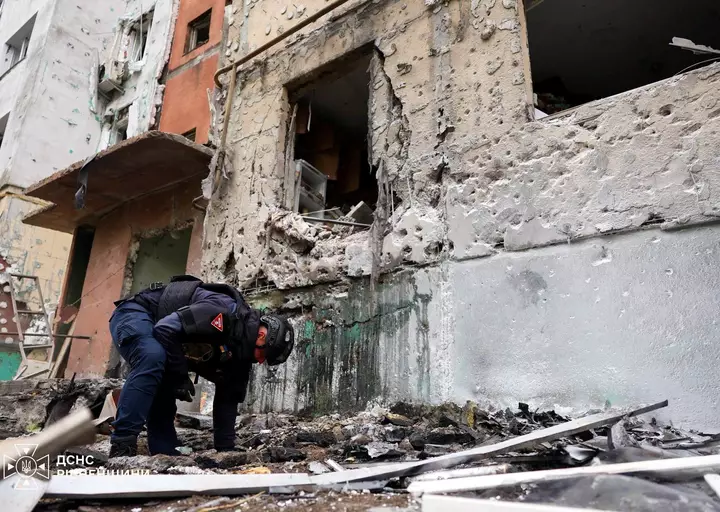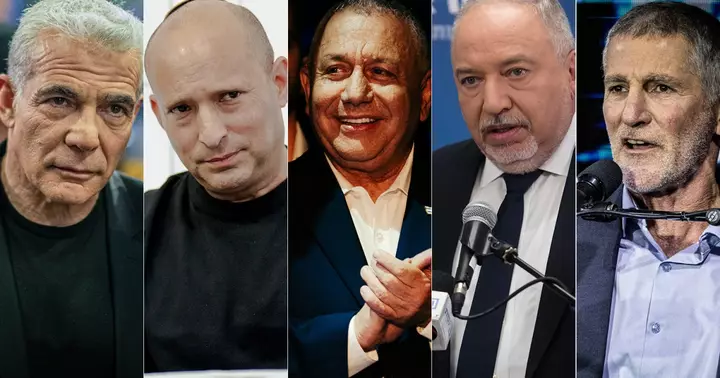
On September 26, five leading members of Israel’s self-styled Zionist opposition signed a non-aggression pact, seeking to oust incumbent Benjamin Netanyahu in the October 27 election. Gathered at the Tel Aviv home of opposition leader Yair Lapid were his co-runner, former Prime Minister Naftali Bennett, leader of Beyachad; former Chief of Staff Gadi Eisenkot, leader of the new Yashar party; Yair Golan, leader of the Democrats party; and Avigdor Liberman, head of the Yisrael Beiteinu party. In the statement of principles published after the hours-long meeting, the leaders said, “Despite ideological differences among us, the formation of a Zionist, statesmanlike government dedicated to repair and reconstruction is our shared overarching goal.” However, whether they offer meaningful change in substance as well as style, or which one of them might lead a future coalition, remains open to question.
With the exception of Golan, all take a fundamentally right-wing approach to Israel’s challenges. None is committed to establishing a Palestinian state, with only the Democrats acknowledging it as a distant, unspecified goal. None, Golan included, accepts that Israel’s war on Gaza amounts to genocide or that it has committed war crimes in killing more than 74,000 people there.
Nor has any questioned Israeli military actions against Lebanon, Syria, Yemen, Qatar and Iran, instead reserving criticism mostly for how those actions have allowed Israel to be perceived internationally. So, who are the main opposition figures and what do their parties stand for? Credited with originating the Dahiyeh Doctrine in 2008, involving “disproportionate force” and large-scale destruction of civilian infrastructure against groups such as Hezbollah and Hamas, Eisenkot served as Israeli military chief from 2015 to 2019.
The 66-year-old entered politics in 2022 with former Defence Minister Benny Gantz’s National Unity alliance and later joined the war cabinet assembled by Netanyahu after the Hamas-led attacks in southern Israel on October 7, 2023. In December that year, his son Gal, 25, and two nephews were killed while participating in the genocide in Gaza, losses commentators say have helped forge a connection with an electorate that has come to see itself as scarred by war. In June 2024, he quit the war cabinet alongside Gantz, accusing Netanyahu of lacking a strategy to end the war.
A year later, Eisenkot founded the centrist Yashar (Straight/Honest), advocating for professional government, military service for all – including ultra-Orthodox Jews – and a state commission of inquiry into the failings before October 7. While notoriously ambiguous on many of Israel’s foreign policy positions, he has been critical of the government’s reliance upon the United States in achieving its war aims, while not questioning those aims themselves. In June, he characterised Washington’s mediated negotiations with Tehran to end the war against Iran that Washington had embarked upon with Israel as “a deal taking shape far from here and far from Israeli interests” and, the same month, railed against US restrictions on Israel’s freedom of action in Lebanon.
Eisenkot has ruled out including the United Arab List, or Ra’am party, in a post-election coalition. In a September 26 Channel 12 interview, he said no Arab party would accept his conditions, including recognition of Israel as a Jewish state. Beyachad (Together) is the joint list announced in April 2026 by former Prime Ministers Naftali Bennett and Yair Lapid, who served for a combined 18 months in 2021-2022 between Netanyahu governments.
Extract — continue reading at the source.