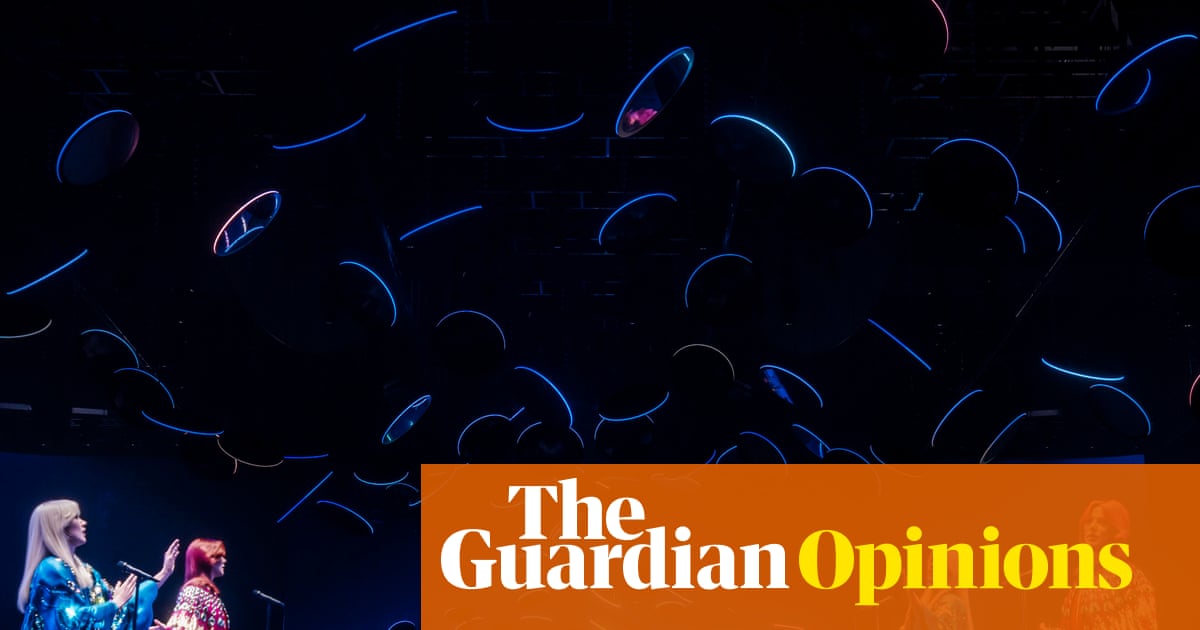
Here’s what Avatar concert producer Unit1 Studio’s CEO Barney Wragg said in a recent interview. Digital avatars are already part of our entertainment landscape – from Tupac and Abba to Maria Callas – but now that an avatar’s cheeks can change colour mid-set, is it game over for humans? Wragg last week reported a massive investment in his company to make hyper-realistic avatar-entertainment.
Unit1 plans to roll out avatars of musicians living – and dead – so that the success of Abba Voyage is just the start of a slew of “hybrid” concerts. In other words, flesh-and-blood audiences paying massive amounts of human money to witness a very expensive LED screen showing phantom musicians in the 21st century’s equivalent of the magic lantern. (The tech is a 2D illusion: you think you’re seeing Abba’s Agnetha in 3D, but you’re not; it’s all just a new-fangled but fundamentally old-fashioned trick of the light.) And the frontiers for Wragg and his team are endless: recreating Live Aid, Hendrix at Woodstock, the Beatles at the Cavern Club, and doing so in multiple locations simultaneously. It’s the logical endpoint of a culture of nostalgia epitomised for Wragg by his teenage nephew, who, having discovered and fallen in love with Janis Joplin’s music, wanted to see her live, but the unfortunate fact of her death in 1970 meant that this was impossible.
But why should that tiny hiccup be an impediment? Unit1 can bring her back, potentially resurrecting all your other favourites of yesteryear in what Wragg calls “time-travel tourism” – assuming that they receive permission from the musicians’ estates. Wragg talks about the tech not in terms of its creative use, but its documentary capacity: “We are re-engineering a moment in time, absolutely to fidelity.
It’s not a case of interpreting what somebody said, it’s just representing exactly what they said.” Unit1’s vision goes far beyond any of classical music’s attempts to recreate the musical cultures of the past with historically informed performance practice. Wragg talks in terms of absolute fidelity to what happened, a perfect simulacrum not of a song, a symphony, or an aria, but of an actual “moment in time”, rendered as precisely as possible, to be repeated indefinitely. Wragg admits there are limits: “We have been approached where people say, ‘What about if this person met this star?’ We’ve said, ‘Look, you’re straying into a world of fiction.’” But surely, seeing Joplin’s avatar perform as if she were still alive today is the height of science fiction.
Isn’t fiction the whole point of the technology? Why not imagine Freddie Mercury singing with Ella Fitzgerald, Nat King Cole with Marlene Dietrich, or how about Mozart in a keyboard battle with Beethoven? The problem with Mozart, Beethoven or Bach, say, is that they didn’t, alas, leave much of a digital record to work with to make their avatars, unlike Abba or Joplin.
As opposed to recreating, faithfully, actual moments in time, this seems to actually be about making advanced-level digital exhibits that people will pay to see every night in spaces once reserved for human musicians to perform in but that will now be consecrated to these digital homunculi: zombie concerts, opiates for an apocalyptically nostalgic age. Try throwing an apple at the stage; try interrupting the setlist; try making them perform an encore; try to get their autographs; try to find empathy and connection with this digital playback. Or maybe I should get with the programme and embrace the theme-park immersion of this wondrous age of technology that helps keep us stuck in a permanently perfected past.
Extract — continue reading at the source.