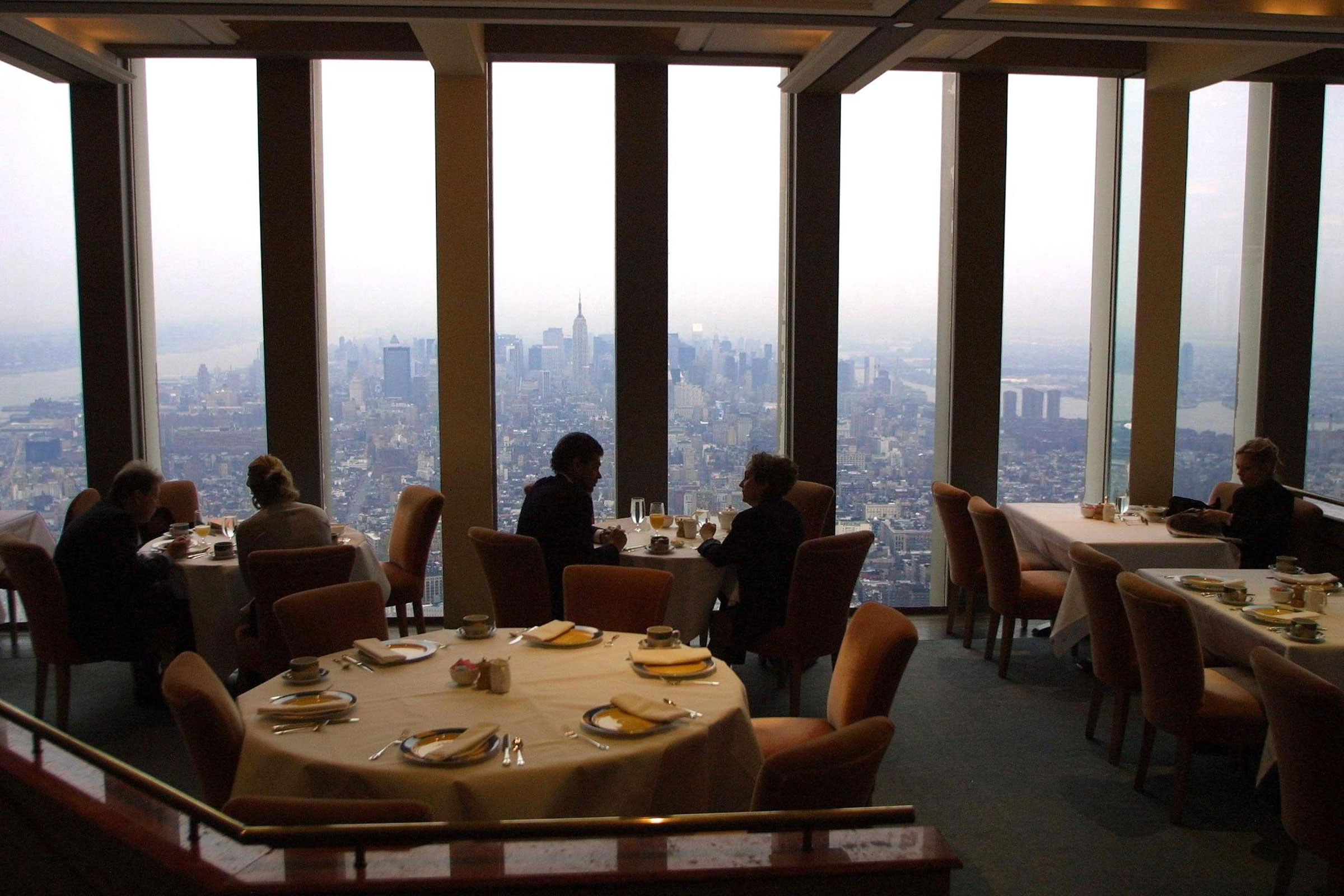
Stealing a moment like this was a coveted morning ritual for some of the breakfast staff at Windows on the World, the restaurant that was on the 107th floor of the North Tower of the World Trade Center. This was the meeting place where New Yorkers and out-of-towners went to celebrate birthdays and anniversaries; to revel with food and drink and to mark life milestones. And for many of the staff, it was a dream job.
Most tragically, there are the 2,977 people who were killed, including 79 workers from Windows, and 91 of its guests. Those victims and their families are at the heart of this dark moment in history, which millions of us experienced from close or afar. How one feels is at least partly determined by one’s proximity to the event.
On that day, I was covering the Toronto Film Festival as a journalist. As a native New Yorker, I felt like I’d left my post. I was watching an 8:30 a.m. screening of Monsoon Wedding, a movie directed by Mira Nair, the mother of then 9-year-old Zohran Mamdani, who is now New York City’s mayor.
It’s a tenuous connection I mention because that’s what happened on 9/11; the attack cast in stark relief the myriad connections that are otherwise invisible in this city. Suddenly, we found out that our daughter’s fifth-grade teacher’s cousin worked at Cantor Fitzgerald, or a neighbor’s brother was a fireman who worked at Engine 54. On that day, the connections were rippled with panic.
And then, for too many, grief. That manifested with the missing posters that filled the city for weeks; desperate pleas that became heartbreaking tributes. Those posters were an early act of collective mourning.
The city was still an open wound. You could smell the smoke almost everywhere for weeks. The randomness of the event—we were flooded with stories of those who died and those who didn’t by happenstance—draped over the city like an uncomfortable, existential veil.
Extract — continue reading at the source.