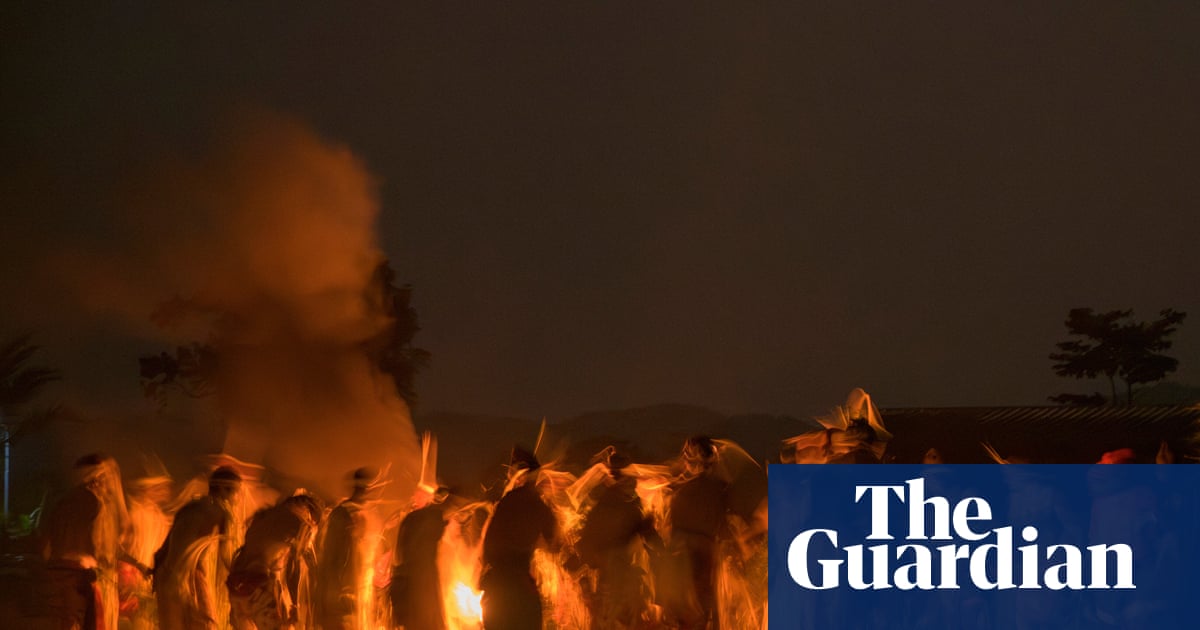
People sit shoulder to shoulder beneath palm fronds hung from the rafters. Through the night, they swallow what they have come here for: a bitter root bark called iboga. Tabernanthe iboga is a slow-growing central African rainforest shrub, the root bark of which has long been used in several Gabonese ritual traditions.
In Gabon’s villages and forests, iboga is cultivated and sometimes gathered from wild populations, often collected under ritual conditions. But nothing in its cultural usage, at sites such as this temple on the outskirts of Libreville, is comparable to the potential wave of demand fast approaching from abroad. A US executive order has turned a spotlight on ibogaine, a drug made from the plant, which pharmaceutical companies believe has huge potential for use in addiction treatment.
In the Bwiti (also known as Bwété) spiritual tradition, iboga is used in many different ways. Apollon Obolo, a practitioner of Misoko Bwiti, a branch concerned with healing and divination, describes the ceremony taking place that night, called Mubindu, as a way of lifting the burden carried by relatives and friends after a death. But, he stresses, iboga is only one part of the practice.
Iboga is just an element,” he says. In Misoko, Obolo says, knowledge of iboga is received “from generation to generation”, and accumulated “time after time”. A 2012 report by Yann Guignon, an intercultural and sustainable development consultant and president of the NGO Blessings of the Forest, records practitioners describing wild iboga as something that must be considered in relation to the whole forest, including by following animals that eat the fruit.
This stands in contrast to the interest now being taken by pharmaceutical companies. Ibogaine has a fast-developing reputation in addiction treatment, with early observational studies reporting sharp reductions in opioid withdrawal and craving after a single treatment. In a study published in 2024, 30 male US special operations veterans, most of whom were diagnosed with mild traumatic brain injury, received ibogaine combined with magnesium.
A month later, average PTSD, depression and anxiety scores had fallen by at least 81%, while disability scores moved from mild-to-moderate impairment into the “no disability” range. The study was small, uncontrolled and included complementary therapies, meaning it could not establish efficacy. Its authors have called for further controlled trials.
Extract — continue reading at the source.