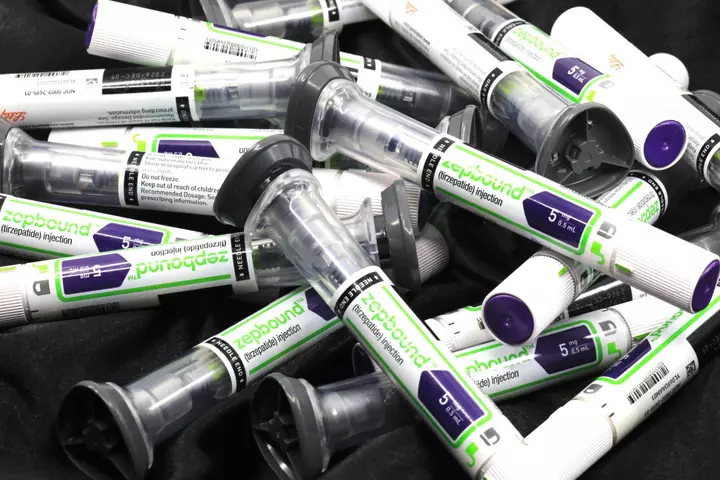
Food and Drug Administration had received 990 adverse-event reports associated with compounded semaglutide and more than 730 associated with compounded tirzepatide. Although these reports do not prove that the medications caused every event, they highlight a growing challenge: as demand for treatments promising better health, recovery and longevity expands, patients need reliable information about what they are taking, where it comes from and what evidence supports its use. The FDA’s safety information on unapproved GLP-1 drugs explains some of the risks associated with products that fall outside established approval pathways.
Peptides have become a prominent part of the conversation about health and human performance. They appear in discussions about muscle recovery, tissue repair, weight management, sleep, skin health and longevity. Some peptide-based medicines have established medical uses, while others remain experimental or lack sufficient evidence to support the benefits promoted online.
Recent reporting on potential changes to access to unapproved peptides illustrates how quickly this market is evolving. Yet these very different products are often discussed as though they belong to one proven category. Scientific interest is not the same as clinical proof, and a compelling personal testimonial is not a substitute for evidence that a treatment is safe and effective.
I first encountered peptides in 2008, when the conversation around them looked very different from the one we see today. Since then, I have watched interest in these compounds evolve from a relatively specialized subject into a mainstream wellness conversation. What concerns me is not that people are curious about new approaches to health.
It is that public enthusiasm can move much faster than the systems needed to assess risk, communicate uncertainty and protect patients. I know the consequences can be personal. I was hospitalized after using a peptide batch that I believe was contaminated.
That experience fundamentally changed how I think about the products people use in pursuit of better health. The promise of a treatment can be persuasive, particularly when someone is trying to recover from an injury, improve their quality of life or address a problem that conventional options have not resolved. But the potential benefit means little if the substance itself cannot be trusted.
Extract — continue reading at the source.