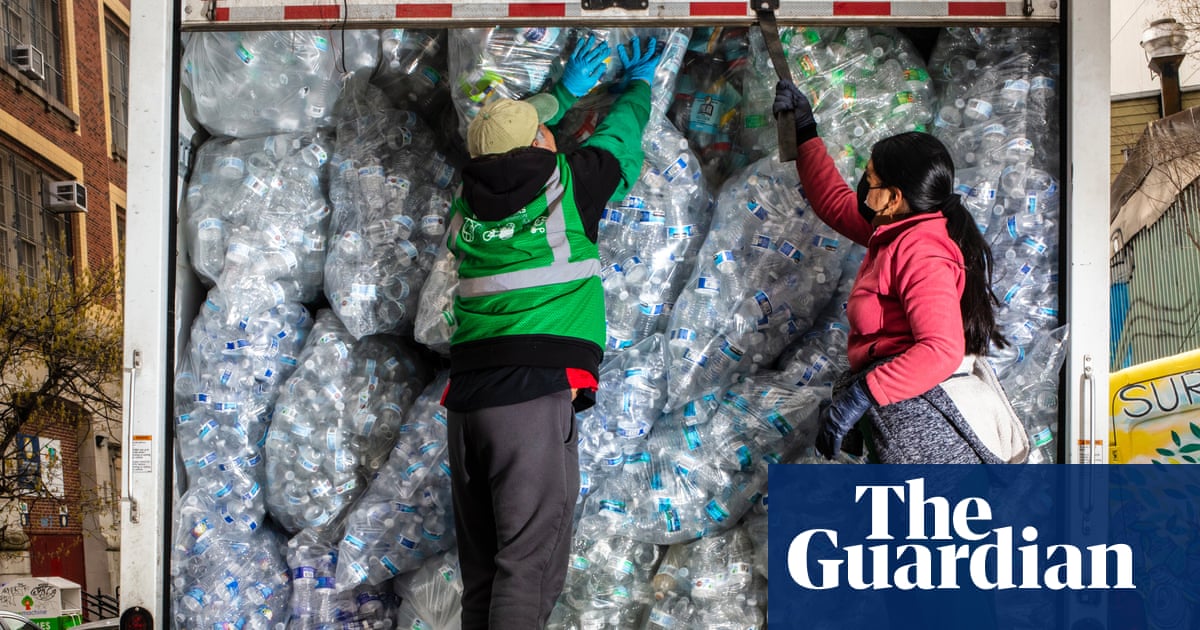
In New York City, the plastic we discard has a way of remaining in plain sight. There are few alleys to hide residents’ refuse, and the clear recycling bags leave their contents on full display. In a city built on a dense grid, lightweight wrappers, bags and bottles spill from overflowing bins and skitter down sidewalks, collecting in gutters and corners before the wind carries them on.
All that plastic is a layer of the urban landscape, as familiar as subway grates and fire escapes, revealing a messy and unflattering aspect of city life. It was not always this way: plastic production has ballooned in recent decades. In 1950, the world produced just 2m metric tons annually – that amount doubled by 1955.
Since then, producers and lobbyists worked to advocate for their interests, steamrolling environmental concerns, research shows. By 2019, the world produced 450m metric tons of plastic, and that number is expected to continue growing rapidly. All that growth has reshaped industries from shipping to medicine.
It has also taken a huge toll on the planet. Every day, the equivalent of 2,000 truckloads of the material is dumped into the world’s water bodies. And even when it is landfilled or incinerated, it spews toxic and planet-heating emissions into the atmosphere. (Less than a tenth of all plastic globally is recycled, and in the US, only about 5% of plastic waste generated by households is recycled.) What kind of world are we making with all this plastic?
What do all these changes mean for our environment, our health and our wellbeing? Are we locked into a future jam-packed with the material, or is there anything we can do to reverse course? Photographer Bryan Anselm took a look at how plastic is shaping environments in New York City – celebrations, workplaces, research centers, neighborhoods.
He pursued the photo project because it is “important for all of us to understand what happens to the plastics we use”. By 2018, that number was up to 218lbs per person, marking a 263% increase, according to federal data. Ordinary people never pushed for that increase, said Judith Enck, a former Environmental Protection Agency (EPA) regional administrator who now heads up the anti-plastic advocacy group Beyond Plastics.
Extract — continue reading at the source.