In September 1991, I had just been thrown into the meat-grinder of a Midlands boarding school. In this bear pit, there were predators and there was prey. You were either the swaggering rugby alpha, whipping a wet towel at pale bodies in the eight-boy dormitory; or the homesick ghost, keeping your guard up, endlessly braced for your toilet cubicle to be kicked open or your washbag chucked off the fire escape.
My mind had always been loud, racing with opinions, stories, jokes. But by the time I adequately considered a thought, the conversation had raced on without me. Suddenly, under 24/7 social scrutiny in a world where bullhorn confidence is king, I felt dismissed.
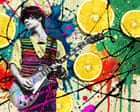
Up to that point, music hadn’t helped. Every rock star I had ever seen – Elton John, Freddie Mercury, Mick Jagger – was a showboating peacock, all hips, handclaps and absurd glasses, seeming to whisper in my ear: “This isn’t for you, bookworm.” But that September, I stumbled across the Stone Roses’ self-titled 1989 debut album. I must have seen John Squire’s genius before I heard it, on his paint-splashed, lemon-drizzled sleeve art.
Hearing his cascading, iridescent guitar solos, I assumed Squire must be an extrovert axe hero: foot on the monitor, diamante codpiece, the works. But there he was on the CD inlay: pipecleaner-skinny, dressed in Manchester streetwear and inscrutable beneath a bird’s-nest fringe (until the mid-90s, I genuinely wasn’t sure if Squire had eyes), slinging a Gretsch Country Gentleman guitar but not treating it like a penis extension. Years before YouTube, it wasn’t easy to find out more.
But when I dug up back issues of NME, I went from fan to disciple. A sometime model-maker who once worked on The Wind in the Willows – but also a child of 70s punk – Squire was enigmatic and otherworldly, softly spoken yet intense as a laser-cutter. Asked by one interviewer what the Roses were all about, his answer was the perfect collision of sky-scraping ambition and bone-dry Britishness: “Love and hate.
Morecambe and Wise …” In those formative weeks, for the first time, I realised that “quiet” could also mean charismatic, insolent, snarky, simmering with latent attitude and temperamentally suited for a life in the arts. Through Squire, I discovered painting (Jackson Pollock’s “drip and splash” influence was all over his sleeves and guitars), modern history (the Paris riots of May 68 referenced on Bye Bye Badman), fashion and even religion (you only had to read his lyric to 1994’s Love Spreads, a take on the Passion, with Jesus imagined as a Black woman, to sense the iconoclast claws below the still waters). Hearing the Roses at school, meanwhile, was my ticket into a secret society of indie kids that I hadn’t known existed, all swapping albums, making mixtapes, easy in each other’s company, building each other’s confidence.
Extract — continue reading at the source.