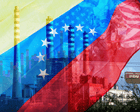
Written in the middle of the last century, the US Department of State memo conveys its message in a curt and undiplomatically honest tone: the glue that binds Washington to Caracas is, and is always likely to be, oil. Decades later, little appears to have changed. After a brazen night-time kidnapping of the country’s leader earlier this year, Donald Trump announced last week that the US was taking majority control over about a fifth of Venezuela’s oil reserves.
That deal, according to the White House, “secures our energy dominance for the next century”. How much it will benefit Venezuelans is yet to be seen. The country’s importance to the US has been proven time and time again over the past century.
Home to what are now known to be the world’s largest known oil reserves, Venezuela kept allied planes, ship and tanks well fuelled during the second world war. Washington and Caracas largely cooperated over the following decades, with US energy companies heavily involved in Venezuela’s oil industry, and profiting from it immensely. But relations took a nosedive in 1999, when Hugo Chávez became president.
A self-professed socialist and anti-imperialist, Chávez made alliances, and often oil deals, with China, Iran and Russia. Venezuela switched 180 degrees to become a natural adversary of the US, alongside its ally Cuba. Relations deteriorated further when Chávez was briefly detained by his own military after a deadly crackdown on mass anti-government protests.
The attempted overthrow lasted only two days and he was soon back in the presidential palace, accusing Washington of involvement in the failed coup. Chávez deepened Venezuela’s dependence on oil exports in the years that followed. In 2007, he stepped up his battle with Washington with a wave of nationalisation in which he seized oilfields, including those that US firms had operated.
Caracas had nationalised the oil industry decades before, but had allowed US companies to profit from the extraction. Under Chávez’s new terms, however, the state oil company was given control of a majority share and foreign firms were offered minority stakes. Among US oil companies, Chevron agreed to the worse terms, but ExxonMobil and ConocoPhillips refused and were in effect pushed out of the industry.
Extract — continue reading at the source.