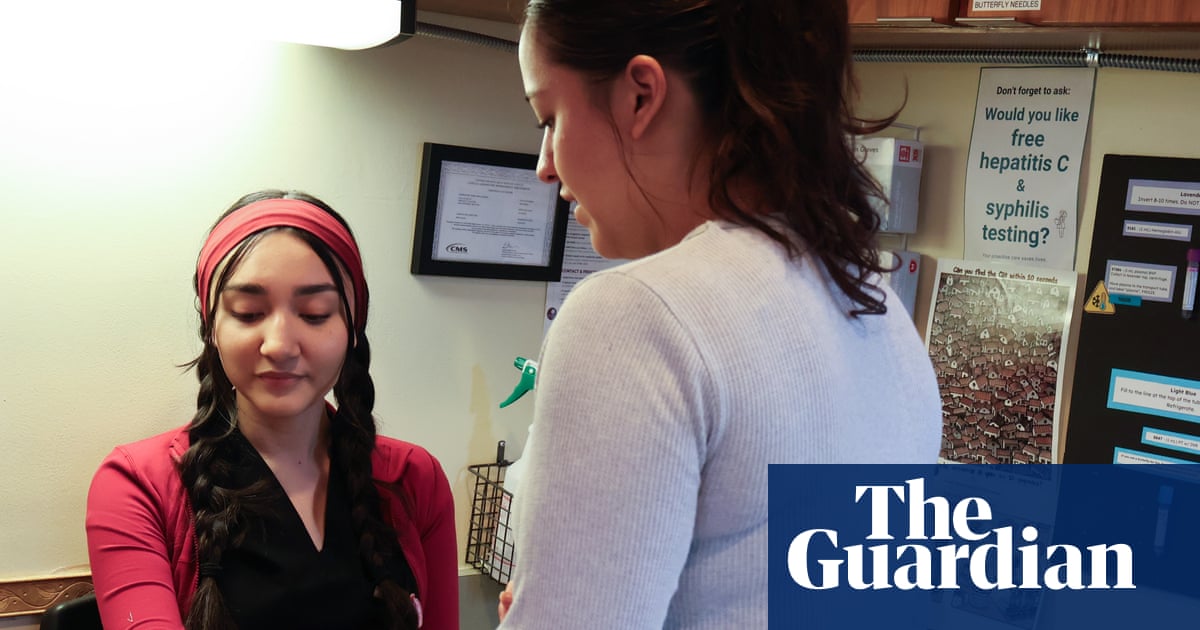
Let me know if you feel any discomfort and I can take it off.” She’s not a doctor or a nurse – at least, not yet – but a 21-year-old college student. Between classes, Martinez works as a bilingual health apprentice at Casa de Salud, a primary care clinic in Albuquerque, New Mexico. On top of taking vitals, Martinez is certified in harm reduction – she can run a needle exchange and give out fentanyl test strips.
And she understands how a patient’s trauma and past neglect can show up in an exam room. That responsibility sometimes felt overwhelming, like when she didn’t know how to translate certain medical terms, or when she herself had to go under anesthesia and explain the risks to her parents. Now through Casa’s de Salud’s apprentice program, she is working toward becoming the certified nurse anesthetist she wishes she and her parents had access to.
While states across the country face a healthcare workforce shortage, the need is particularly high in rural areas and within Spanish-speaking communities; in New Mexico, 32 of its 33 counties face a shortage. Although they make up 20% of the population, Latinos account for only about 6% of the US physician workforce. To provide that care, not just for the community, but from the community, Casa de Salud’s year-long apprentice program has trained more than 300 bilingual high school and college students since its founding in 2005.
The aim is not only to help students from marginalized backgrounds get into medical programs, but to keep them in the community. At least a third of the students Casa de Salud has tracked have gone into the healthcare field, with more than half of those attending medical school. The group met every few weeks at a gym in the South Valley, where they offered limpias, massage, reiki, accu-detox and other treatments.
Seeing the need for connecting culturally grounded caregivers to the healthcare system, Casa de Salud soon after launched its health apprentice program. Alejandra Casarrubias was among the program’s first students. Today she’s a registered nurse, a sexual assault nurse examiner and clinical manager at Casa de Salud.
According to the Association of American Medical Colleges, “patients from minoritized races tend to fare better with doctors of the same race”, across metrics like infant mortality and compliance with healthcare plans. Casa de Salud provides care to a patient base that is predominantly Spanish-speaking and 80% uninsured. Because of the health apprenticeship’s bilingual requirement, Village Center says 100% of the apprentices are themselves Latino, and many like Martinez are also first-generation college students.
Extract — continue reading at the source.