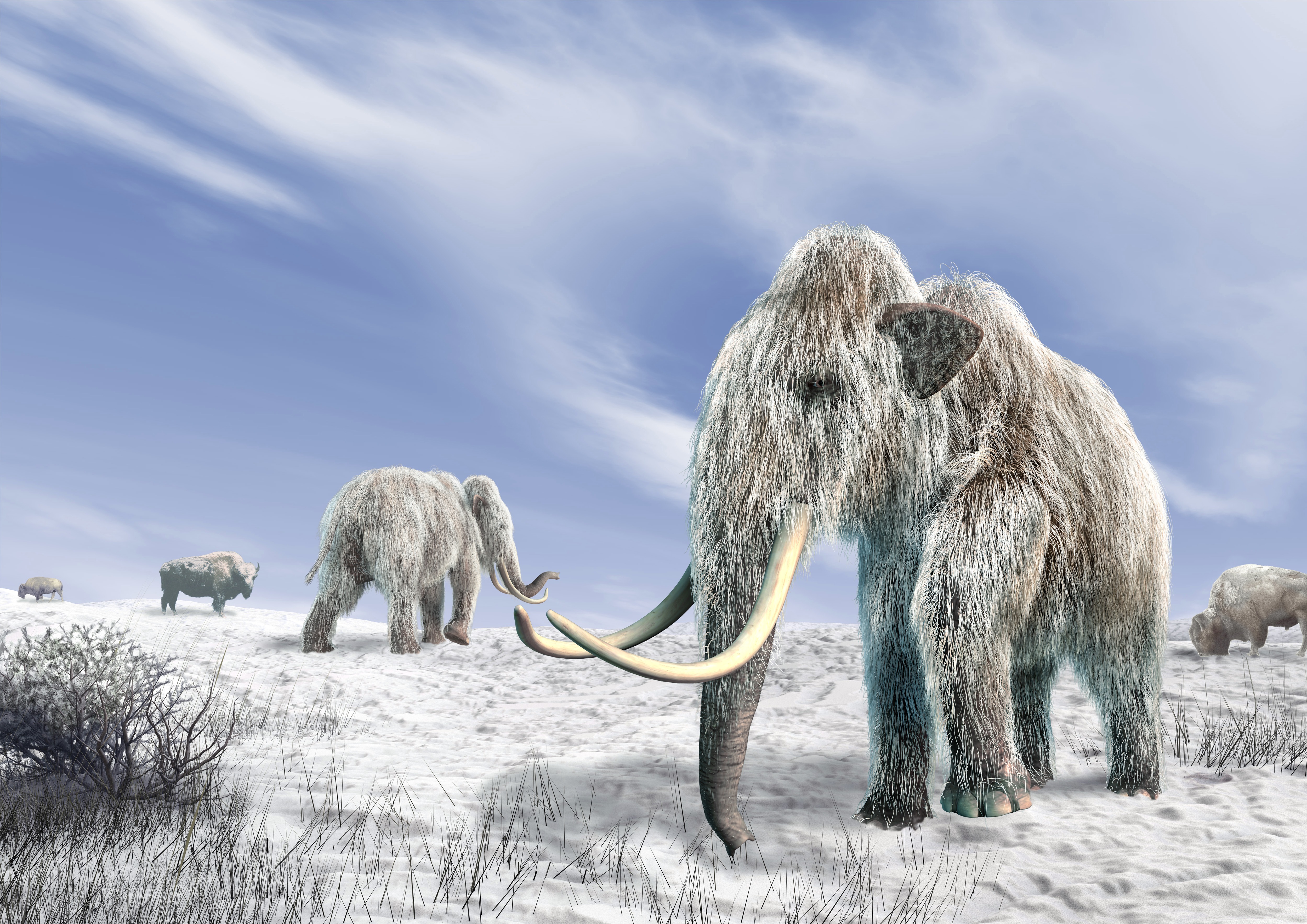
If you’ve been excitedly awaiting the return of the woolly mammoth, you’ll have to be patient a little longer. It was in 2021 that the newly established, Dallas-based company Colossal Biosciences announced plans to use modern gene-editing technology and DNA harvested from mammoth remains to manufacture a mammoth embryo, implant it in the womb of an elephant surrogate, and bring the great, gentle, six-ton beast—which vanished from the planet more than 4,000 years ago—back into the modern world. The target date for a pregnancy was 2027; the target date for the birth was 2028.
In a recent conversation with TIME, Colossal CEO and co-founder Ben Lamm concedes that those goal posts have moved more than a little. Not 2036, but not 2030 either.” In just the past year, Colossal has learned vastly more about both the mammoth and the elephant genomes than has ever been known before, not only improving the odds that the mammoth can be brought back to life, or de-extincted, but also unpacking basic genetic science that could one day have knock-on effects for humans—including potentially increasing resistance to cancer. Colossal proved its de-extinction chops in the spring of 2025, when it announced that it had brought the extinct dire wolf back to life, editing the genome of the closely related gray wolf to replicate the features of its vanished cousin—including a white coat, larger size, more powerful shoulders, wider head, larger teeth and jaws, more-muscular legs, and characteristic vocalizations, especially howling and whining.
To work that genetic magic, Colossal scientists collected dire wolf DNA from an ear bone and a tooth unearthed in two ancient samples, sequenced the genome, and compared it to that of the gray wolf. They then harvested cells from a living gray wolf and made 20 edits on 14 genes using the CRISPR-Cas9 gene-editing tool, which produced the critical dire wolf characteristics. Finally, they extracted the nucleus of the edited cell, inserted it into a domestic dog ovum whose own nucleus had been removed, and implanted the resulting embryo into the womb of a domestic hound.
Nine weeks later, the dire wolves were born. To do something similar with the woolly mammoth, Colossal discovered that the work would be a heavier genetic lift than their research teams had originally expected. The initial estimate was that it would take edits to about 60 genes to turn an elephant nucleus into a mammoth nucleus that could then be used to create a mammoth embryo.
Now that number is about 150—and rising. Among the genes and regulatory switches that have been discovered are ones that shrink the mammoth ear to about one-tenth the size of an elephant’s ear. In the hot climates in which Asian and African elephants live, large, heavily vascularized ears serve as heat dumps, cooling the blood and the body as a whole.
That would not do for the mammoth, which made its home during the Ice Age and needed to husband all the heat it could. Mammoth tails are shorter than those of elephants too— for the same heat-retention reason—and Colossal scientists have found the gene that expresses that as well. The genetics of the mammoth’s characteristic heavy coat have also been unpacked.
Extract — continue reading at the source.