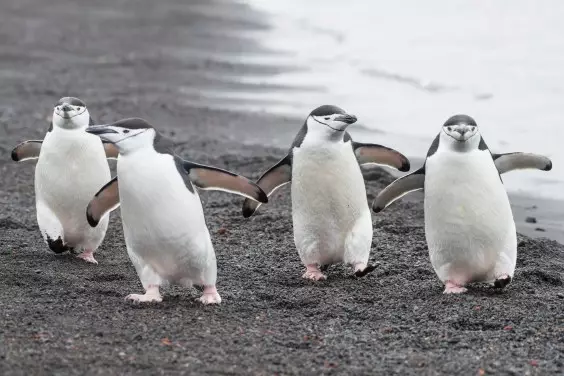
In 2000, a doctoral student from Stony Brook University reported that chinstrap penguins (Pygoscelis antarcticus) on the Antarctica peninsula were on the decline. But without solid baseline numbers for their stronghold in the South Sandwich Archipelago, he couldn’t assess the magnitude of the decline. A recently published study in the journal Cell, however, has now made it abundantly clear: The populations of chinstraps on Zavadoski Island, which boasted the largest penguin colony in the world, have dramatically collapsed over the last 15 years.
Biologists from the U.K., U.S., Germany, South Africa, and Chile used drone surveys and aerial photos, along with satellite images that detect patches of penguin poop, to estimate penguin population sizes on the island. The data showed that chinstrap numbers plummeted from more than 500,000 individuals in 2011 to about 200,000 by 2025. On the other hand, macaroni penguins (Eudyptes chrysolophus), which also inhabit Zavodovski, increased in number by almost 30 percent—from an estimated 90,000 to more than 200,000.
The two species have distinctly different lifestyles: Chinstraps eat krill, while macaroni penguins also eat fish, which gives them more dietary flexibility should krill become scarce. And as Antarctic waters have warmed from climate change, populations of krill have moved southward, likely jeopardizing the food intake by chinstaps. Assuming the downward trend applies to the entire South Sandwich Archipelago (which awaits further study), the researchers advise reclassifying the chinstrap penguin species as IUCN Endangered from its current classification as a species of Least Concern.
After all, as they noted in the paper, the consequences extend far beyond just the chinstraps: “The total loss of over a quarter of a million pairs of penguins from Zavodovski is likely to have repercussions for the structure of food webs in the entire South Sandwich Islands region.” Enjoying Nautilus? Subscribe to our free newsletter.
Extract — continue reading at the source.