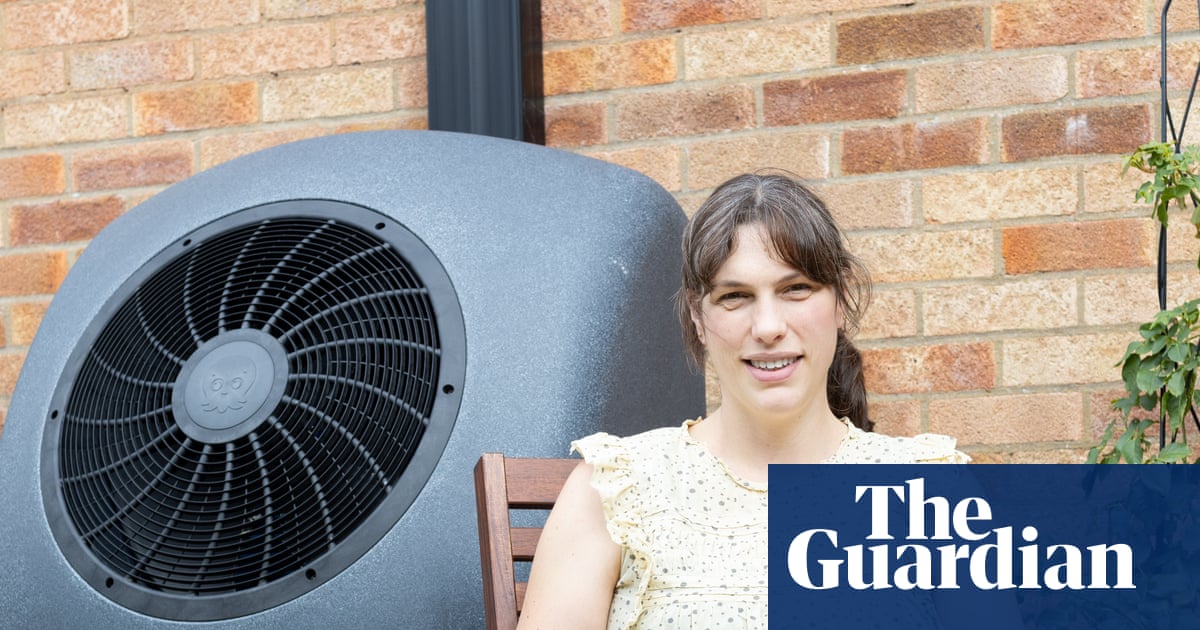
Clare Naylor paid close attention to how much energy she and her family were using last winter, filling hot-water bottles and bringing out extra blankets to ensure they didn’t go over budget. This year, she won’t have to worry as she is guaranteed not to receive a bill. While millions of British households face the highest energy charges in three years from today after a 4% rise in the price cap, and predictions of a 16% increase in January, upgrades to Naylor’s home mean she will not have to pay anything.
The four-bedroom detached home in Milton Keynes was recently fitted with a heat pump and 17 solar panels, and a large battery was installed in the garage to manage the energy generated. The new technology, as well as four new radiators, means the house can use an energy tariff which guarantees she will not pay any bills for five years. In effect, the house behaves like a mini-power station that feeds excess energy back to the grid.
As long as the Naylor family stay within a “fair usage” limit, Octopus Energy guarantees they will not be billed for heating, lighting or any of the devices that a family with three children under 10 use. The family’s energy bills were relatively low – she says they were about £130 a month, a sum they now plan to spend on holidays. The house, which was built in the 1980s, was retrofitted for free by Santander as part of a project to examine how to fund homes towards better energy efficiency.
If Naylor had to pay for the works, the solar panels, heat pump and battery would have come to just under £20,000 after a government grant was applied. The Octopus “Zero Bills” tariff is operating in hundreds of new-build homes around the country since it was launched five years ago. The company is now testing how it works in houses, such as the Naylors’, that are older and need to be retrofitted.
Properties need to have good insulation, solar panels, a heat pump and a battery so that they can generate more energy than is being used. The zero-bill promise does not cover charging electric vehicles (EVs). Typically, the best candidates for the retrofitting work are homes built in the last 10 years with good insulation levels, said Banks.
The usage cap will be different for each house and is set depending on how much energy they would normally use, with a margin on top. Santander is working on how to offer financing for households who need to borrow money to fund retrofitting projects. In the meantime, using its home improvement loan, at a 6.4% interest rate over five years, would mean repaying £389 a month for a £20,000 project.
Extract — continue reading at the source.