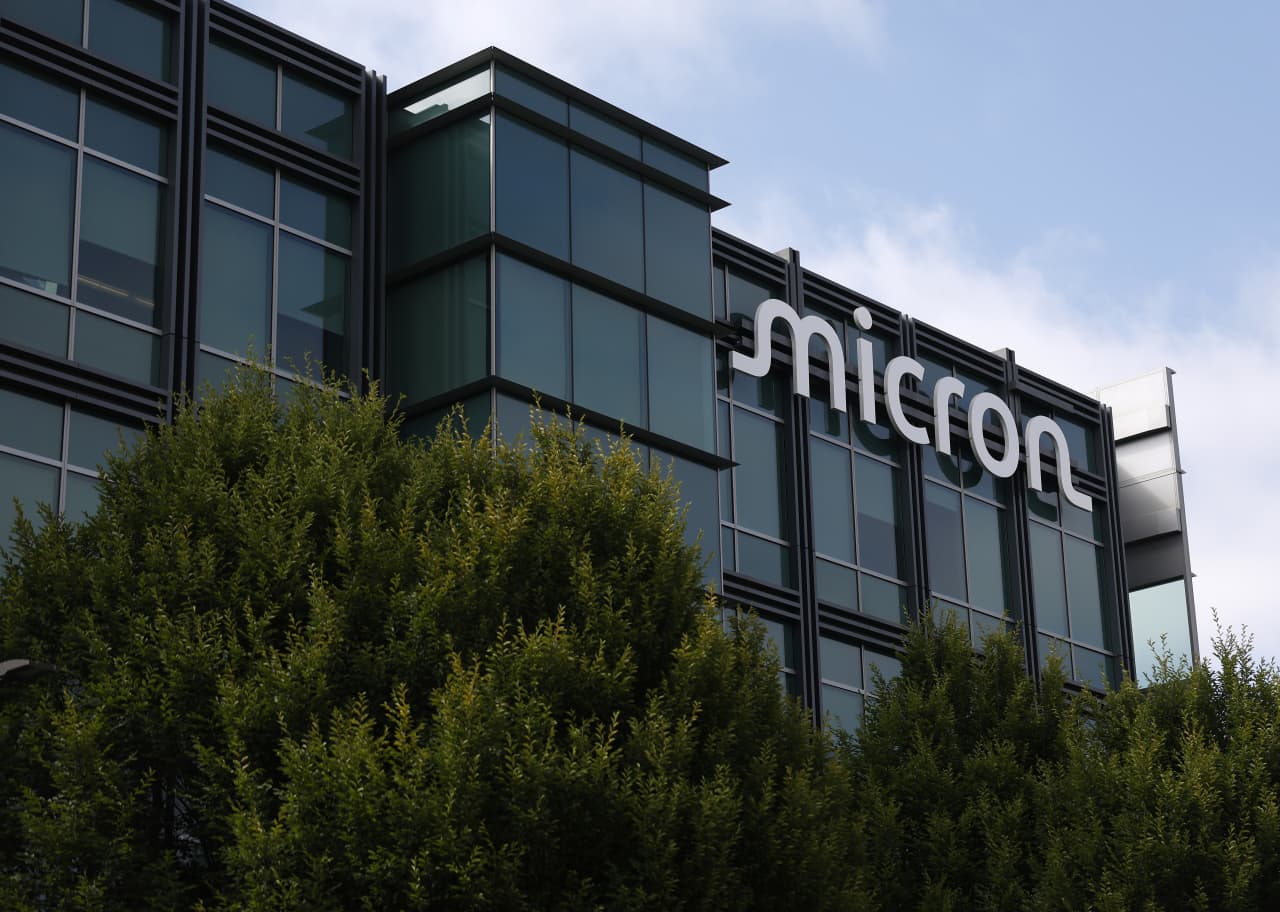
These four stocks could benefit most from a $3.2 trillion semiconductor opportunity These four stocks could benefit most from a $3.2 trillion semiconductor opportunity A BofA analyst expects the semiconductor market to reach $3.2 trillion by the end of the decade, shrugging off fears of an AI slowdown Bank of America sees Micron as a potential leader if chip-sector momentum continues. While investors weigh the implications of a potential slowdown in artificial-intelligence development, one analyst is feeling even more upbeat as he looks several years out. Bank of America analyst Vivek Arya now expects the total addressable market for the entire semiconductor industry to reach $3.2 trillion by 2030 — led by growth in memory-chip and data-center demand, as well as stronger recoveries for the automotive and industrial industries.
He expects the market to reach $1.7 trillion this year. Arya said he sees “no signs of slowing” for customer orders, long-term agreements, supply commitments and chip pricing despite recent market jitters. Some investors have worried that if Anthropic, OpenAI and other AI companies slow down their training of large language models, they will need to spend less on hardware and infrastructure.
Video 91/1 Skip Ad Continue watching after the adVisit Advertiser websiteGO TO PAGE Why humanoid robots are so hard to mass-produceSee All Videos Why humanoid robots are so hard to mass-produce Play video: Why humanoid robots are so hard to mass-produce The BofA analyst said in a note to clients that next year “remains much a fully booked/contracted year” for providers of computing power, networking components and memory chips, and that 2028 is expected to “remain tight” as well. Don’t Short Yourself offers weekly money tips to help you earn it, stack it and grow it. I agree to the Terms of Use, Privacy Notice and Cookie Notice.
I would like to receive updates and special offers from Dow Jones and affiliates. I can unsubscribe at any time. **See more:**AI stocks are rebounding. One analyst says there’s no spending slowdown in sight.
In the near term, the chip sector could “remain range-bound,” Arya noted, meaning it’s unlikely stocks move meaningfully higher or lower. He cited the upcoming U.S. midterm elections, as well as broader macroeconomic trends. Against that sort of backdrop, he expects “greater resilience” from makers of AI and analog chips, as well as networking providers.
Once chip-sector momentum picks up, Arya said he could see shares of Micron Technology “Memory-chip shortages and price inflation remain a critical lever behind industry growth upside,” Arya wrote, adding that he also sees “a brighter outlook” for makers of traditional and AI servers. has gained about 58% on the year, “semis still screen attractively relative to growth,” Arya said, meaning they’re cheap in the context of their growth potential. The chip sector is less expensive than the S&P 500 The analyst also raised his expectations for the total addressable market for wafer-fab equipment to reach $156 billion this year and $210 billion next year, as demand for the wafers required to make logic and memory chips continues to grow. He added that he could see the industry reaching $360 billion in revenue by the end of the decade, due to new generations of chip-manufacturing technology and expanding clean-room space for memory and storage components.
Extract — continue reading at the source.