When Allan Marrero, an asylum-seeker from the Cayman Islands, was released after five months in immigration detention, there was only one journalist he invited to his celebration: Eileen Grench, a reporter with the independent, non-profit news outlet Documented. Grench had previously reported on Marrero, who was detained after interviewing with federal officials for a marriage-based green card. But beyond covering his detention struggles, she humanized him, emphasizing his and his husband’s love story.
The Marreros’ trust in Grench and Documented resulted in full access and rich reporting that received much attention; even NYC’s mayor, Zohran Mamdani, tweeted Grench’s story upon Allan’s release. Documented is one of many immigrant-serving news outlets across the US meeting the moment when many legacy and mainstream publications are not, whether due to layoffs, lack of resources or being out of touch with immigrant communities. These independent local news organizations are using social media, chat apps and other nontraditional methods to connect directly with immigrants and non-English speakers – especially during recent Immigration and Customs Enforcement (ICE) surges – and they are leaving an impression.
They might not be able to access it or make it happen, but they can articulate their own needs. What these outlets are doing is just understanding how amplifying the community’s voices can help them.” Last year, Documented and the Spanish-language news service Conecta Arizona launched the Immigrant News Coalition (INC) with the Listening Post Collective, the Bay Area’s El Tímpano, and the Minneapolis-based Sahan Journal to share strategies and resources for serving immigrant communities – and to ensure their outlets’ survival. Their work has since been bolstered by a $1.5m award from the Press Forward Foundation to “test and spread effective revenue models for immigrant-serving newsrooms” and additional funding from Democracy Fund.
Through listening tours and research, the outlets have found that members of immigrant communities in the US don’t always read the news by visiting websites and reading push notifications, especially when English is not their first language. Instead, they rely on other platforms that may have inaccurate information, such as WhatsApp, which over half of Latinos in the US use. To meet specific immigrant communities where they are, Documented runs a WhatsApp group in Spanish, a WeChat group for Chinese immigrants, and a TikTok account in Haitian Creole to combat misinformation about ICE raids and fear-based scams.
We’re creating news first and foremost for immigrant communities, and that looks very different than news created for non-immigrant communities.” Emmy-winning journalist Maritza Félix started Conecta Arizona’s WhatsApp group, La Hora del Cafecito (Coffee Time), during the pandemic to provide timely, accurate news for immigrant communities in Spanish. The online gathering space, which has thousands of members across platforms, has a weekly Q&A with expert guests, including immigration attorneys, education policy experts and labor rights specialists. But as ICE raids continue, members are engaging less in the public group chat and more in one-on-one direct messages with the staff.
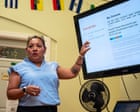
We are listening to what they say and their silences at the same time.” Having a dialogue with the local Bay Area immigrant community has been crucial for El Tímpano, which is Spanish for “eardrum”. In addition to SMS messaging that reaches more than 7,000 Spanish-speaking immigrants, the outlet’s disinformation defense initiative, Comunidades Informadas, has trained more than 400 Latino immigrants in the Bay Area to recognize and address disinformation and misinformation. We’ve received really positive responses to these workshops and to the information that we provide to combat that fear.” In May, the Alameda county library partnered with El Tímpano for a disinformation defense initiative workshop in Spanish via Zoom for its staff members.
Extract — continue reading at the source.